
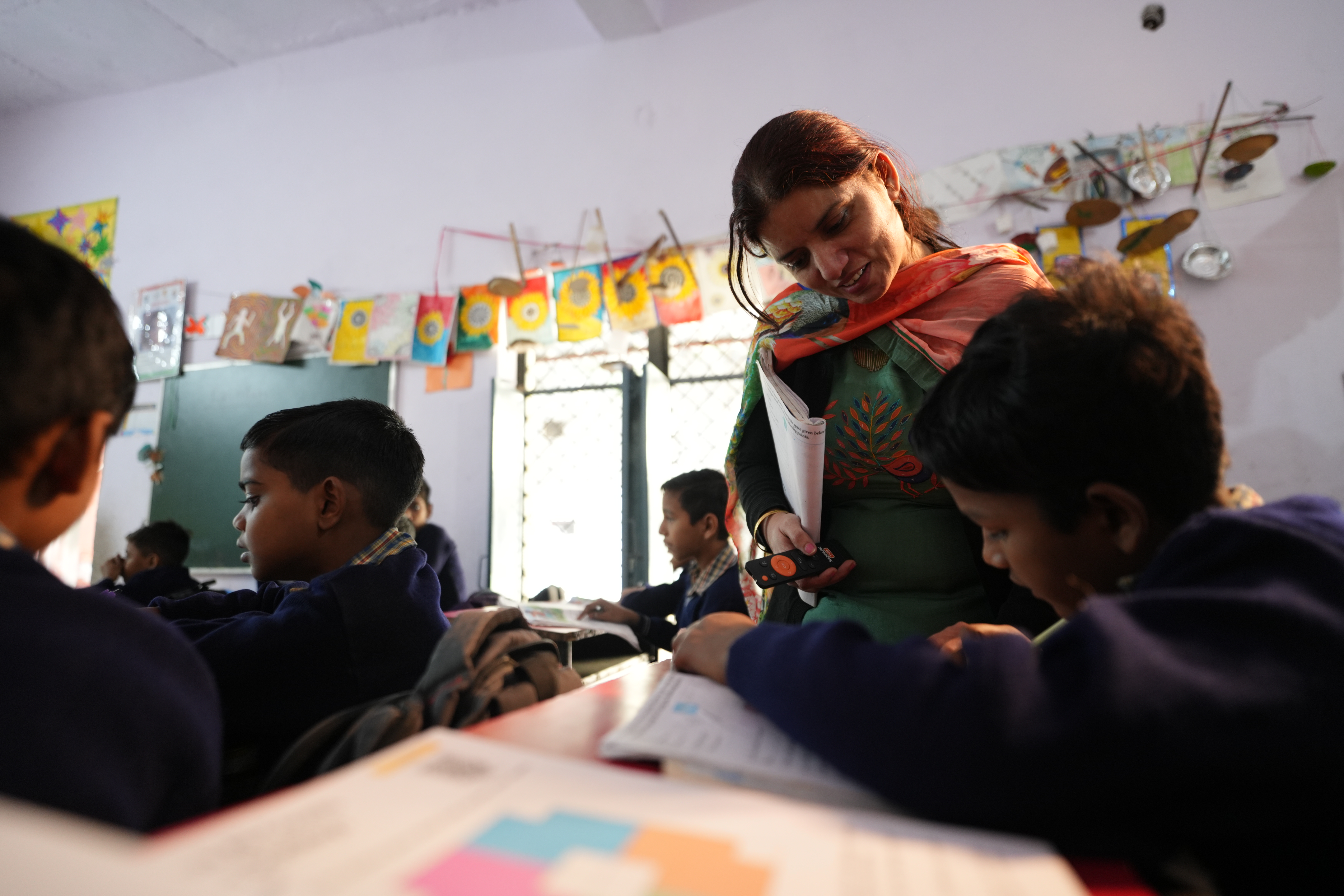
In a government school classroom, a teacher stands before children with varying learning levels, confidence levels, and unique learning needs. Some students are eager to participate. Others hesitate to answer even the simplest questions. The challenge is often a lack of the right support system in the classroom.
In India, for years, education was only focused on student enrolment and traditional textbook-based learning. Today, this focus has shifted towards something equally important: the quality of education. Schools and institutions now focus on the real learning outcomes, such as how the children understand what they learn. Are teachers equipped with the tools and support needed to help every child succeed?
This is where an ngo working for education in India creates a meaningful change. By working closely with schools, teachers, and communities, education-focused NGOs are creating a sustainable learning environment for children. It introduces innovative learning tools and experiences to make classroom learning interactive and participatory for children.
Growing Role of Education NGO in Rural School Development
As the educational ecosystem grows and goes beyond the textbook, education NGOs are helping schools adapt to meaningful changes and make classroom learning more interactive and engaging for children in rural classrooms.
Child education NGOs in India bring interactive teaching tools and teacher empowerment programs into the classrooms to improve how learning is delivered and experienced. With innovative learning tools, it strengthens the classroom practice and helps teachers navigate everyday learning challenges with constant support.
NGOs also bridge the gap between parents and teachers by encouraging community participation. When parents and teachers engage in learning activities, they also create an environment that educates children outside the classroom.
Better Classroom Learning with Teaching Materials for Primary Schools
For many young learners, understanding abstract concepts can be difficult when presented only through text or verbal instruction. Children today need visual aids and interactive resources to understand concepts with better visualisation.
This is where teaching materials for primary schools become important for underserved classrooms. Through visual learning cards, activity-based boards, story charts, and interactive resources, schools are transforming concepts into experiences that children can see and understand.
Innovative teaching materials and these resources make lessons more engaging and provide teachers with structured ways to simplify complex topics and encourage greater classroom participation.
Activity-Based Learning Tools for Kids: Creating Engaging Classrooms
When children get the opportunity to engage in learning activities like solving a puzzle, participating in a group activity with their peers or exploring concepts through play and interactive activities, learning becomes more meaningful when they can actively participate in the learning process.
This is why the inclusion of activity-based learning tools for kids is increasingly becoming an important part of modern classrooms.
Activity-based learning encourages children to observe, experiment, collaborate, and discover with their peers. Rather than focusing only on rote memorisation, students learn how to think critically and solve problems independently.
These experiences allow children to learn every concept with clarity and build skills that encourage self-confidence. Most importantly, they help children associate learning with curiosity and enjoyment rather than pressure.
Educational Kits for Students Improving Foundational Learning
Classrooms in rural India need learning solutions that simplify the learning process by turning classroom learning into hands-on experiences that children can relate to.
Primary education in rural classrooms needs independent and frugal solutions that do not depend on heavy infrastructure or internet connectivity. One of the most effective tools is educational kits for students that simplify foundational learning concepts and encourage active participation among children with different learning styles.
These educational kits make high-quality learning more accessible and inclusive.
Educational App for Children Supporting Digital Learning
As educational kits support interactive learning, educational apps also open up new opportunities for children to learn with interactive lessons, audio-visual content, quizzes, and guided activities.
When educational apps for children are introduced into the classroom, teachers deliver lessons with more clarity and confidence. These apps also make learning more interactive and engaging for kids as they learn through playful activities and interactive content aligned with the curriculum.
Education-Based NGO in India Creating Long-Term Educational Impact
Implementing sustainable changes in rural and underserved classrooms requires continuous effort and collaboration. Education-based NGOs in India contribute towards this by focusing on empowering teachers and bringing innovative learning tools into the classroom.
NGO-led programs go beyond academic performance. With interactive learning methods and innovative teaching tools, schools adopt stronger teaching and learning practices.
Educational foundations like Sampark Foundation continue to demonstrate how scalable, low-cost, and child-centric solutions can improve learning experiences for millions of students across India.
Child Education NGO in India Building Future Learning Opportunities
Child education NGOs in India are helping educational institutions create learning environments where children are encouraged to participate, explore and develop strong foundational skills.
Education NGOs are helping make quality education more accessible and effective by combining innovative teaching practices, engaging learning tools, teacher empowerment, and digital learning solutions.
Creating equitable learning opportunities for children requires active collaboration between NGOs, schools, communities, and policymakers. Because when children are given the right support during their early years, the impact extends far beyond the classroom.
Create a quality learning environment for children. Contribute and Become a Spark.
FAQs
1. Why are educational NGOs important in India?
Educational NGOs play an important role in bridging the learning gaps between rural and urban classrooms. It supports schools by introducing innovative learning tools and teacher empowerment to make quality education accessible, especially in underserved communities.
2. What are the benefits of activity-based learning tools?
Activity-based learning tools improve engagement, concept clarity, critical thinking, creativity, and retention by encouraging children to learn through active participation and exploration.
3. How do educational kits support classroom learning?
Educational kits simplify complex concepts with hands-on learning experiences that improve student participation and strengthen foundational literacy and numeracy skills.
4. Why are digital learning platforms important for children?
Digital learning platforms make learning more interactive and accessible with audio-visual content, guided classroom activities, and personalised practice opportunities that complement classroom teaching.


