
The AI Education Impact Summit is a nationwide dialogue series by Sampark Foundation, designed to create awareness and foster collaboration on how AI can support teachers and strengthen classroom learning across India.
AI Education Impact Summit Series
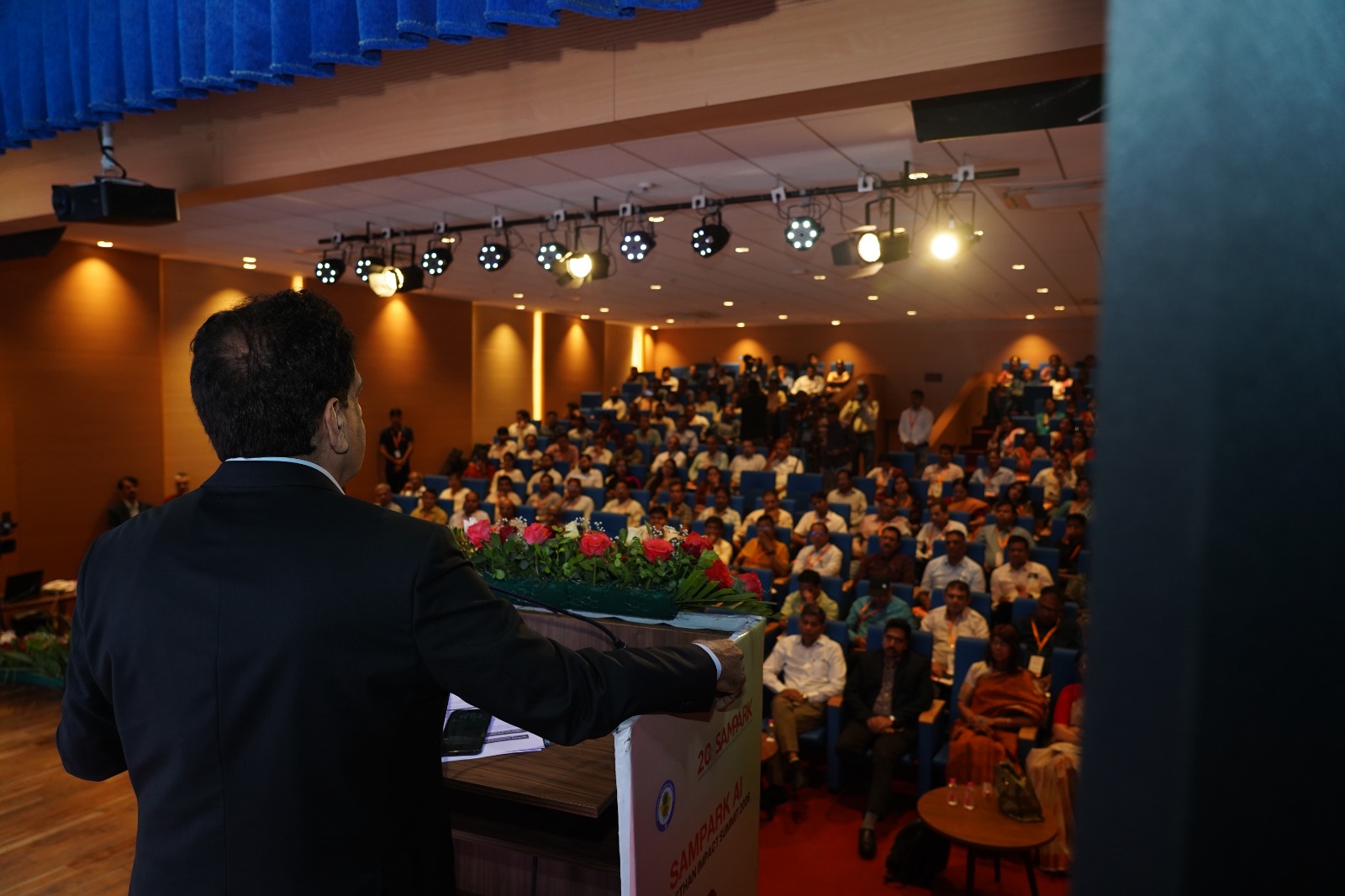


Our impact in numbers
8
States
10
Keynote Speakers
100
Panelists
500
Participants
40
Sessions
Our Vision
The future of education will not be defined by technology alone, but by how wisely we use AI to support teachers and empower students. Through these summits, we aim to bring together governments, educators, and technology leaders to collectively explore how AI can strengthen classrooms and improve learning outcomes for every child.
State-wise AI Education Summits
Empowering education systems across 8 states in India
Completed
10th March, 2026
Mumbai
Can AI truly transform learning outcomes in India?
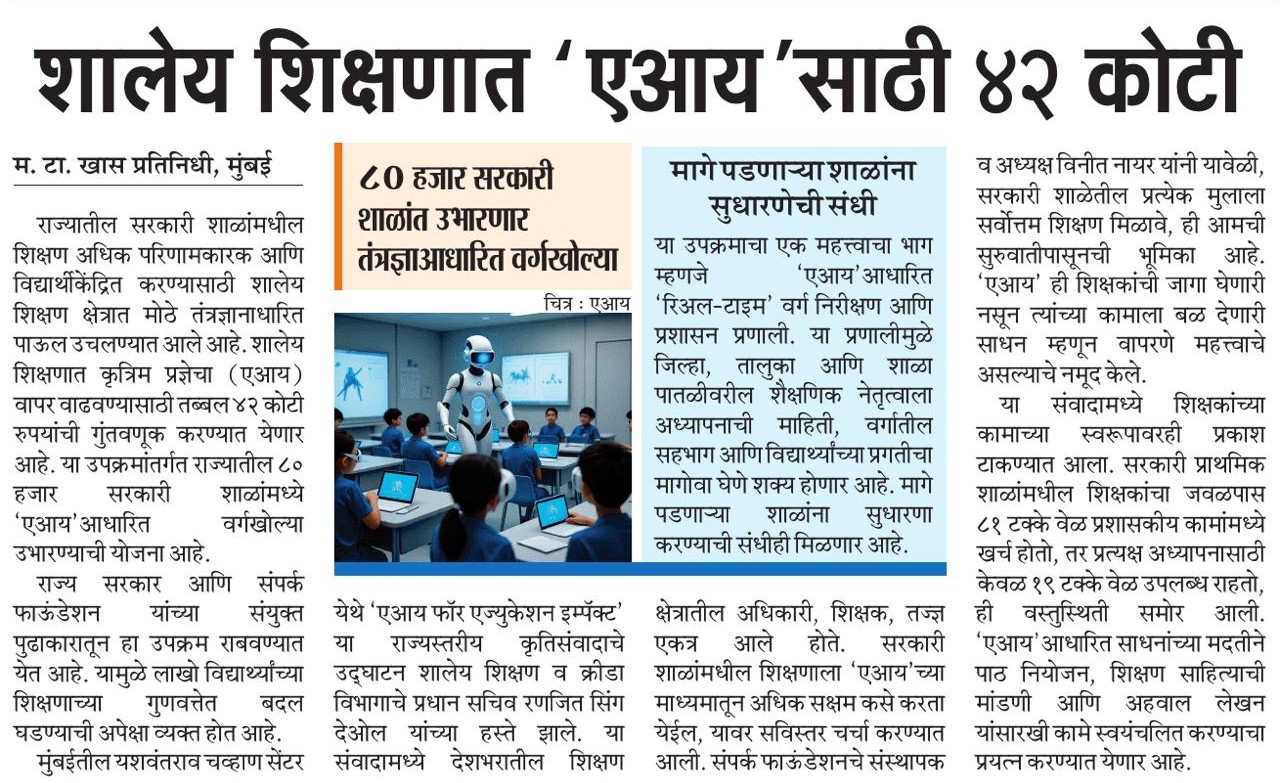
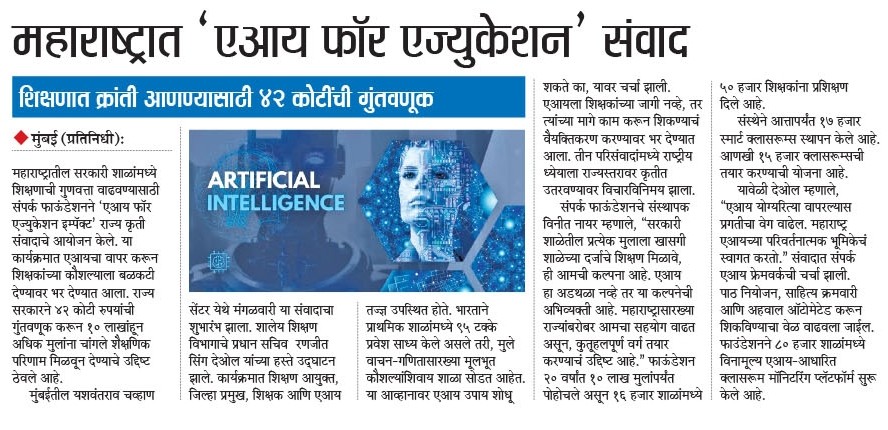
Sampark Foundation’s first AI Education Impact Summit held in Mumbai, Maharashtra brought together policymakers, educators, researchers and practitioners to explore how AI can meaningfully strengthen India’s education system.
Key Speakers
Founder-Chairman, Shri Vineet Nayar
Shri. Ranjit Singh Deol, IAS, Principal Secretary, School Education and Sports Department, Maharashtra
Shri Sanjay Yadav, IAS, State Project Director, MH
Panel Topics Discussed
Where AI improves learning outcomes
Teachers First in the AI era
Data that governs

After Story – Impact & Insights
Media Coverage
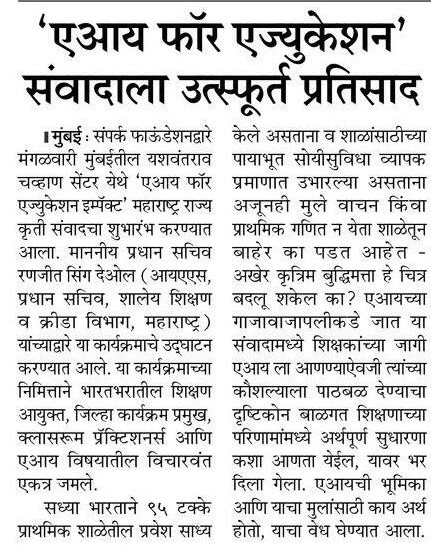

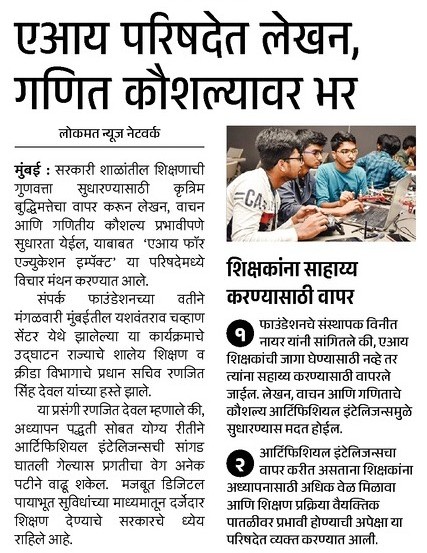
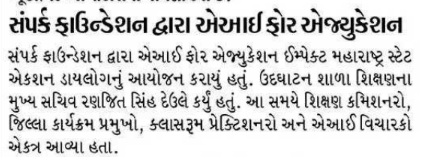



Voices from the Summit
Insights from education leaders
AI is powerful but not yet ready to be left alone with children. The real opportunity lies in using AI as a teacher's ally, not a replacement — ensuring it is supervised, contextual, and aligned with learning goals. Technology doesn't lead learning. Teachers do.
Shri Vineet Nayar
Founder Chairman, Sampark Foundation
Every child's foundation is shaped by a teacher. While AI and technology can support learning, the true pivot of education will always be the teacher. Supporting them is the key to transforming education.
Dr. K. Rajeswara Rao
Retd. IAS & President, Sampark Foundation


Completed
17th March, 2026
Rajasthan
Can AI truly transform learning outcomes in India?
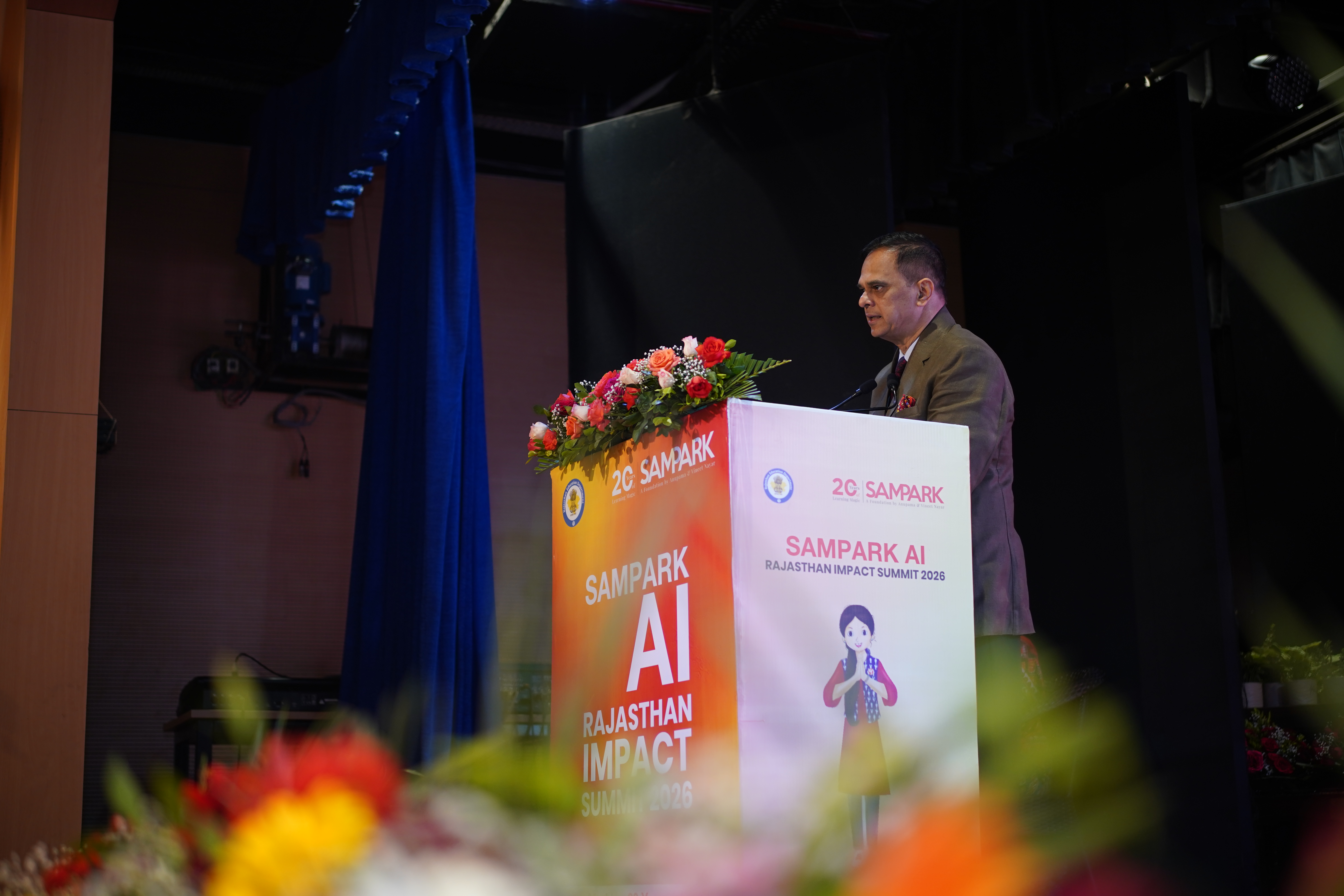
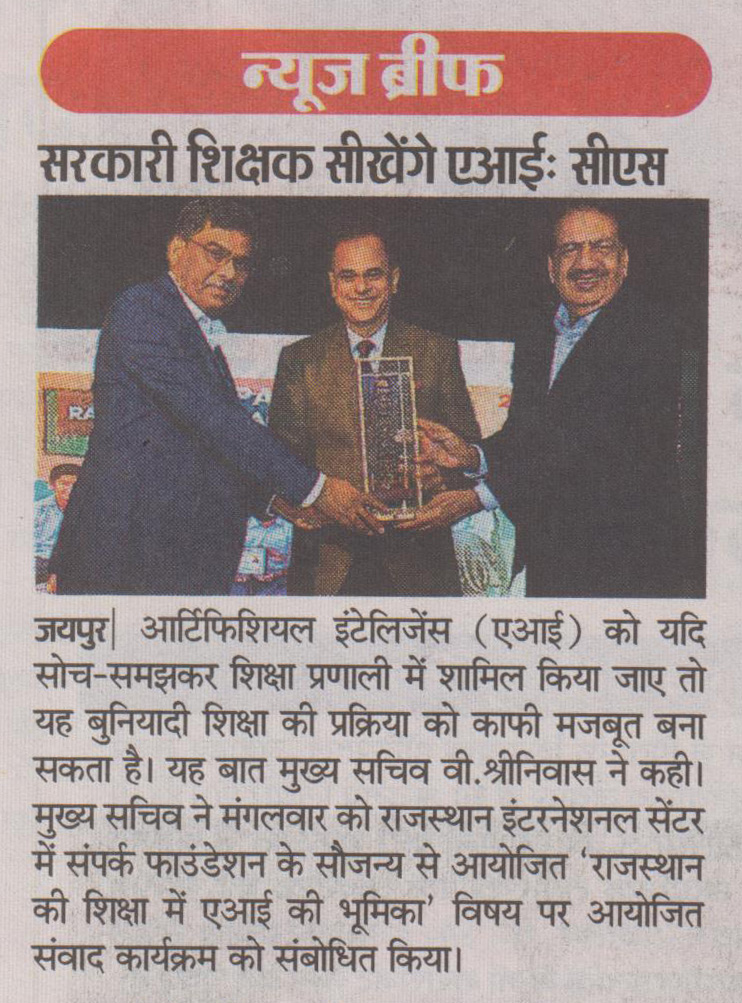
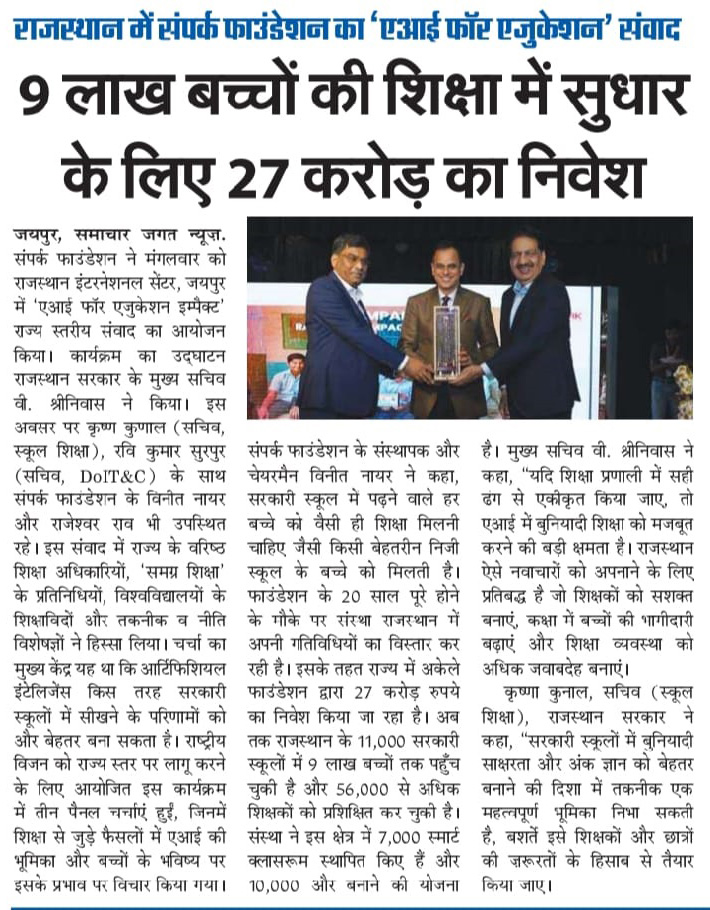
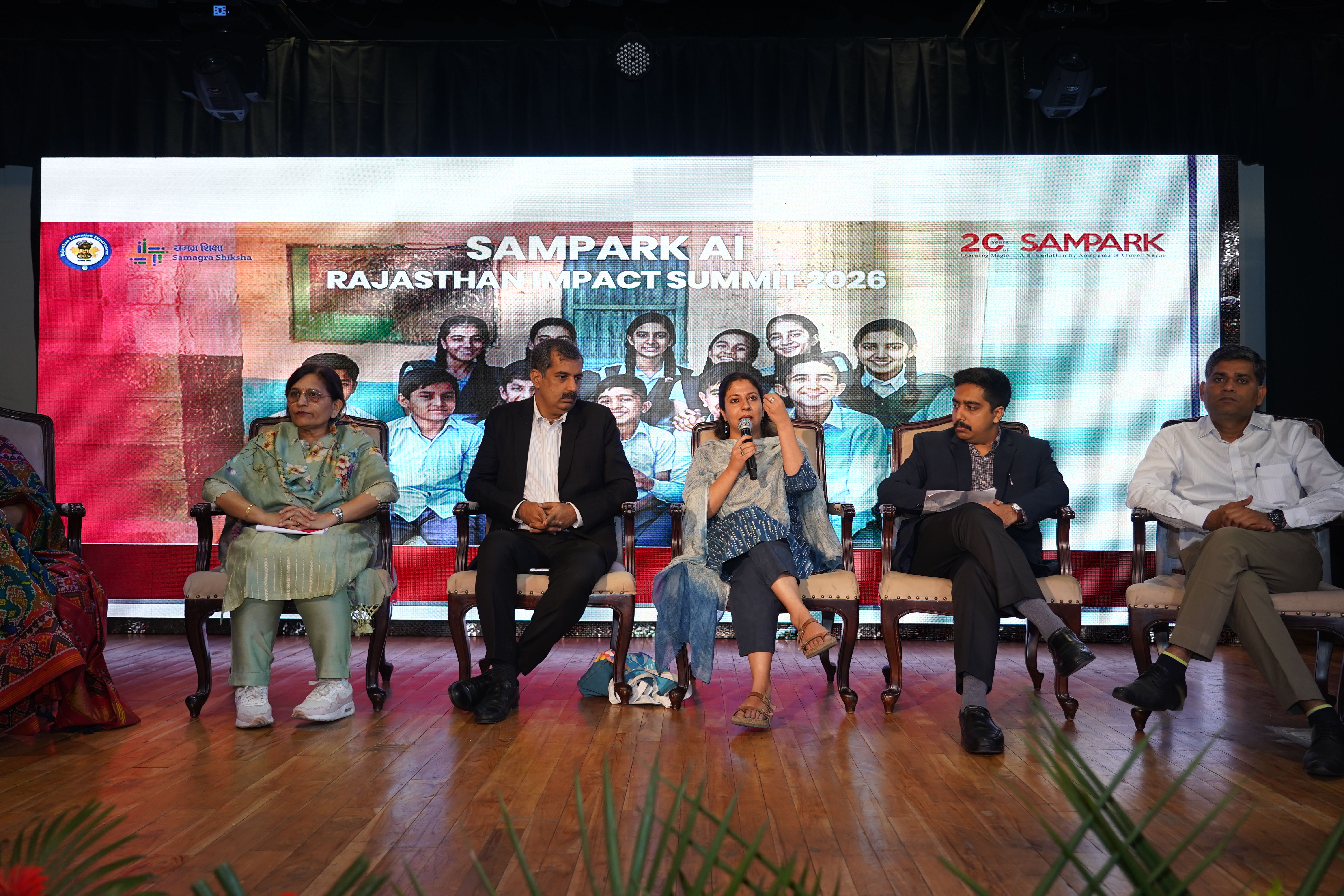
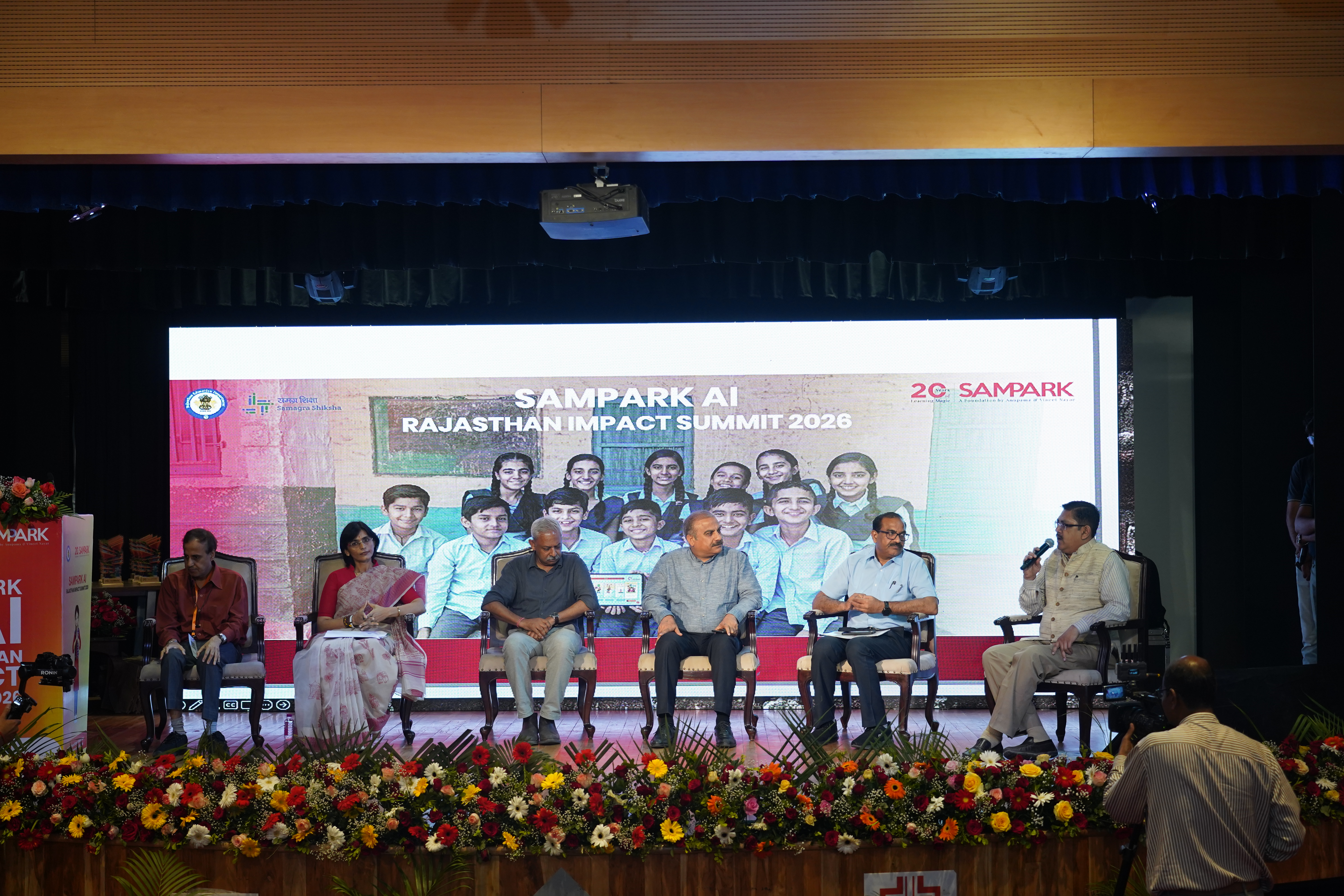
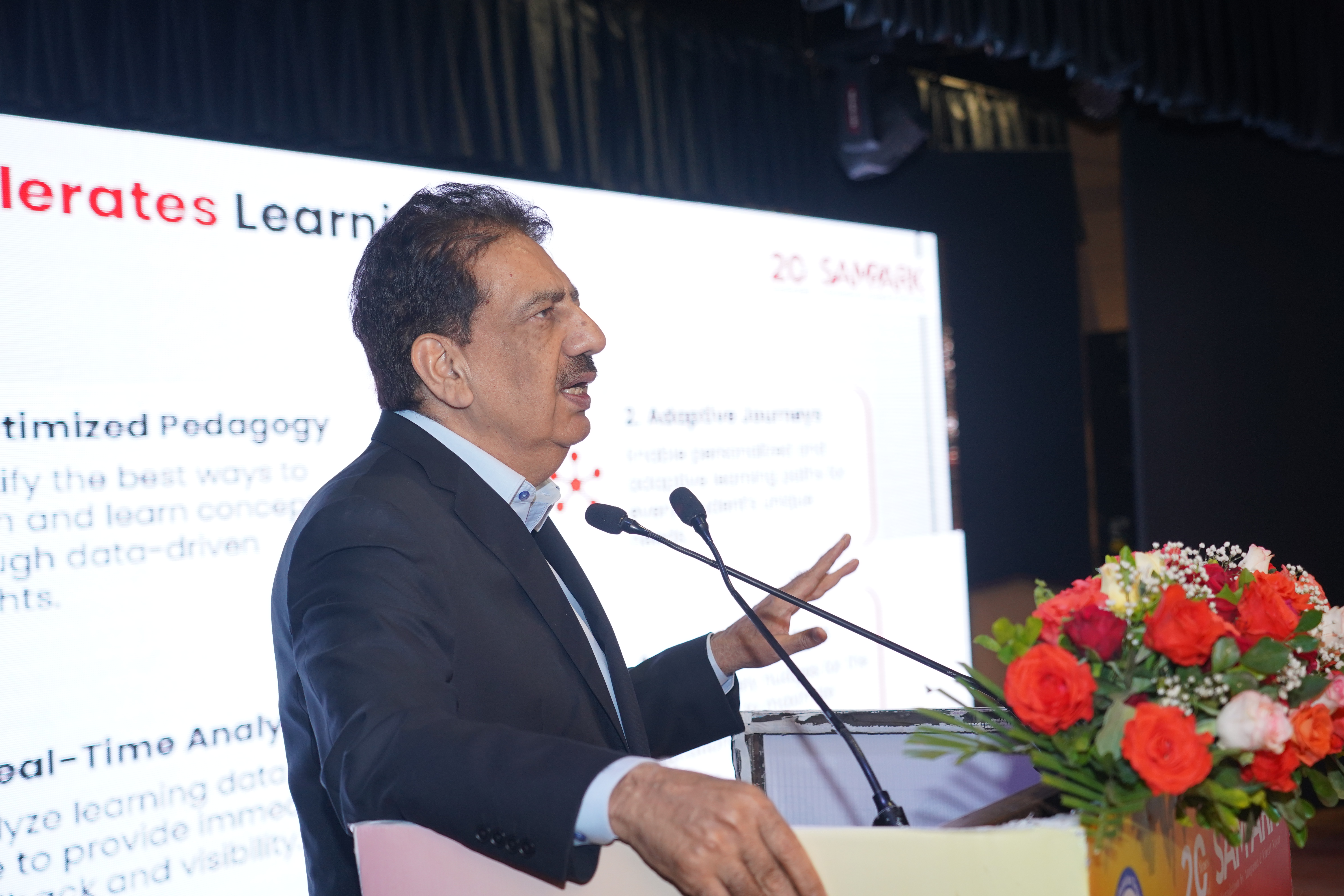
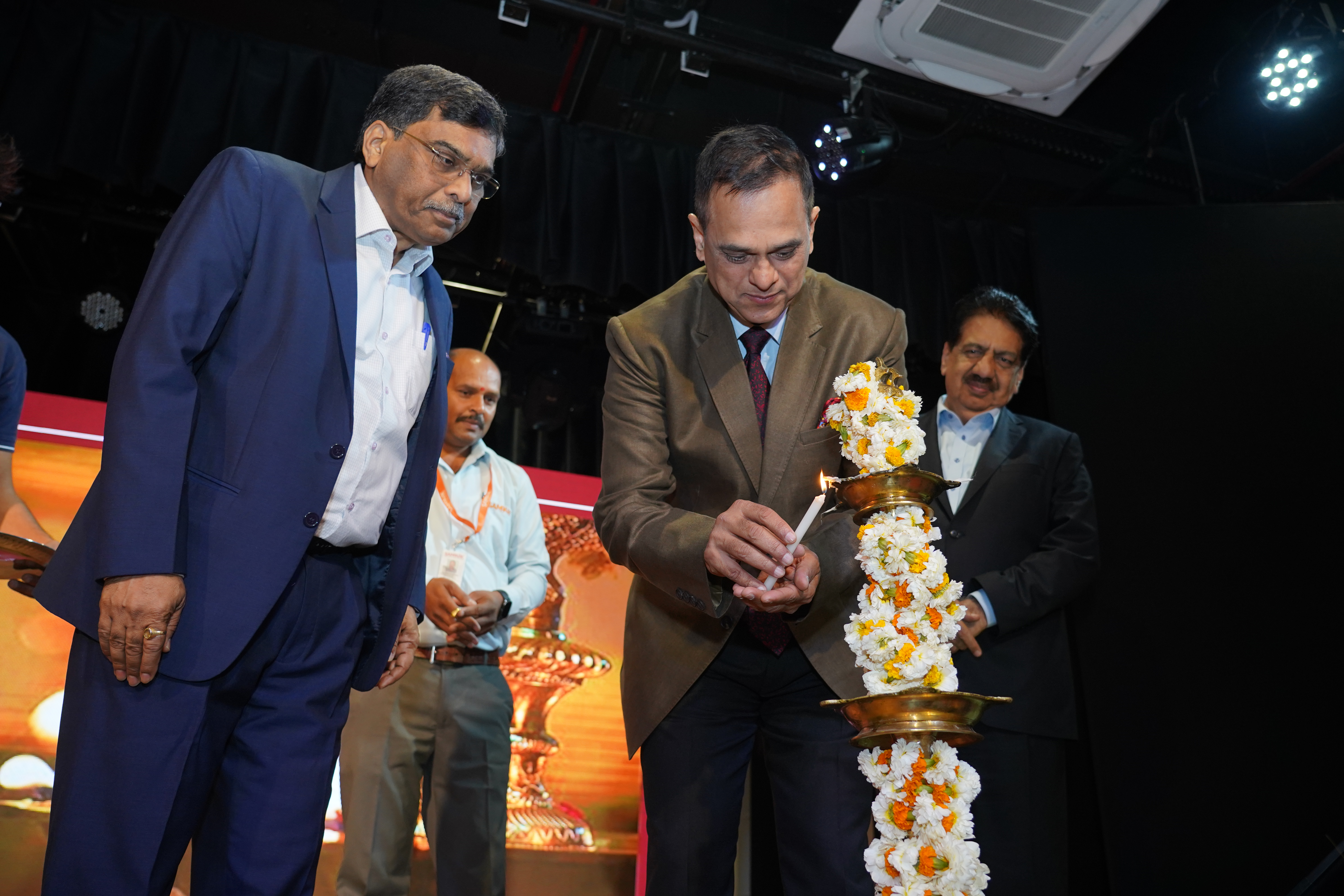
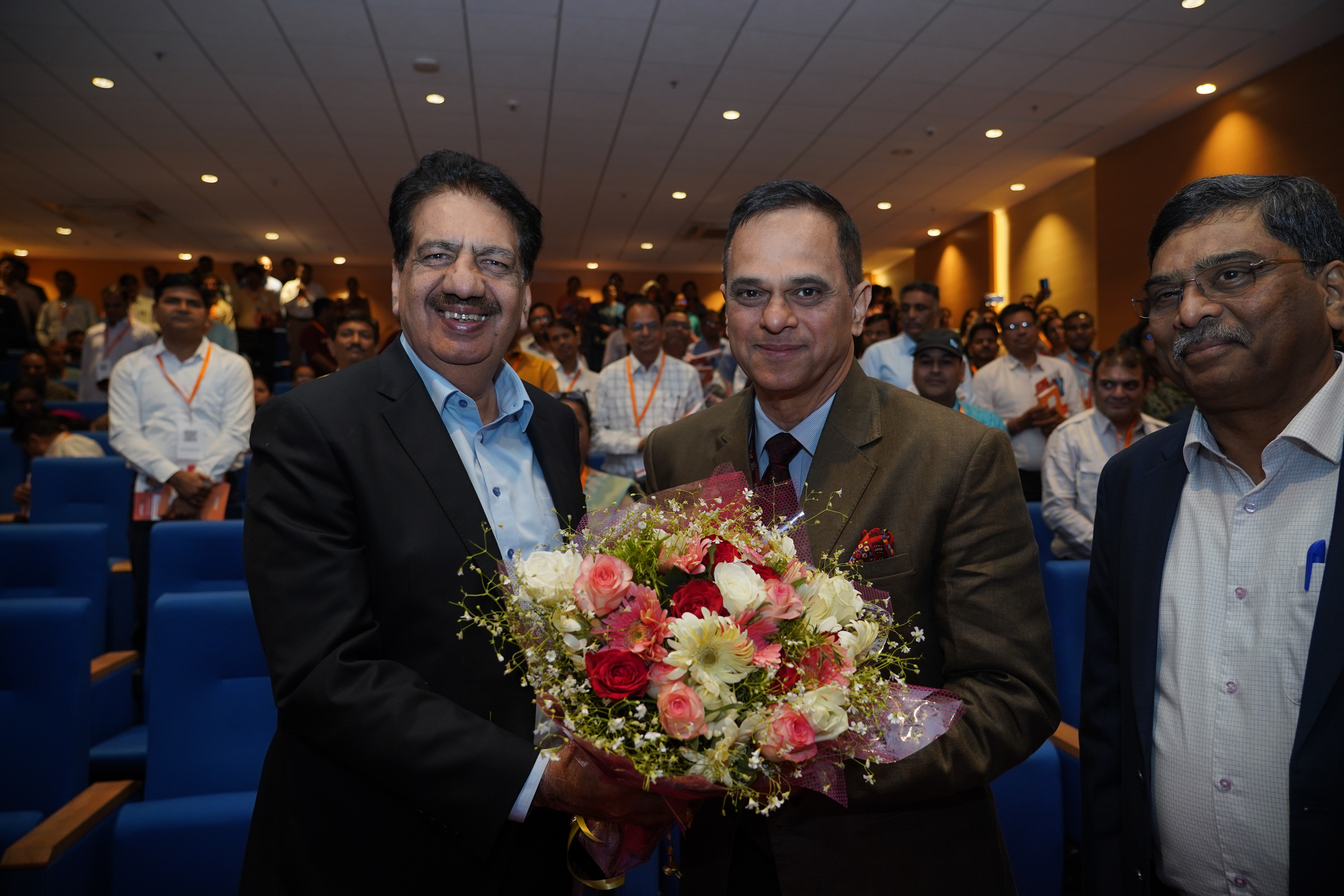
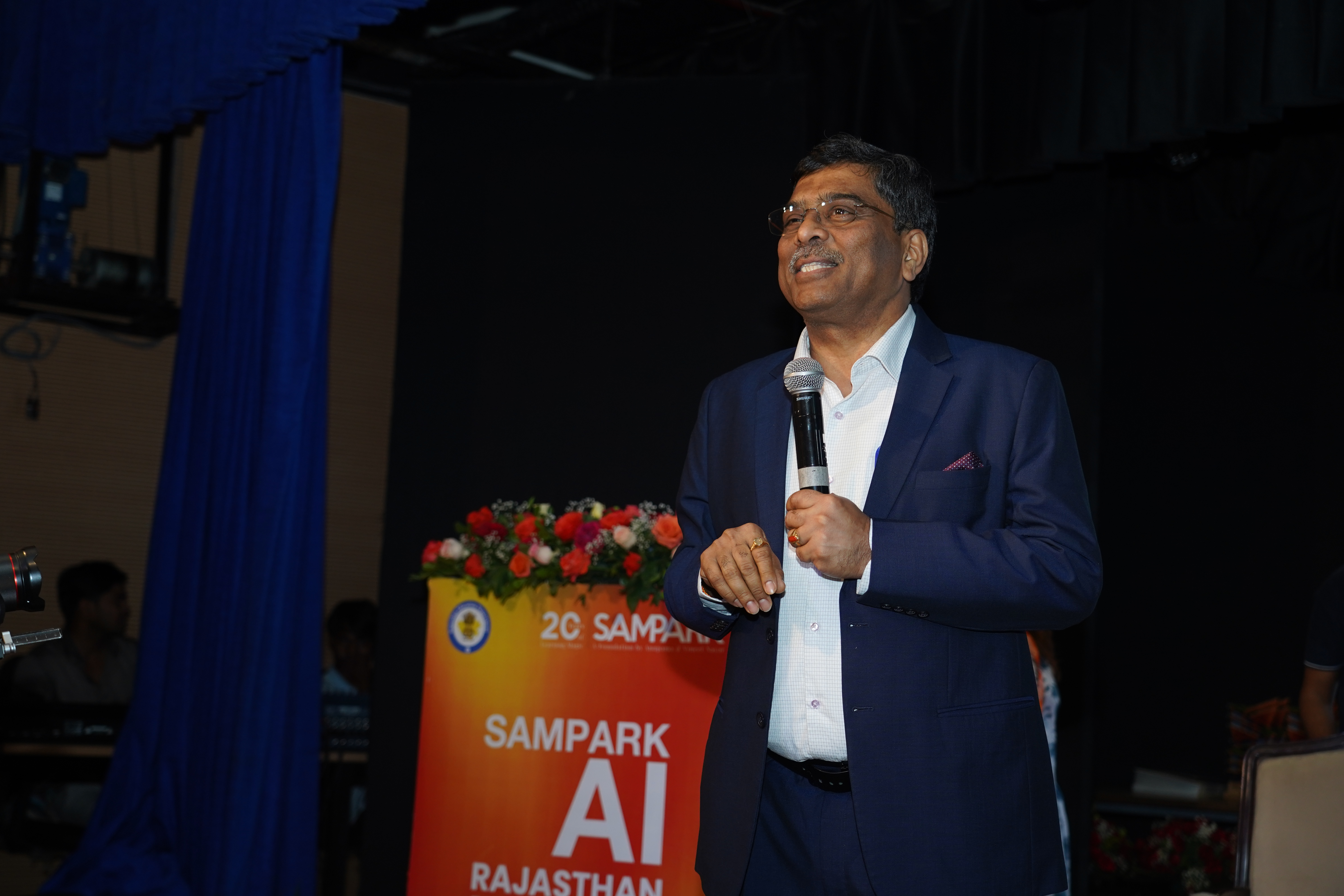
Sampark Foundation’s first AI Education Impact Summit, held in Jaipur, Rajasthan, brought together policymakers, educators, researchers, and practitioners to discuss how AI can meaningfully strengthen India’s education system.
Key Speakers
Chief Secretary Shri V. Srinivas,IAS
Secretary, School Education, Shri. Krishna Kunal, IAS
Founder-Chairman, Shri Vineet Nayar
President, Dr. K. Rajeswara Rao
Panel Topics Discussed
Where AI enhances learning outcomes
Putting teachers first in the AI era
Data that drives better decisions
After Story – Impact & Insights
Media Coverage

Voices from the Summit
Insights from education leaders
The Sampark AI model is an adaptive and teacher-led innovation which is transforming how learning reaches every school, every region. A paradigm shift where AI strengthens classrooms at scale without losing the teacher at the center. Let's bring AI-based school education into the 21st century.
Shri V. Srinivas
IAS, Chief Secretary – Govt. of Rajasthan
AI is powerful but not yet ready to be left alone with children. As AI continues to evolve, its role in classrooms must be guided, not independent. The real opportunity lies in using AI as a teacher's ally, not a replacement — ensuring it is supervised, contextual, and aligned with learning goals. Technology doesn't lead learning. Teachers do.
Vineet Nayar
Founder Chairman, Sampark Foundation
Sampark Didi Ke Sawaal has become every child's favourite — like Alexa or Siri, but for learning. With initiatives like PAL (Personalized Adaptive Learning), the shift is clear: moving beyond old models to empower the Alpha generation to learn at their own pace in their own way. This isn't just innovation. It's a transformation in how India learns.
Dr. Parmod Kumar
State Programme Officer, Directorate of School Education, Haryana
Language should never be a barrier to learning. Multilingual AI tools in education make content more accessible, inclusive, and effective for diverse learners. When technology speaks the learner's language, outcomes don't just improve — learning becomes truly equitable.
Dr. Navneet Goyal
Senior Professor, Department of Computer Science, BITS Pilani
Every child's foundation is shaped by a teacher. While AI and technology can support learning, the true pivot of education will always be the teacher. I studied at a government school and became an IAS because of my teachers — a powerful testament to the role they play in shaping lives. Teachers are not just part of the system, they are its backbone. Supporting them is the key to transforming education.
Dr. K. Rajeswara Rao
Retd. IAS & President, Sampark Foundation
AI is no longer just a tool — it's a disruptor reshaping education. Rajasthan's focused efforts through learning campaigns and large-scale assessments are strengthening foundational outcomes. AI must augment thinking, not replace it. Over-dependence risks weakening cognitive abilities, making the shift to critical thinking more urgent than ever. With digital innovation and Sampark's expansion, Rajasthan is building a purpose-driven, future-ready education system aligned with Viksit Bharat.
Shri Krishna Kunal
IAS, Secretary, School Education Dept., Govt. of Rajasthan
Completed
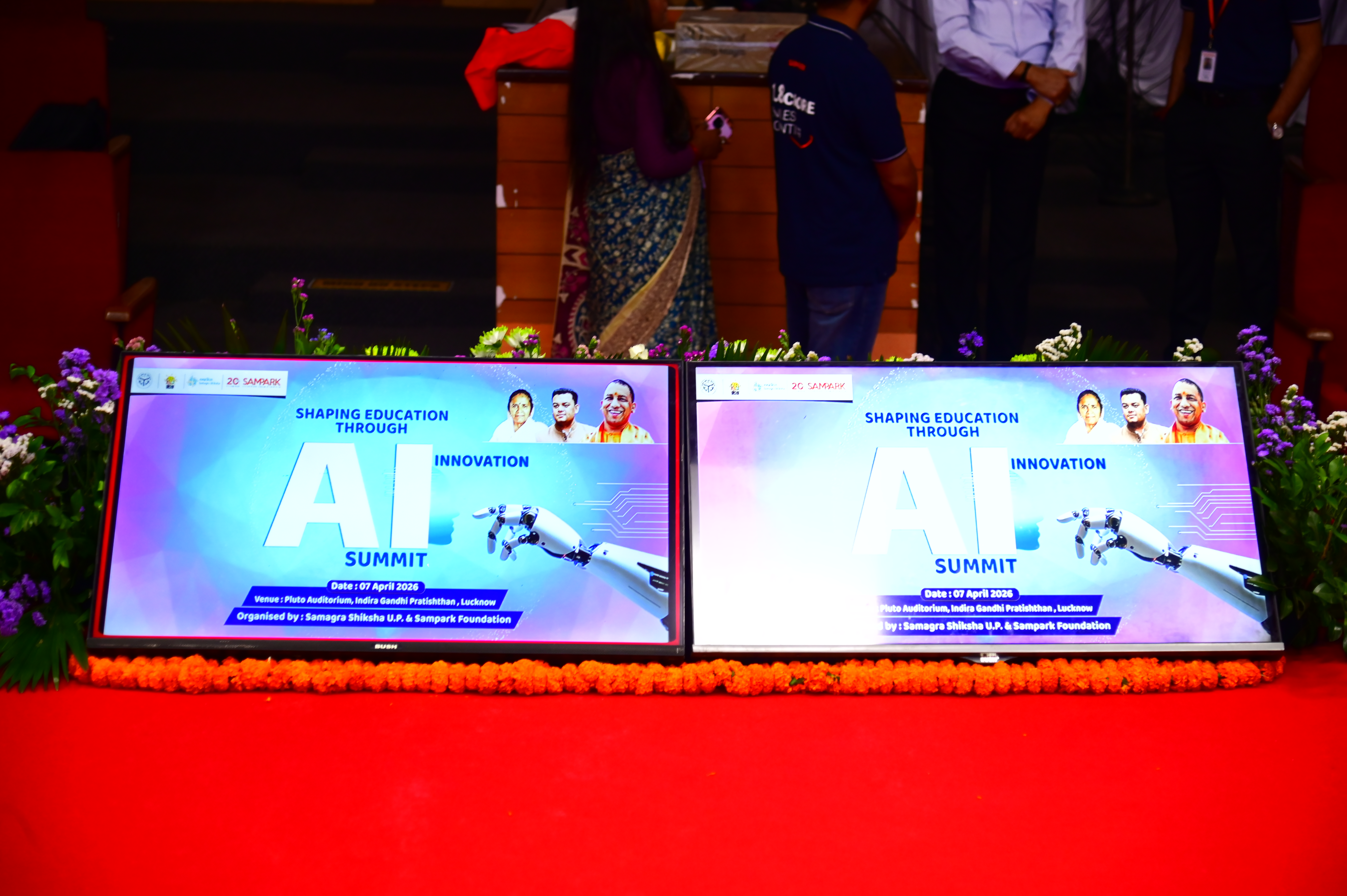
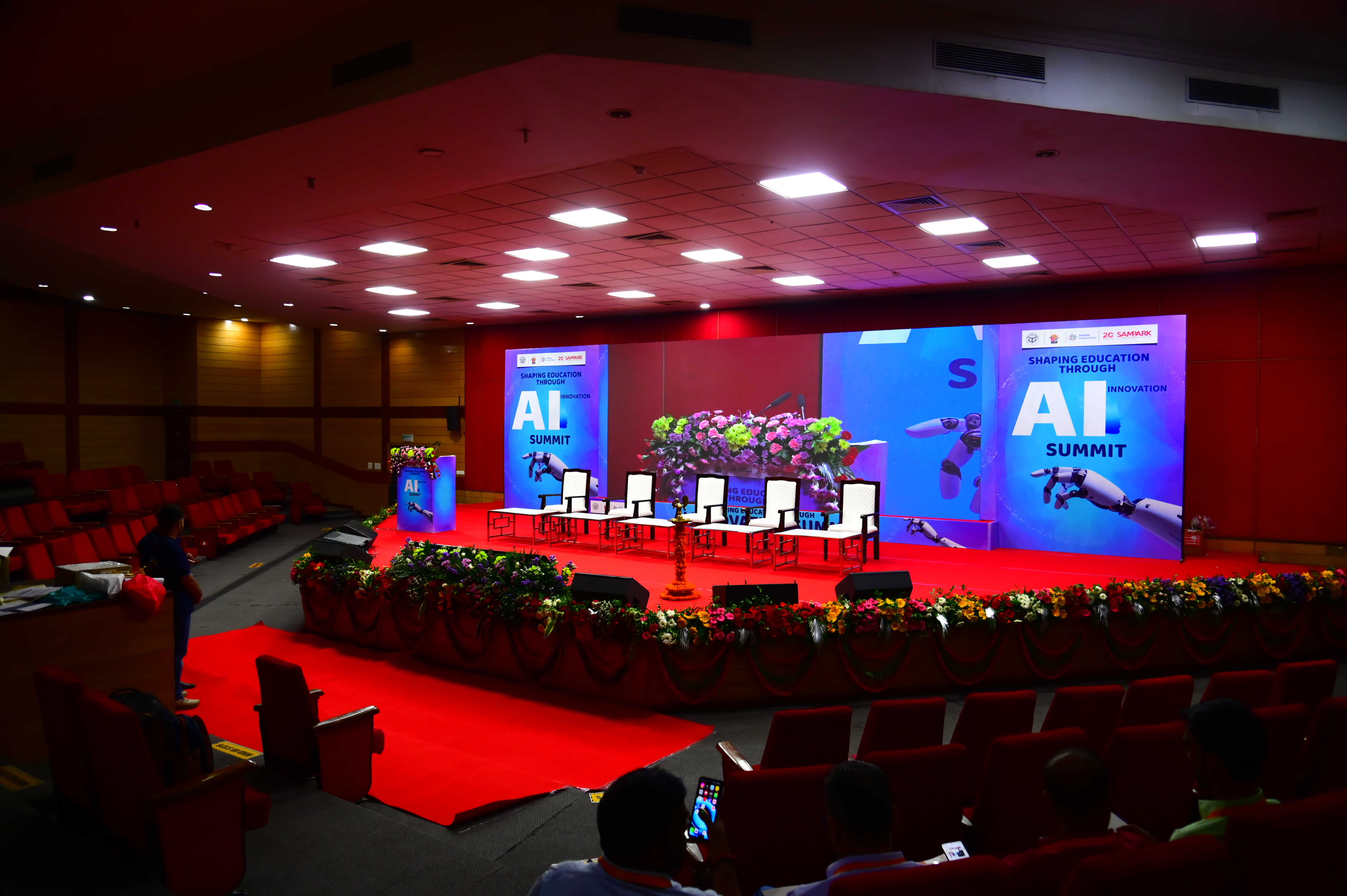
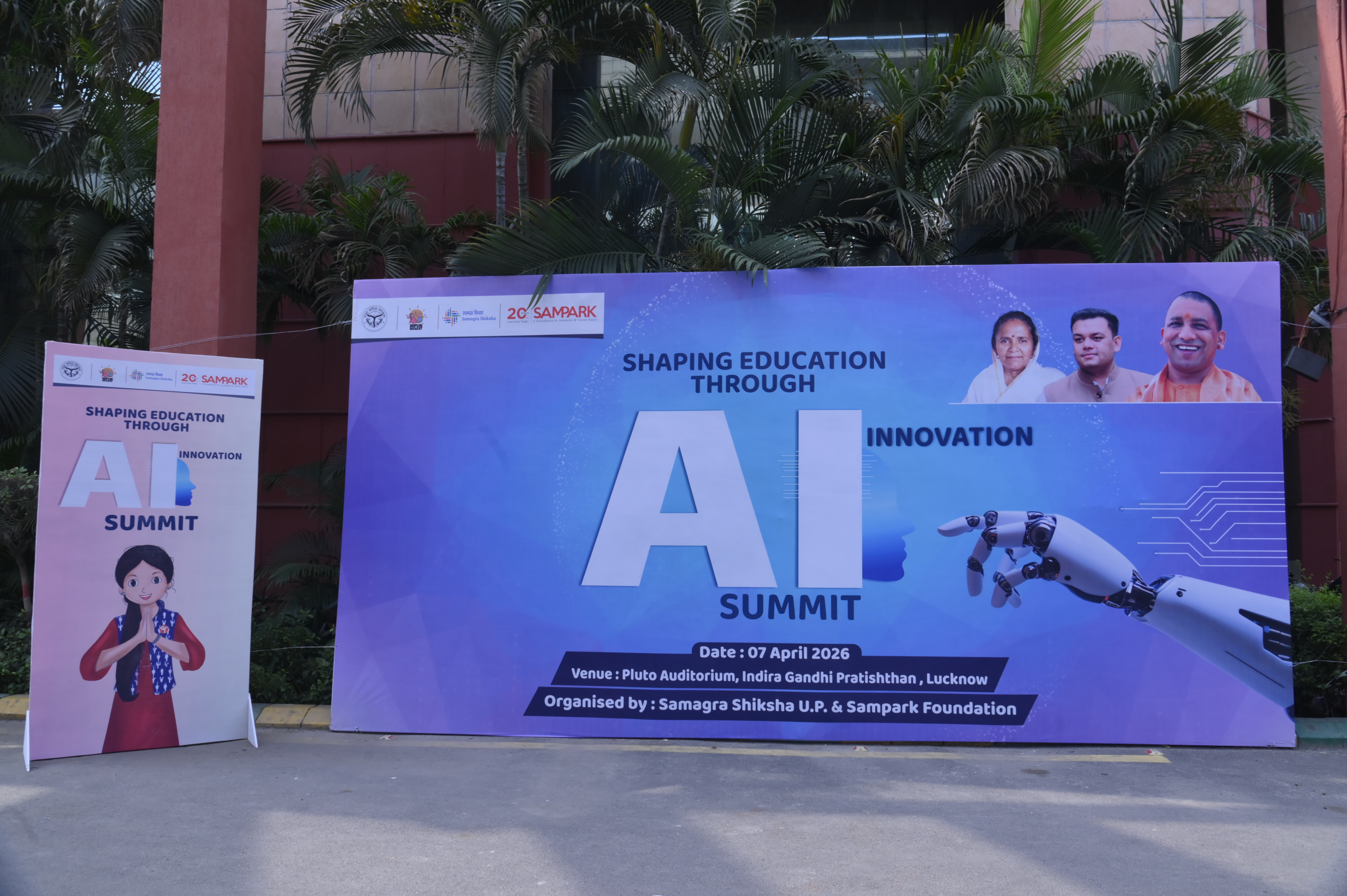
7th April, 2026
Uttar Pradesh
Can AI truly transform learning outcomes in India?
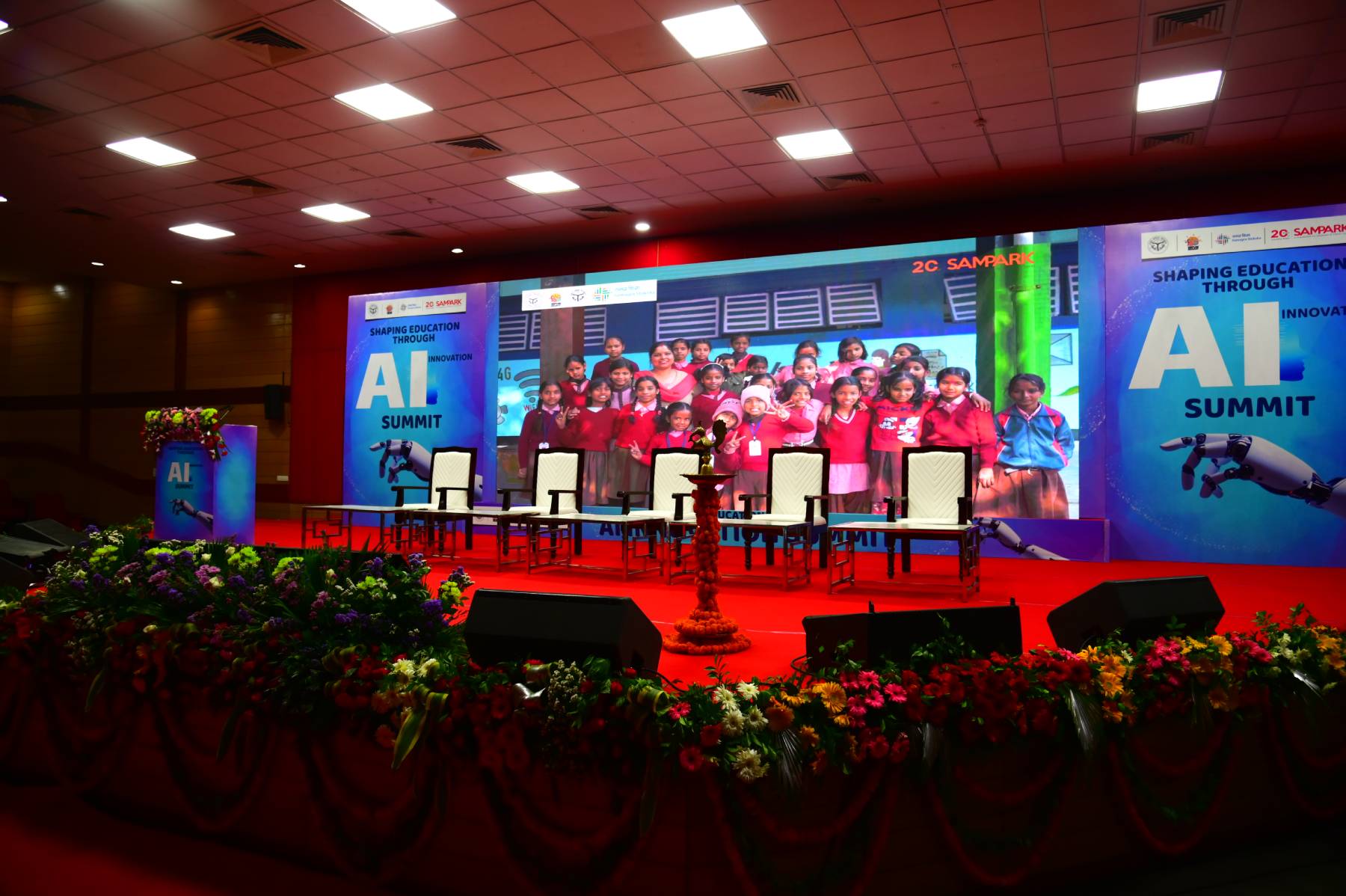
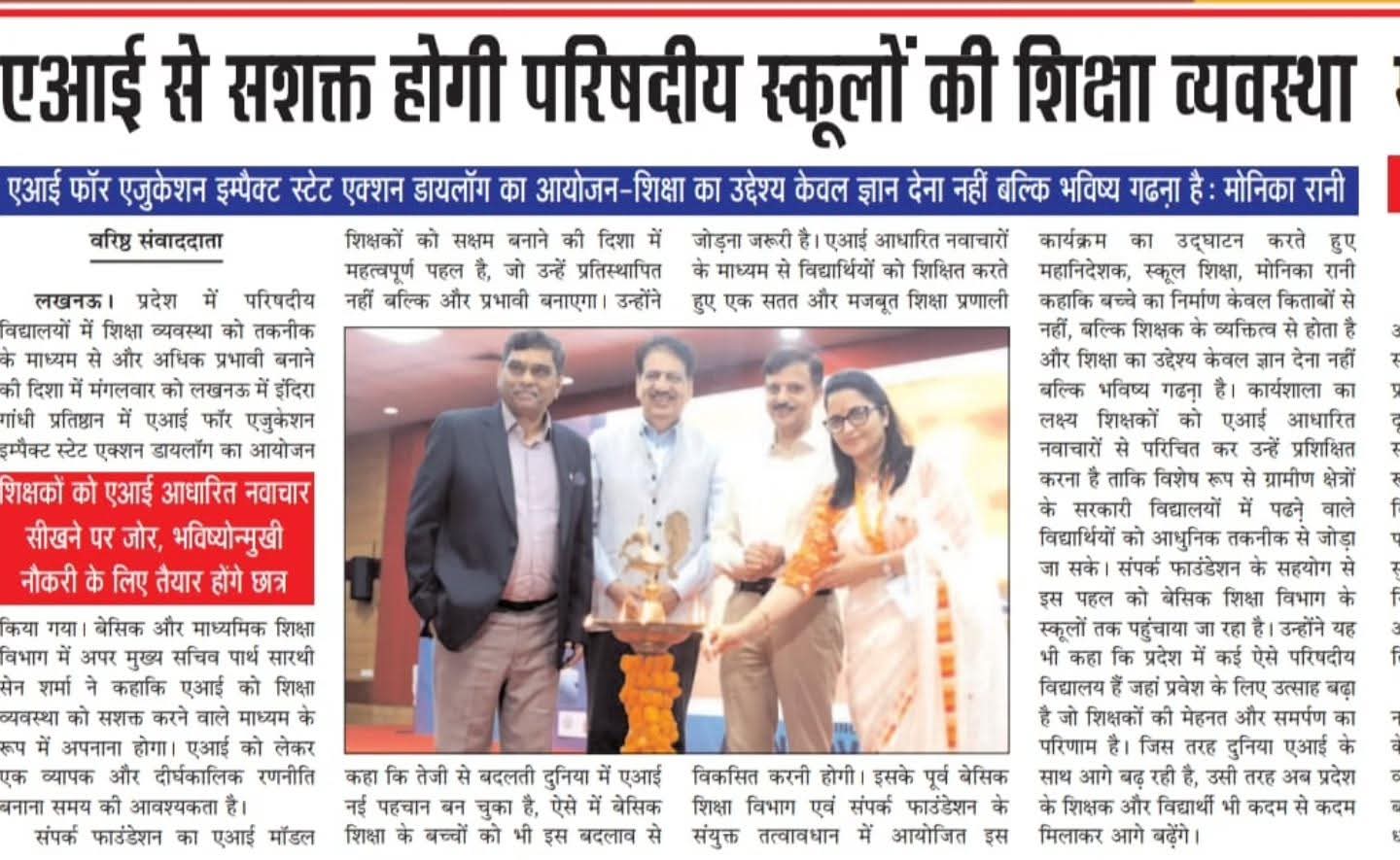
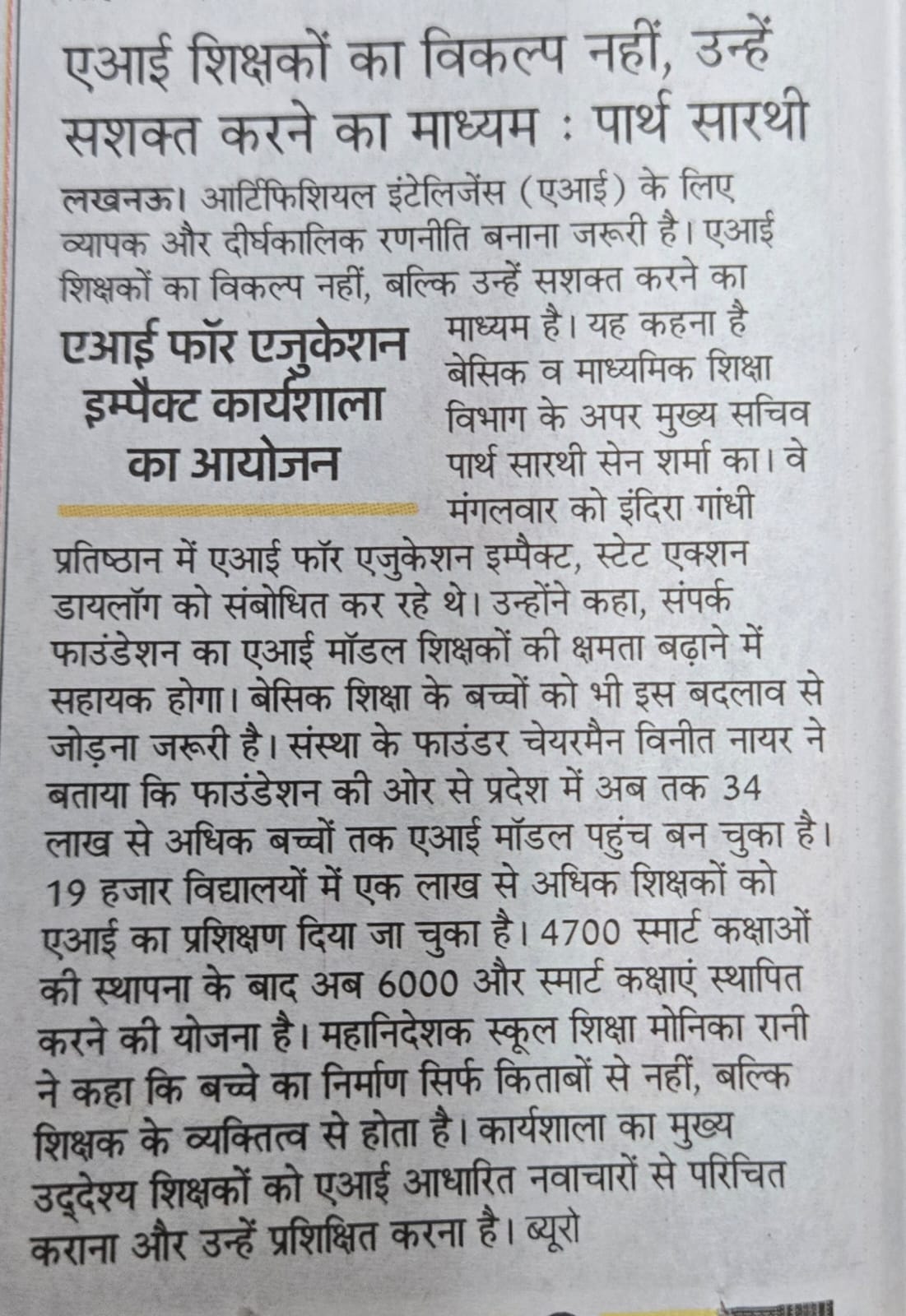
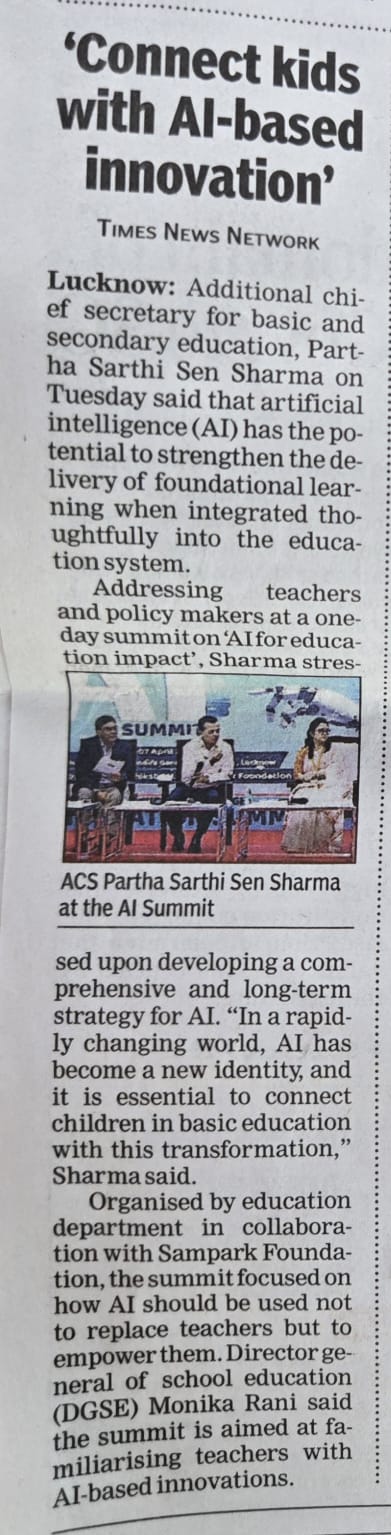
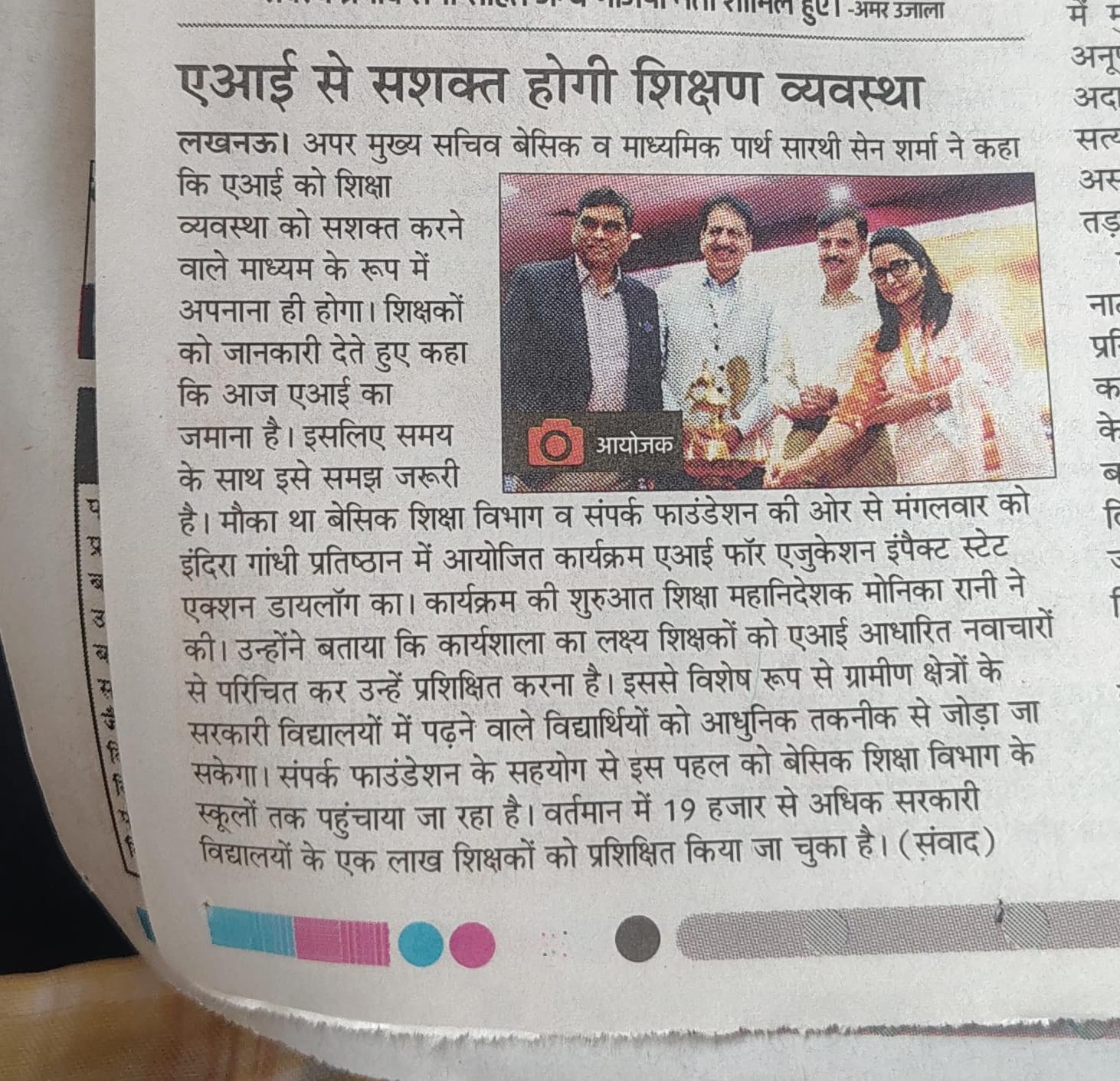
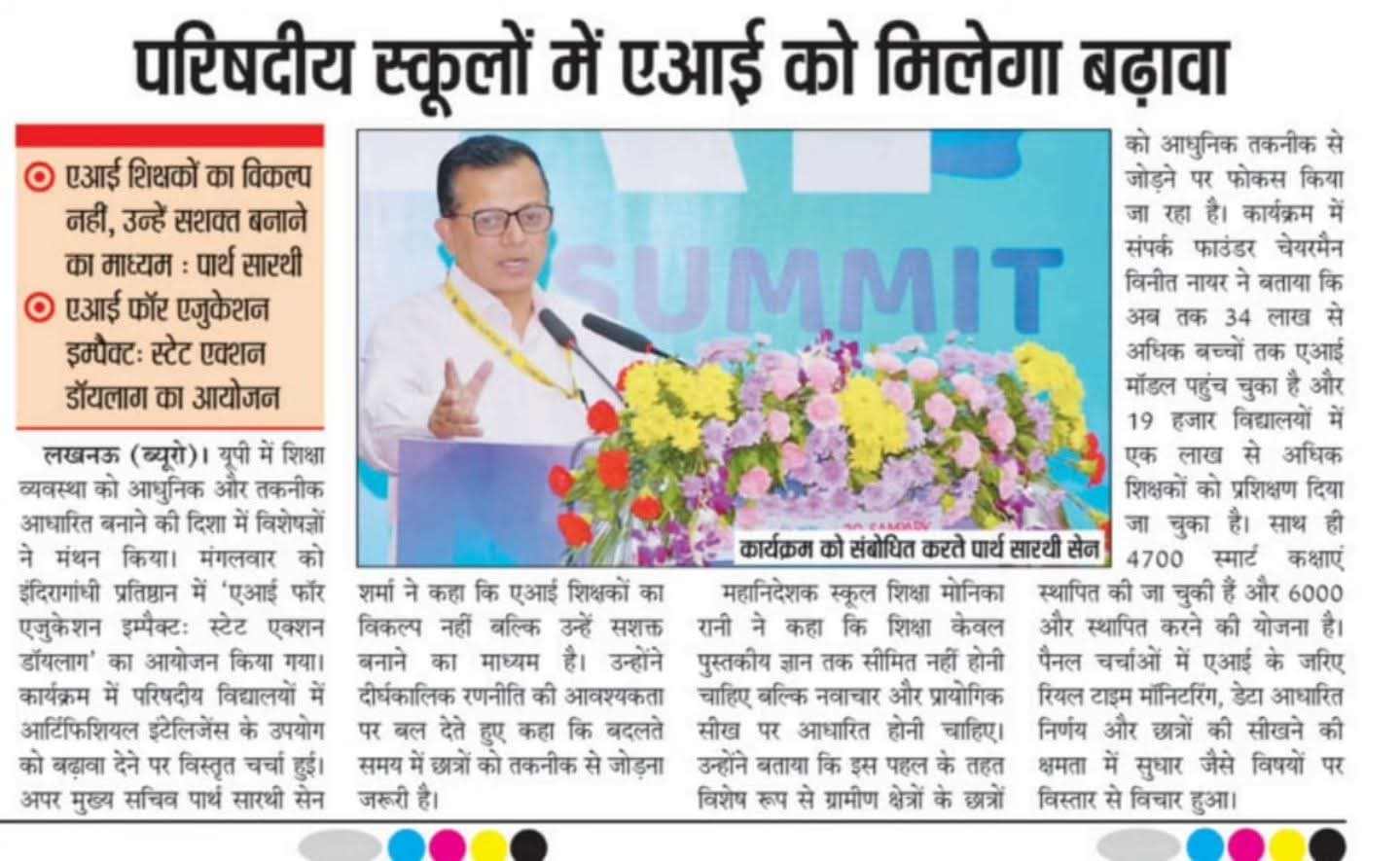
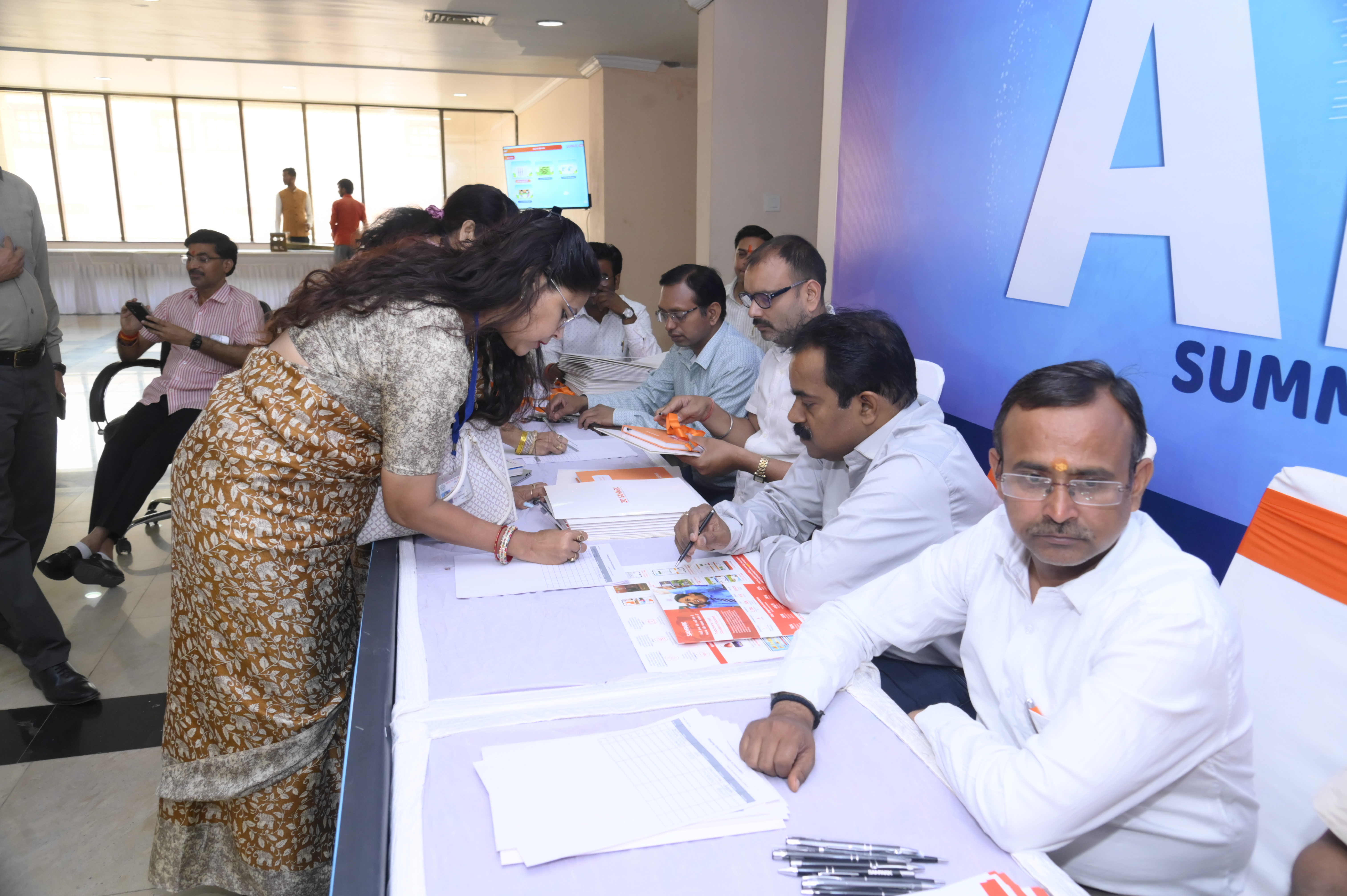
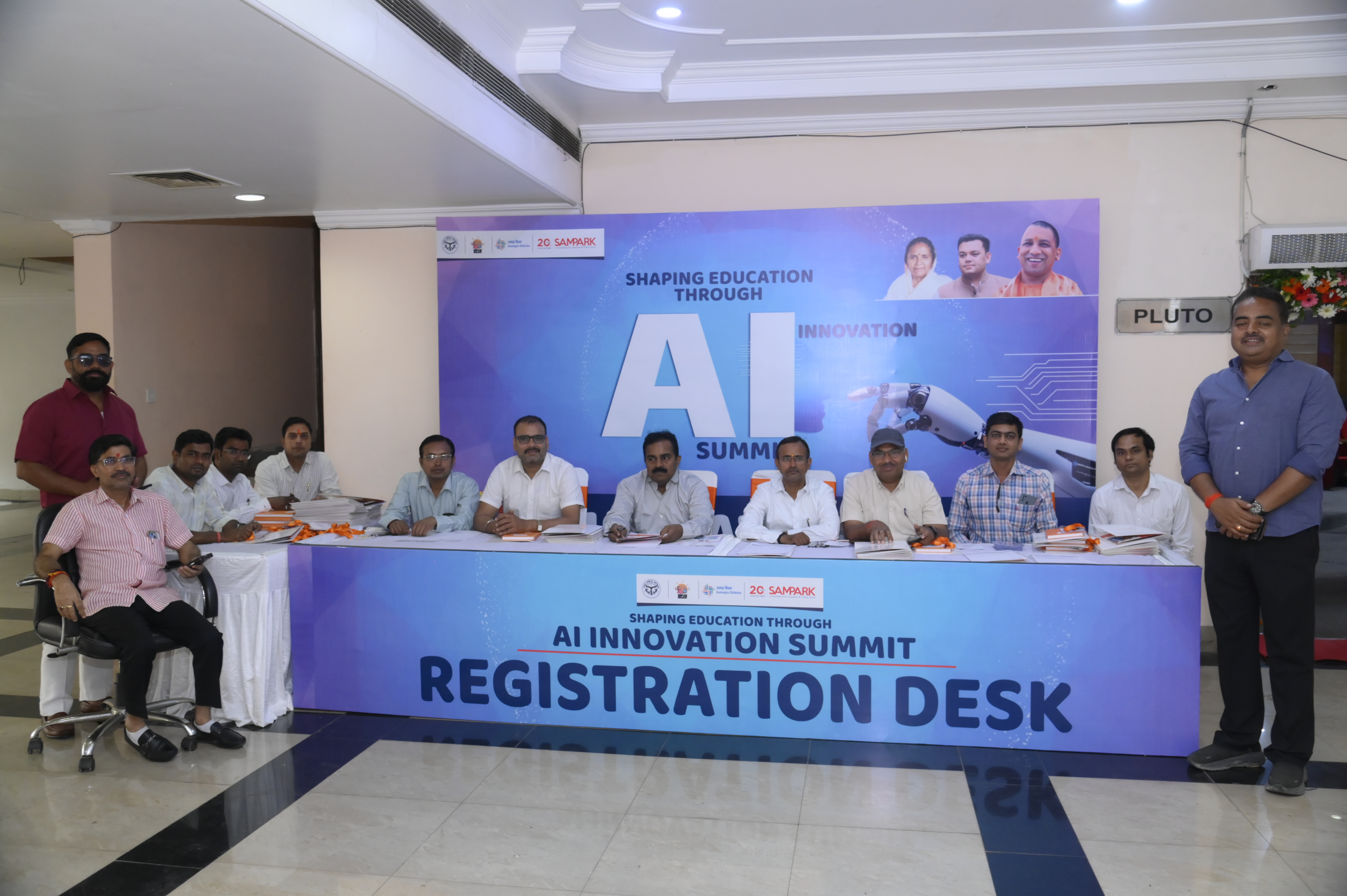
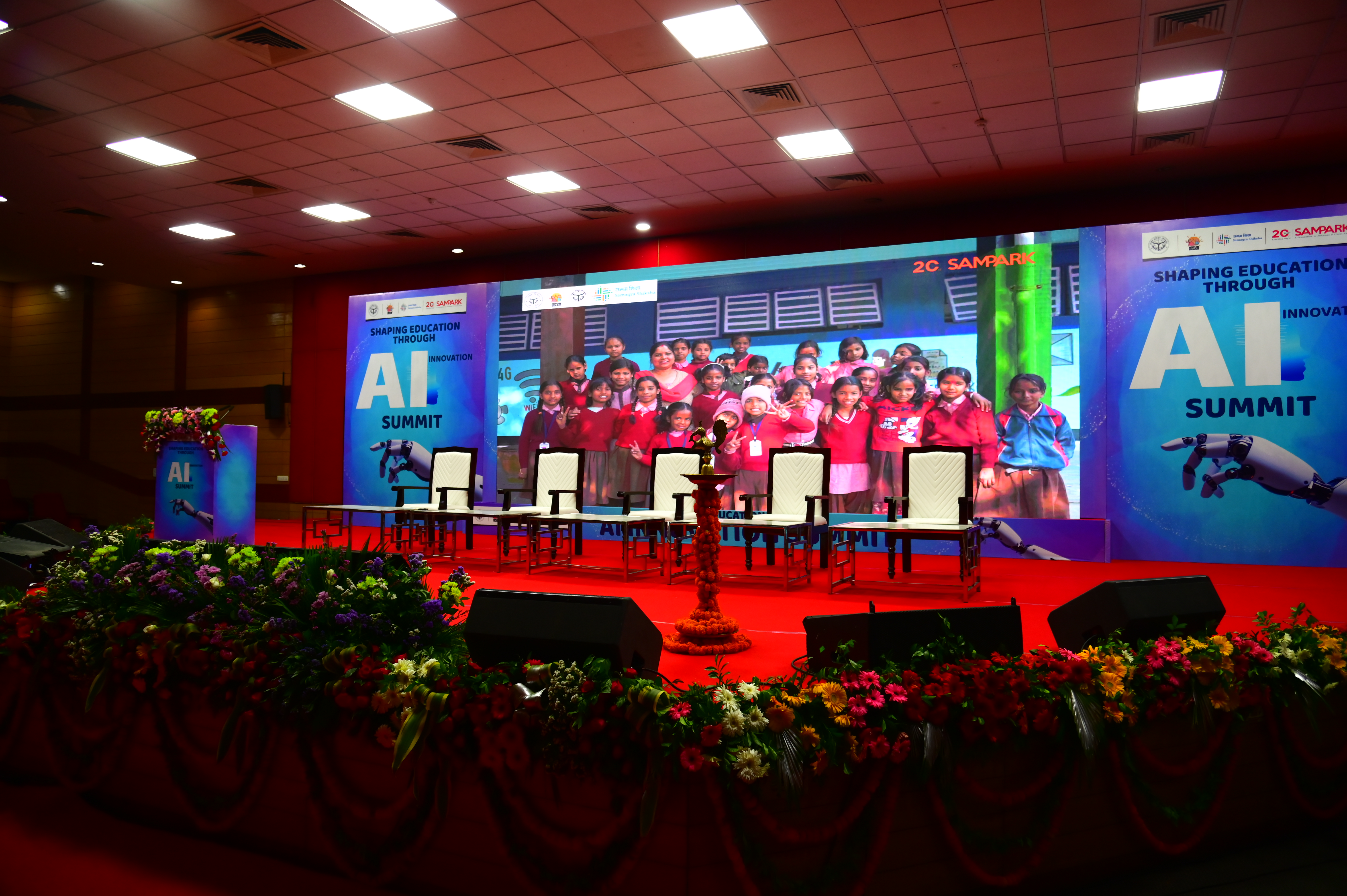
Sampark Foundation’s inaugural AI Education Impact Summit in Lucknow, Uttar Pradesh, convened policymakers, educators, researchers, and practitioners to examine how AI can effectively strengthen India’s education system.
Key Speakers
Shri Partha Sarthi Sensharma, IAS, ACS, Basic and Secondary Education, UP
Smt. Monika Rani, IAS, Director General School Education, UP
Founder-Chairman, Shri Vineet Nayar
President, Dr K. Rajeswara Rao
How AI can improve learning outcomes
Prioritizing teachers in the AI era
Data that enables effective governance
After Story – Impact & Insights
Media Coverage
Voices from the Summit
Insights from education leaders
AI in education is not about replacing the human in the room — it is about building institutions that are future-ready. The teacher remains the most critical variable in any learning outcome. Technology must serve that variable, not substitute it.
Dr. Arun Mohan Sherry
Director, IIIT Lucknow
AI is moving fast and as administrators, teachers, and principals, it is our responsibility to learn and extend our capacities. On the ground, the government depends on teachers to execute its vision. AI must make that easier, not harder.
Vishnukant Pandey
ASPD Secondary Education, Samagra Shiksha
In this world of uncertainty, we can have faith in natural intelligence and trust that AI can never replace love and care. Hence, in the context of pedagogy, I can say that- 'A teacher in UP's government school system in 2030 will use AI to scaffold learning but will never be replaced by AI when it comes to caring for learning and nurturing empathy'.
Prof Anveshna
I had the distinct honour of sharing a stage with Vineet and senior government leaders at the Uttar Pradesh AI Summit 2026 in Lucknow - marking 20 years of Sampark Foundation's extraordinary work in education. Every use case must feed the state's AI Brain. Real-time assessments, teacher support, learning gap detection - none of these should exist in isolation. Each must feed one common intelligence.
Sandeep Haridkar
We have decades of research showing that operational efficiency transforms outcomes. Teachers spending 81% of their time on administration is not a teaching problem - it is a systems problem. AI is the intervention that fixes the system so the teacher can do what only a teacher can do.
Prof. Suresh K. Jakhar
IIM Lucknow
Completed
17th April, 2026
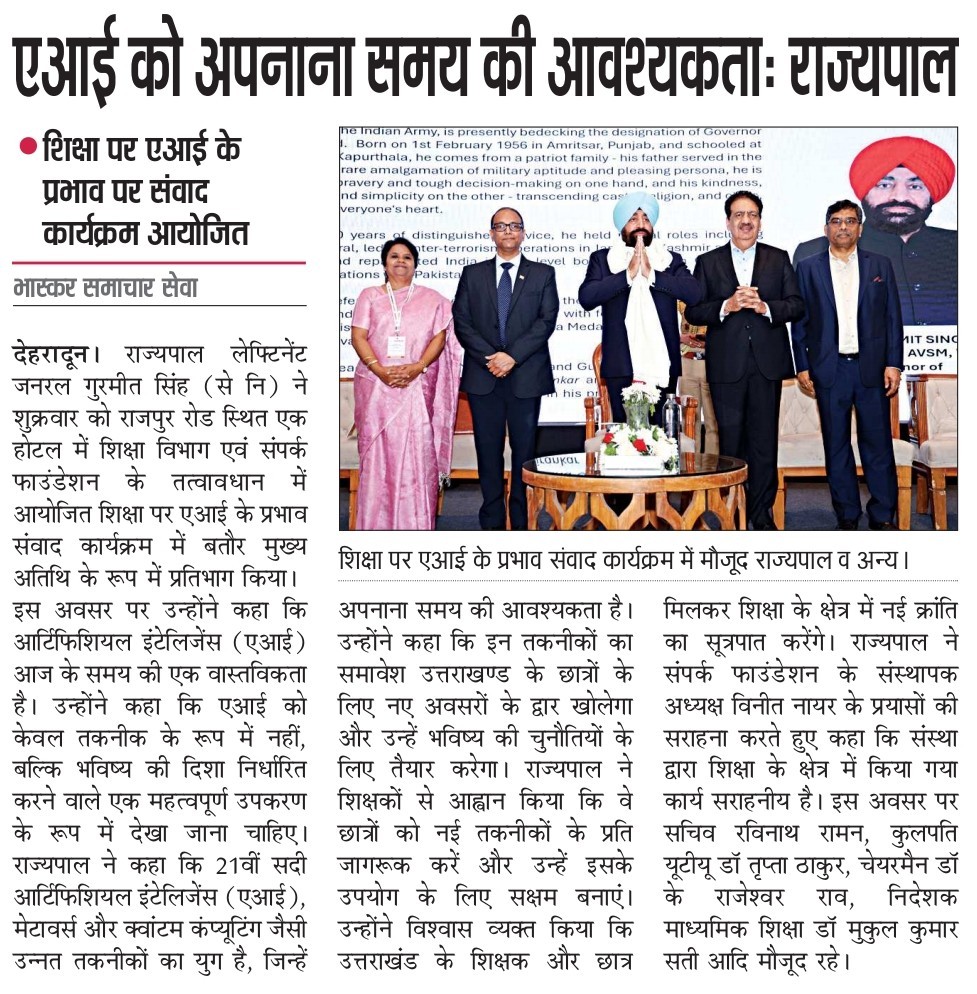
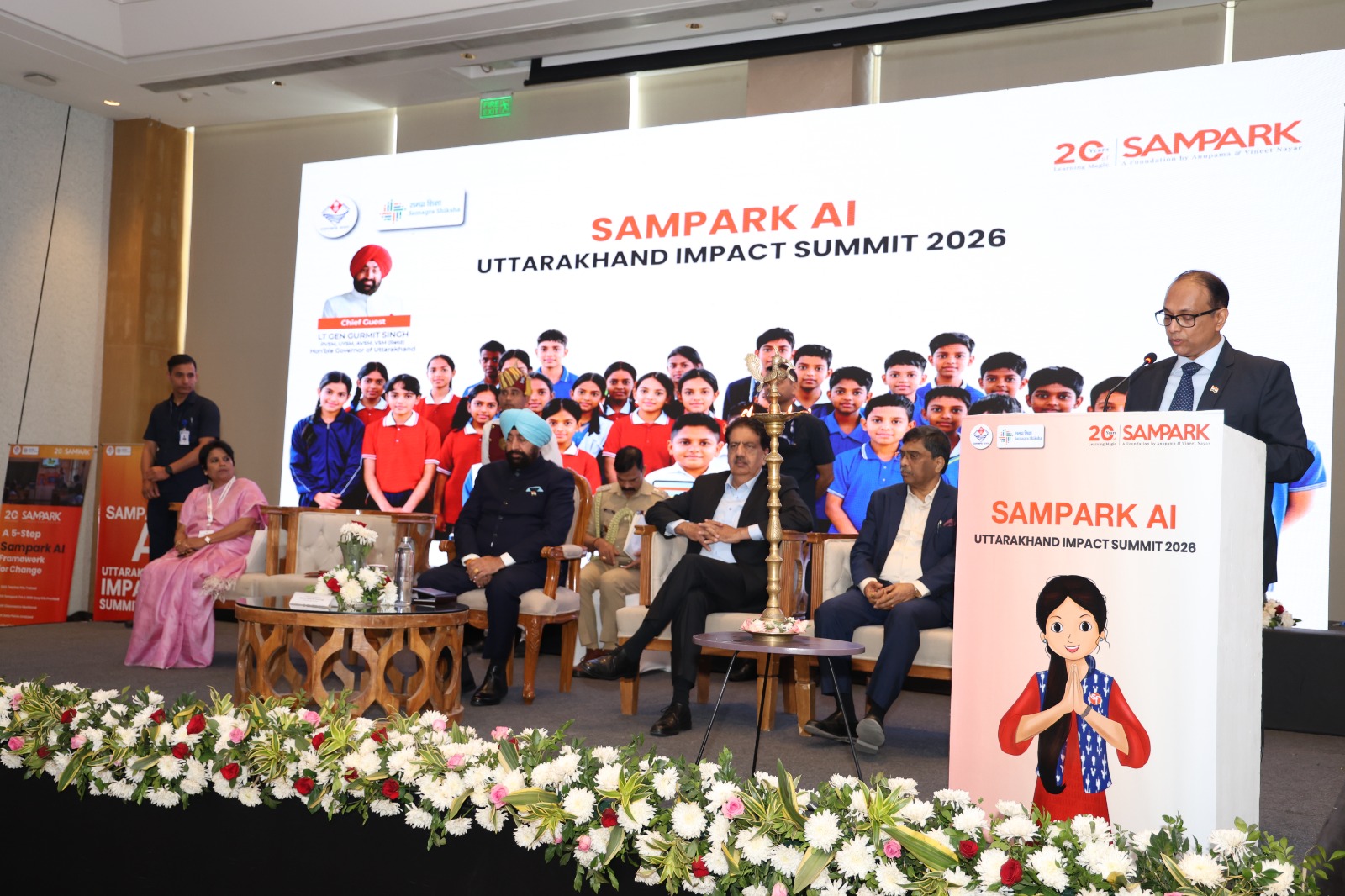
Uttarakhand
Can AI meaningfully improve learning outcomes in India?
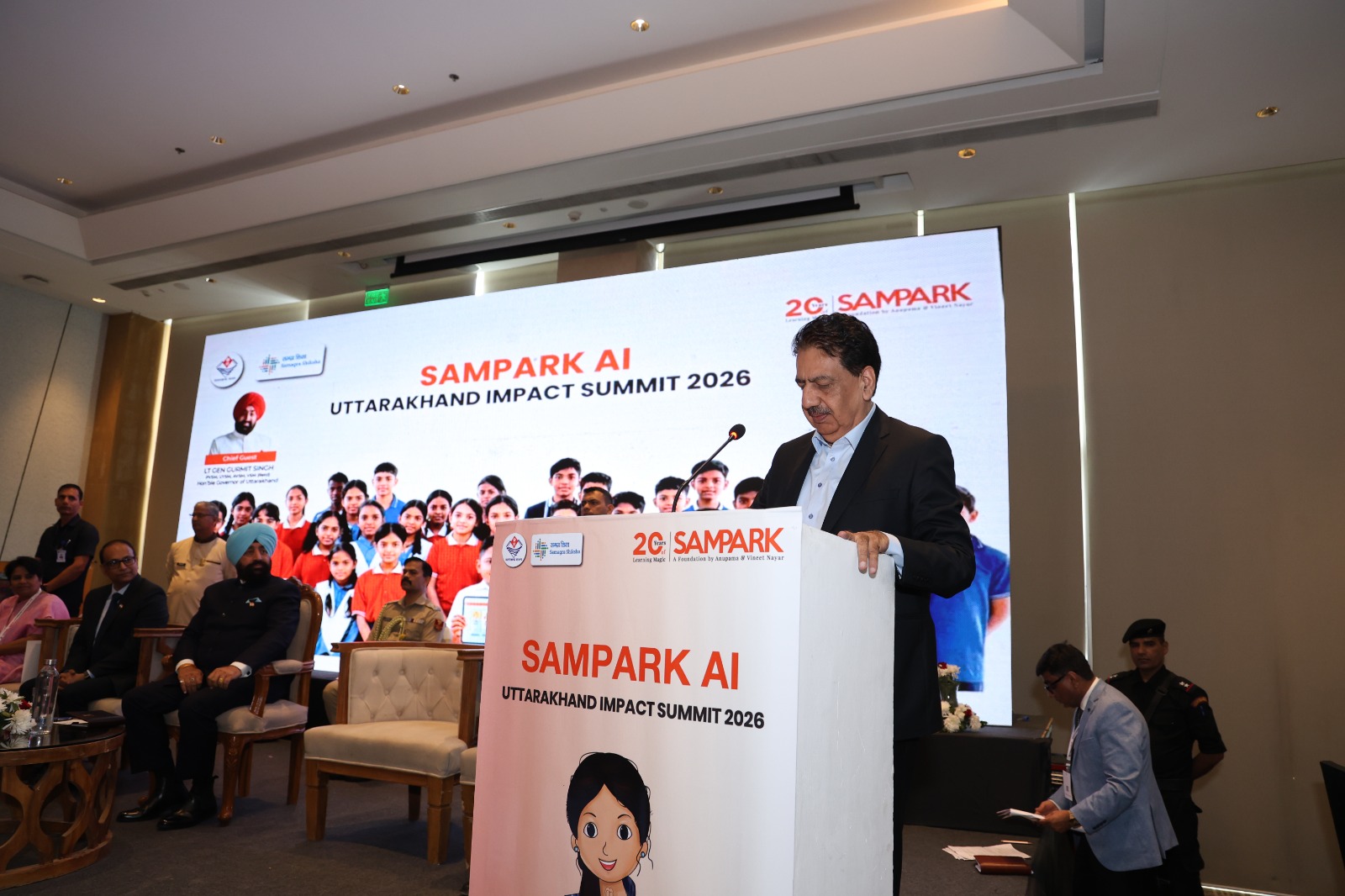
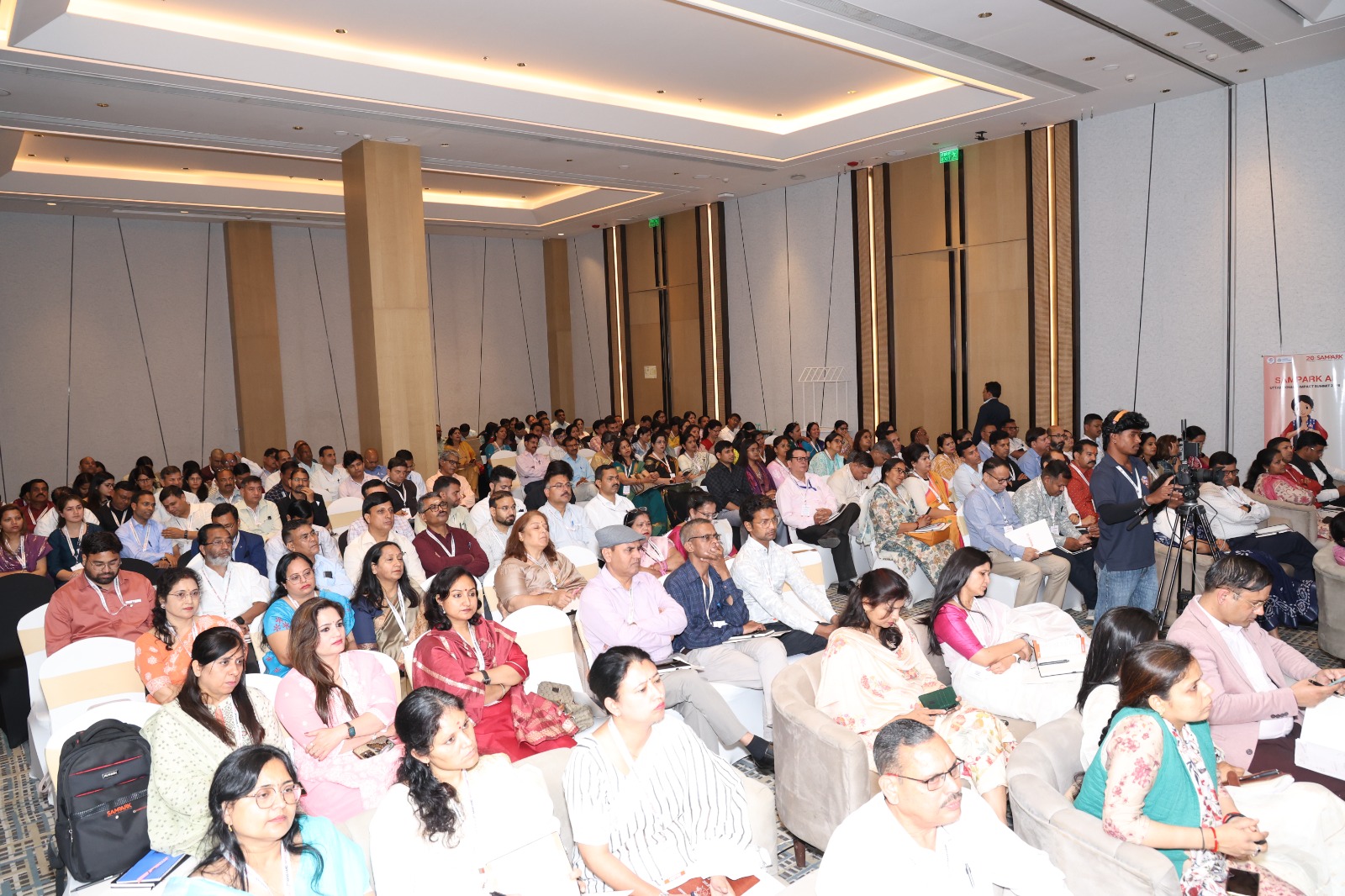
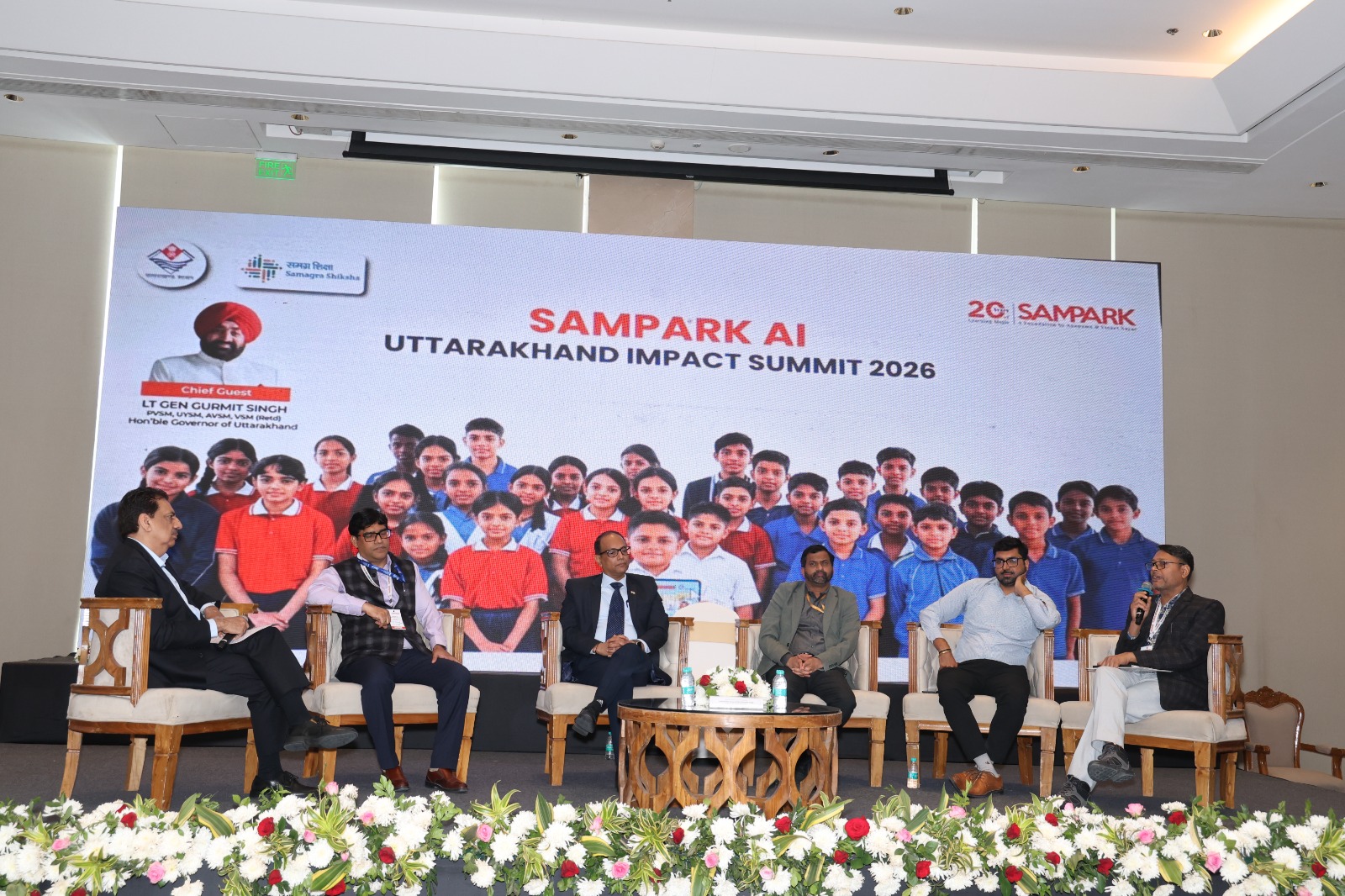
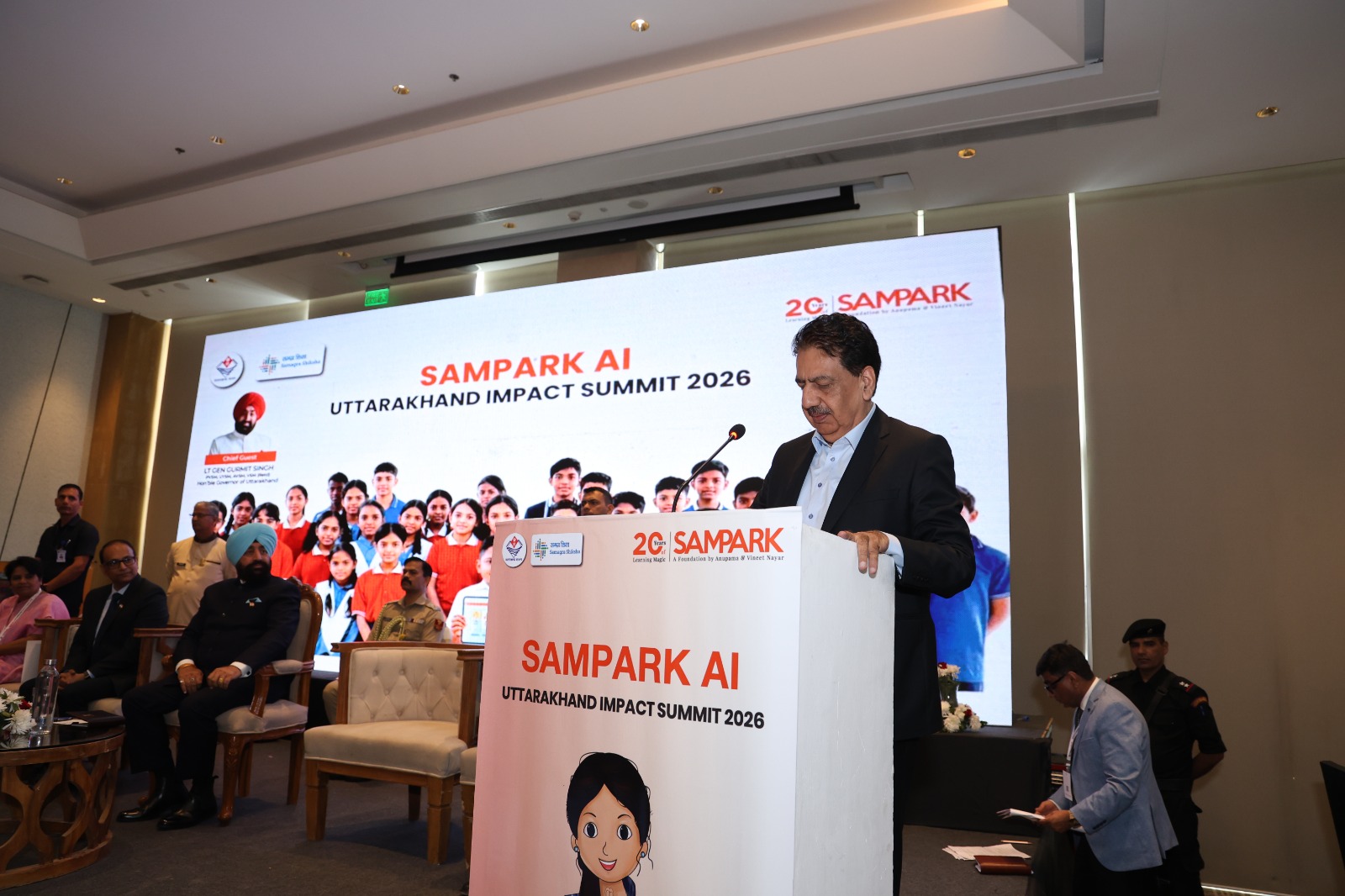
Sampark Foundation’s first AI Education Impact Summit in Mussoorie, Uttarakhand, brought together policymakers, educators, researchers, and experts to discuss how AI can help improve India’s education system.
Key Speakers
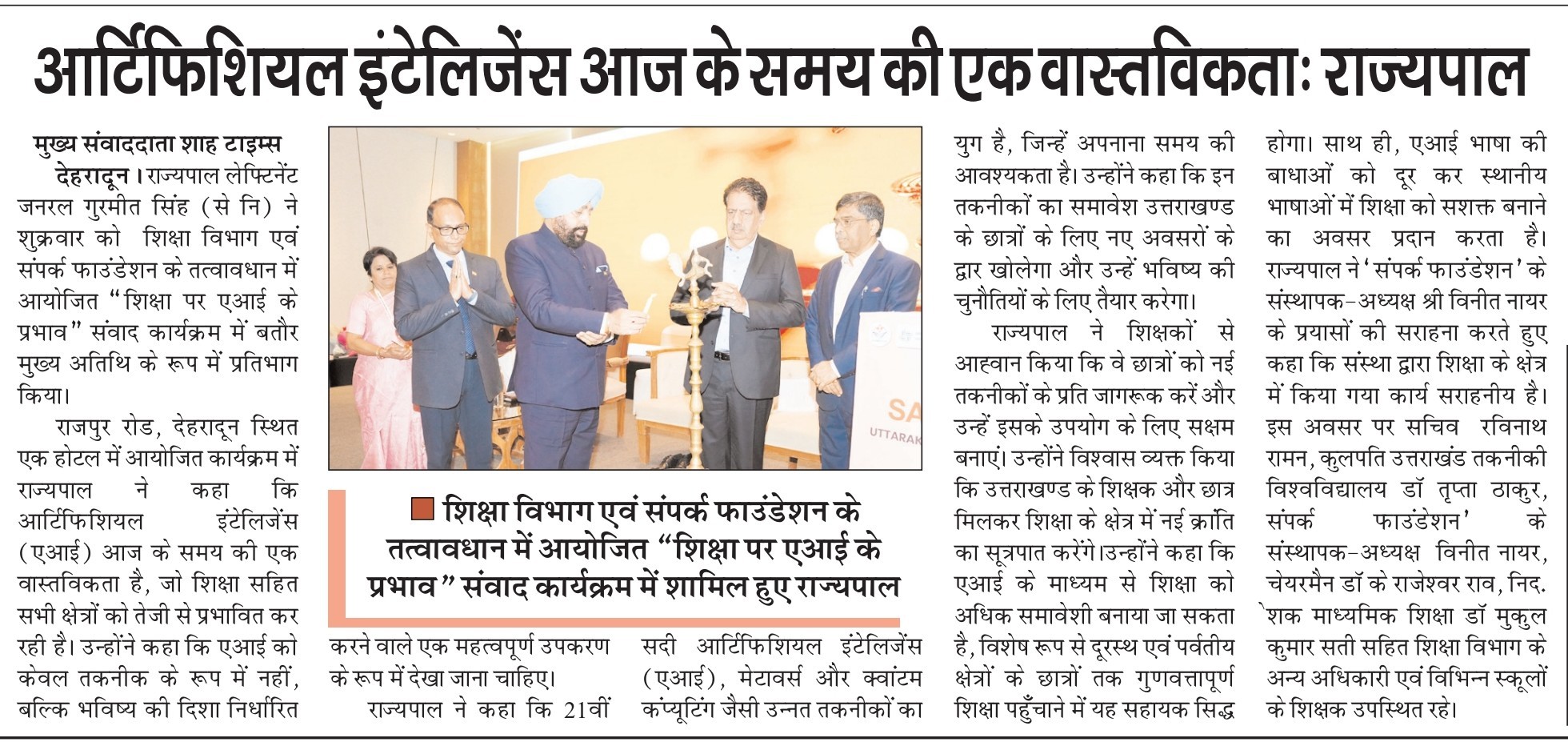
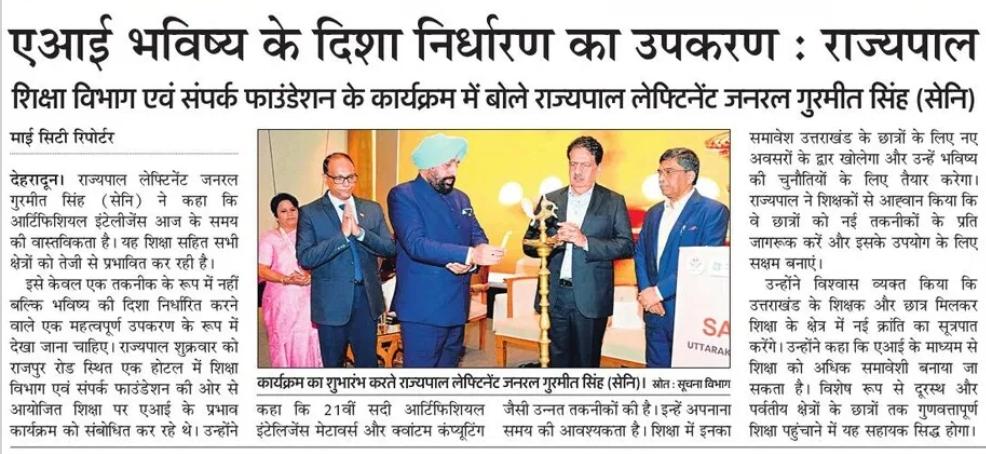
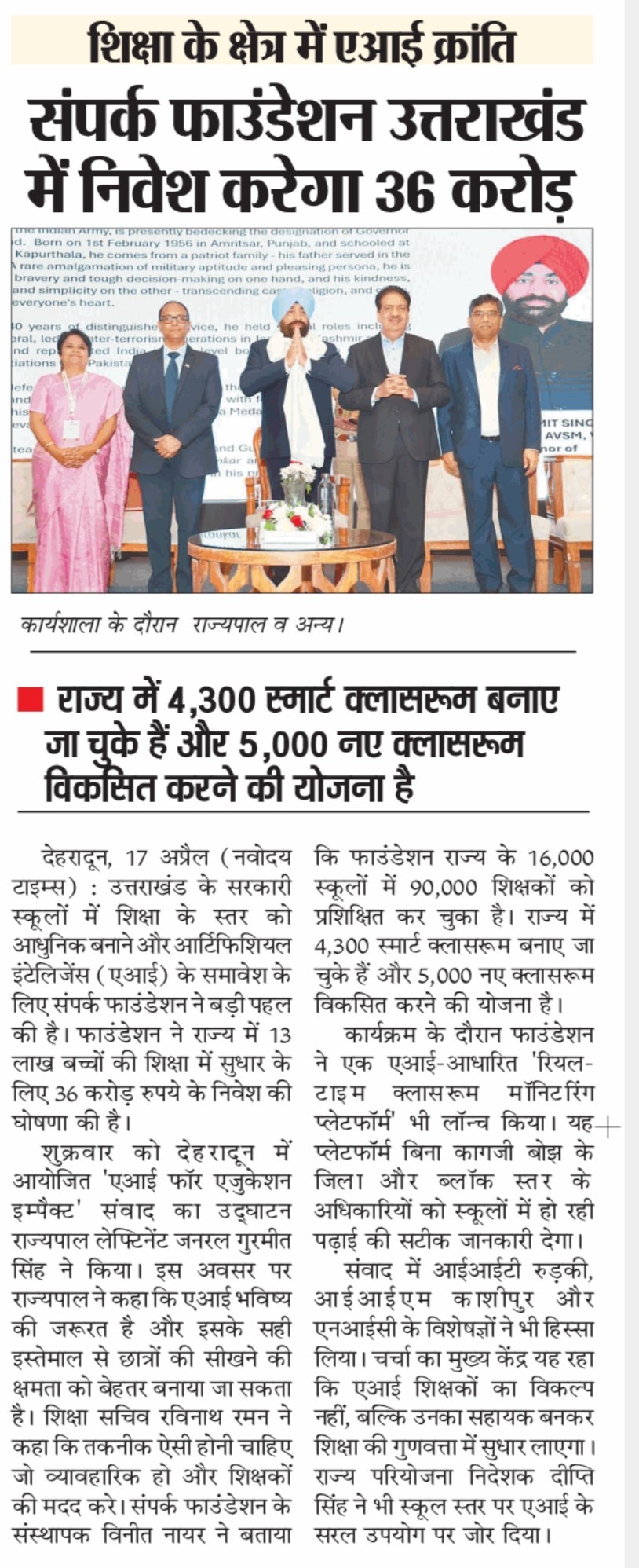
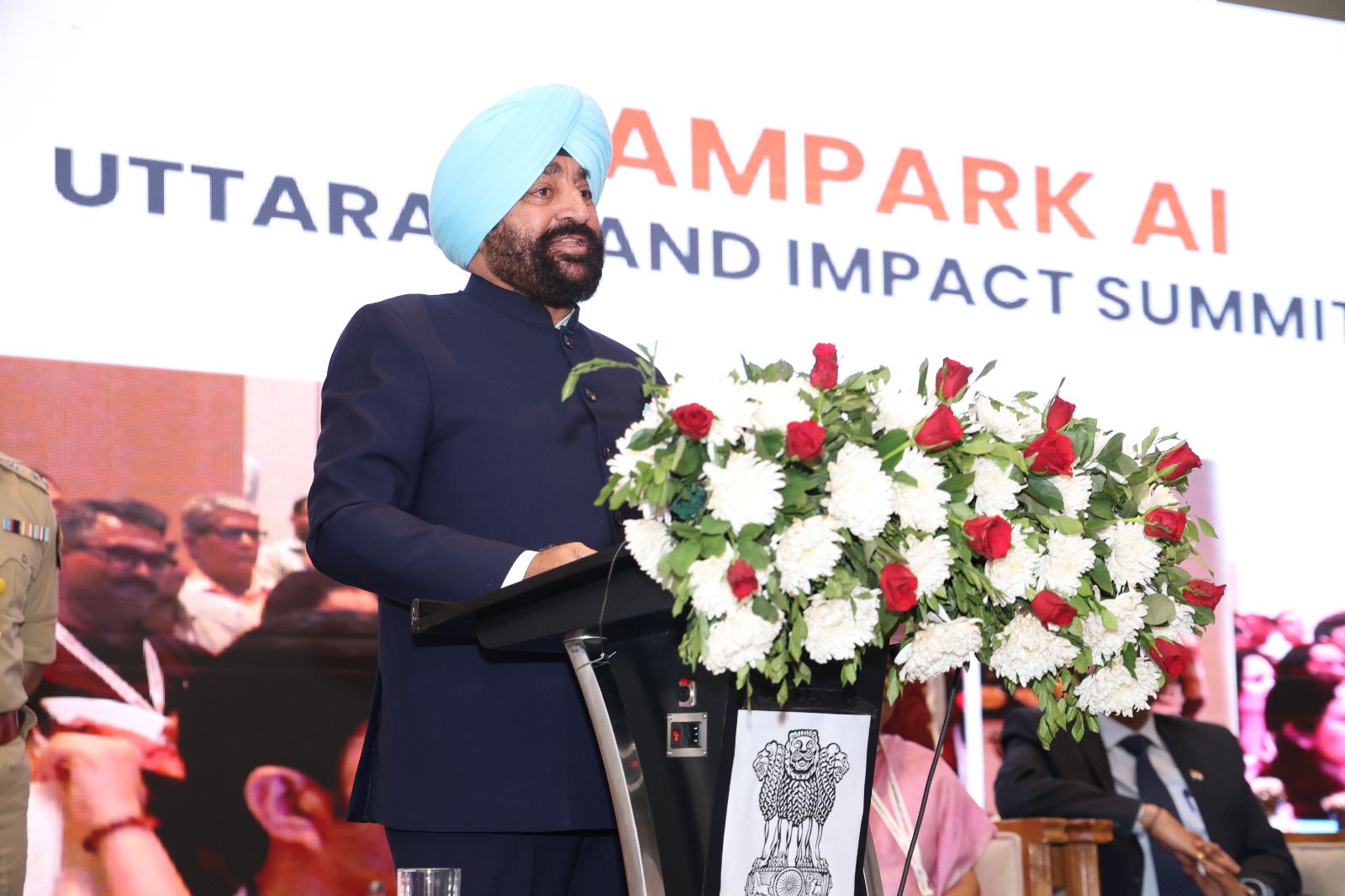
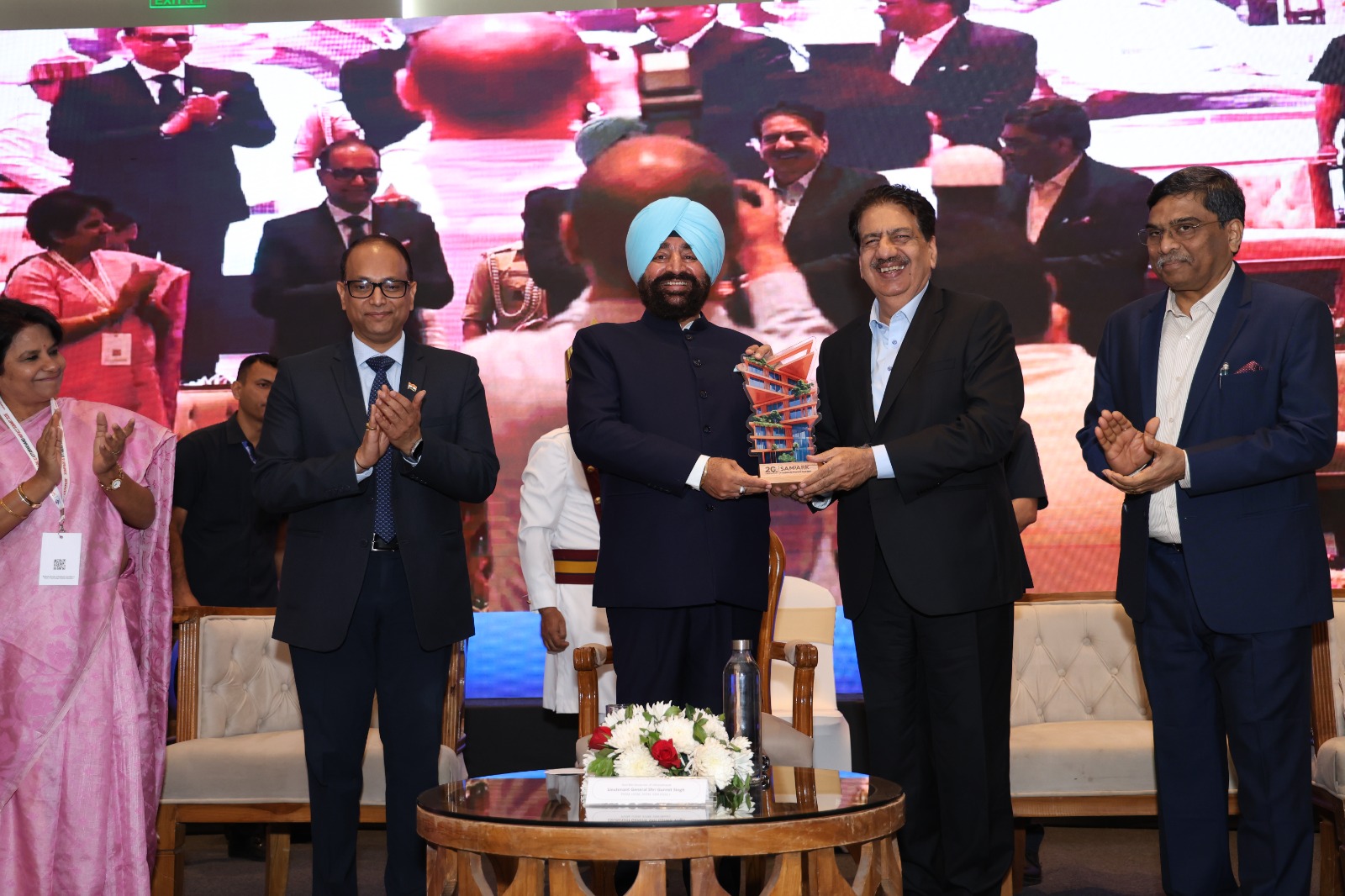
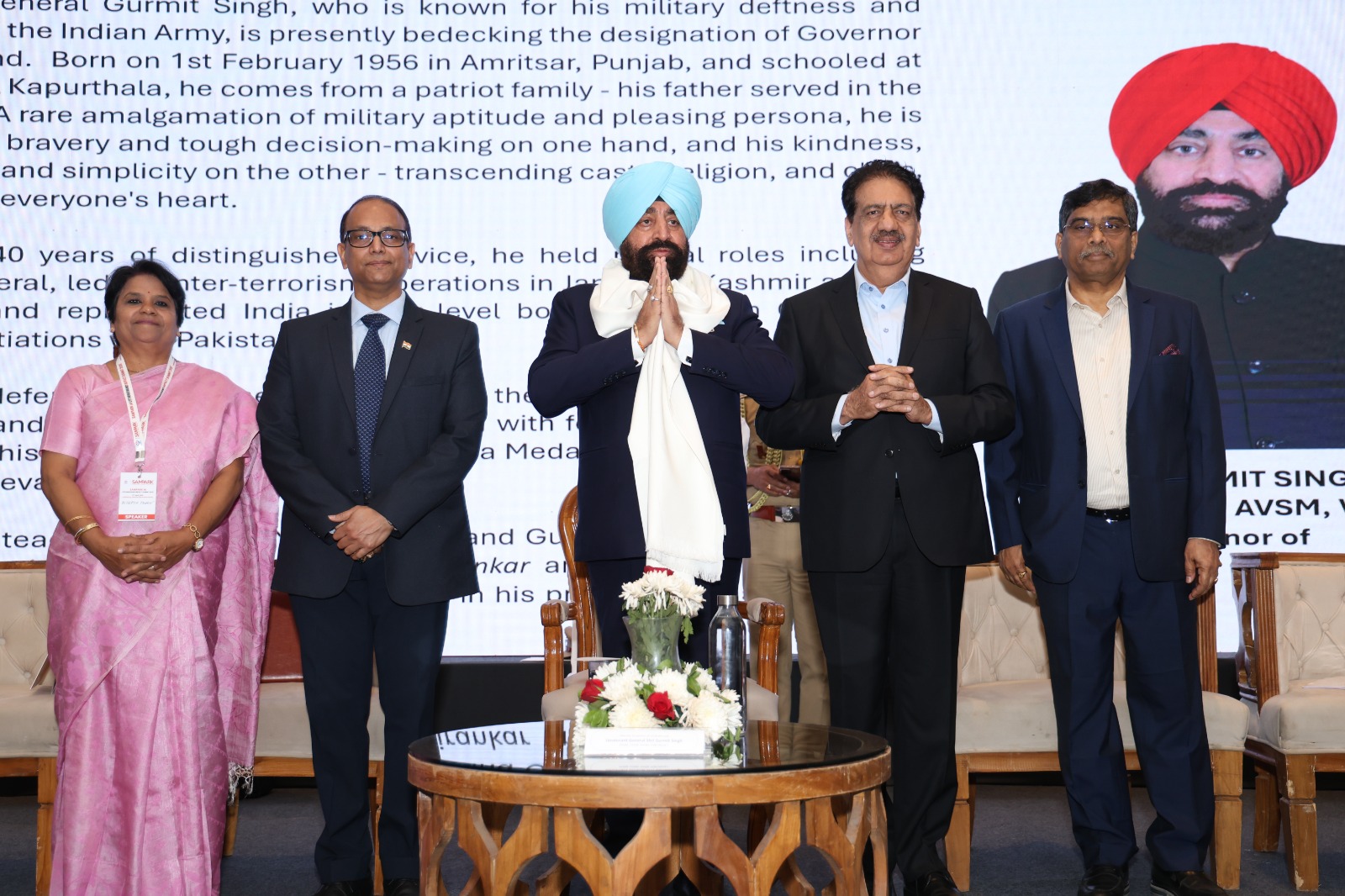
Governor of Uttarakhand- Lieutenant General Gurmit Singh, PVSM, UYSM, AVSM, VSM (Retd.)
Founder-Chairman, Shri Vineet Nayar
President, Dr K. Rajeswara Rao
Shri Ravinath Raman, IAS, Secretary Education, Uttarakhand
Dr. Tripta Thakur, Vice Chancellor, Uttarakhand Technical University, Dehradun
Prof Durgesh Pant, Director General, Uttarakhand State Council for Science & Technology (UCOST) & Director, Uttarakhand Space
How AI can help students learn better
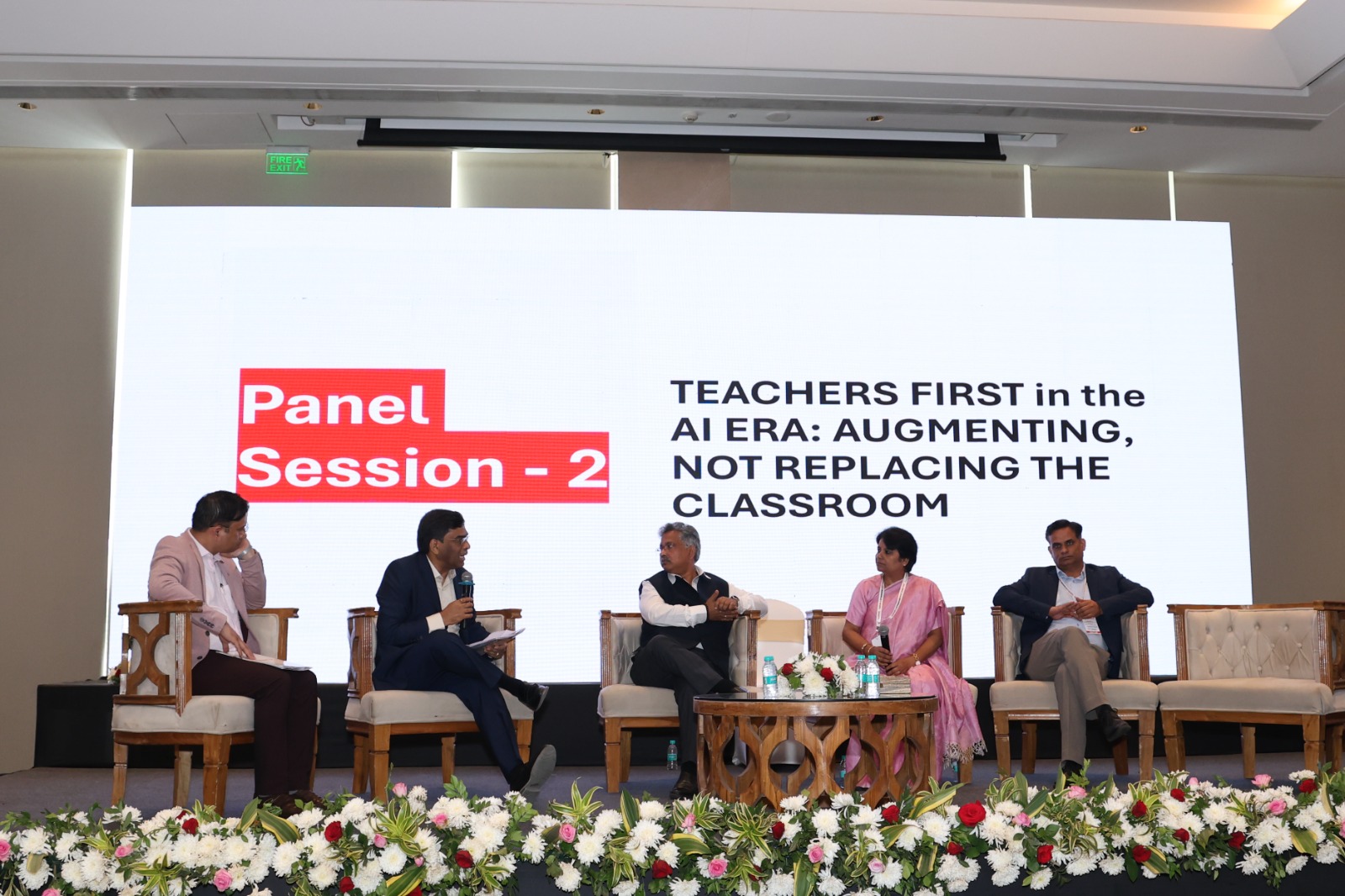
Putting teachers first in the age of AI
Using data to make better decisions in education
After Story – Impact & Insights
Media Coverage
Voices from the Summit
Insights from education leaders
"AI is no longer the future, it is already shaping our present."
A powerful message for educators. "Teachers, you are going to lead this revolution." With belief in students' ability to adapt and a clear formula, Teacher + AI = Better learning outcomes. He reaffirmed that placing teachers at the core is the key to building Uttarakhand as an AI leader.
A powerful message for educators. "Teachers, you are going to lead this revolution." With belief in students' ability to adapt and a clear formula, Teacher + AI = Better learning outcomes. He reaffirmed that placing teachers at the core is the key to building Uttarakhand as an AI leader.
Hon'ble Governor Lt. Gen. Gurmit Singh
PVSM, UYSM, AVSM, VSM (Retd.)
"What have we truly given our teachers to help them deliver on the promise of learning?"
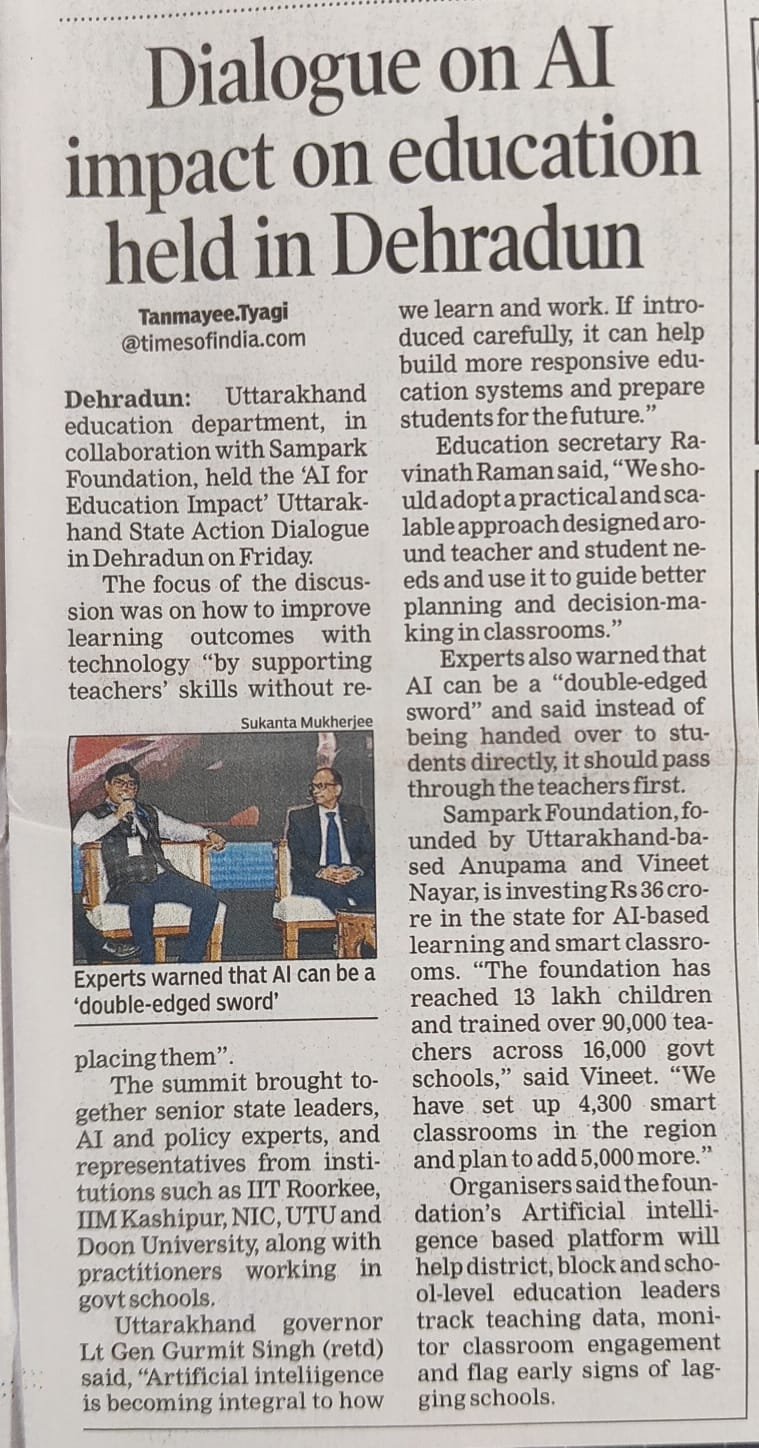
A clear caution too: AI can hallucinate. That's why its best use is in the hands of teachers, creating a one-to-many model where educators guide and filter learning.
A clear caution too: AI can hallucinate. That's why its best use is in the hands of teachers, creating a one-to-many model where educators guide and filter learning.
Vineet Nayar
Founder Chairman, Sampark Foundation
"AI will not replace teachers, it will empower them."
Dr. Tripta Thakur emphasizes the need for collective action, urging institutions to actively support initiatives like those led by Sampark Foundation. With Uttarakhand Technical University extending its full support, collaboration will be key to scaling meaningful impact in education.
Dr. Tripta Thakur emphasizes the need for collective action, urging institutions to actively support initiatives like those led by Sampark Foundation. With Uttarakhand Technical University extending its full support, collaboration will be key to scaling meaningful impact in education.
Dr. Tripta Thakur
Vice Chancellor, Uttarakhand Technical University, Dehradun
"Understanding AI isn't optional for teachers anymore, it's essential."
Prof. Sanjeev Kumar emphasizes that real understanding lies in applying AI meaningfully — whether assessing student levels, designing assignments, or building lesson plans. The task ahead is to use AI to strengthen teaching, while safeguarding the integrity of learning.
Prof. Sanjeev Kumar emphasizes that real understanding lies in applying AI meaningfully — whether assessing student levels, designing assignments, or building lesson plans. The task ahead is to use AI to strengthen teaching, while safeguarding the integrity of learning.
Prof. Sanjeev Kumar
Head, MFSDAI, IIT Roorkee
"AI is a disruptive force and no generation has had to adapt this quickly."
Shri Ravinath Raman highlights a critical balance — while giving AI directly to students can be risky, staying away from it is not an option either. The way forward lies in clear policies, safeguards, and ethical use, ensuring AI is introduced in a controlled and responsible manner.
Shri Ravinath Raman highlights a critical balance — while giving AI directly to students can be risky, staying away from it is not an option either. The way forward lies in clear policies, safeguards, and ethical use, ensuring AI is introduced in a controlled and responsible manner.
Shri Ravinath Raman
IAS, Secretary, Education, Uttarakhand

Scan to Listen to Sampark Music


