
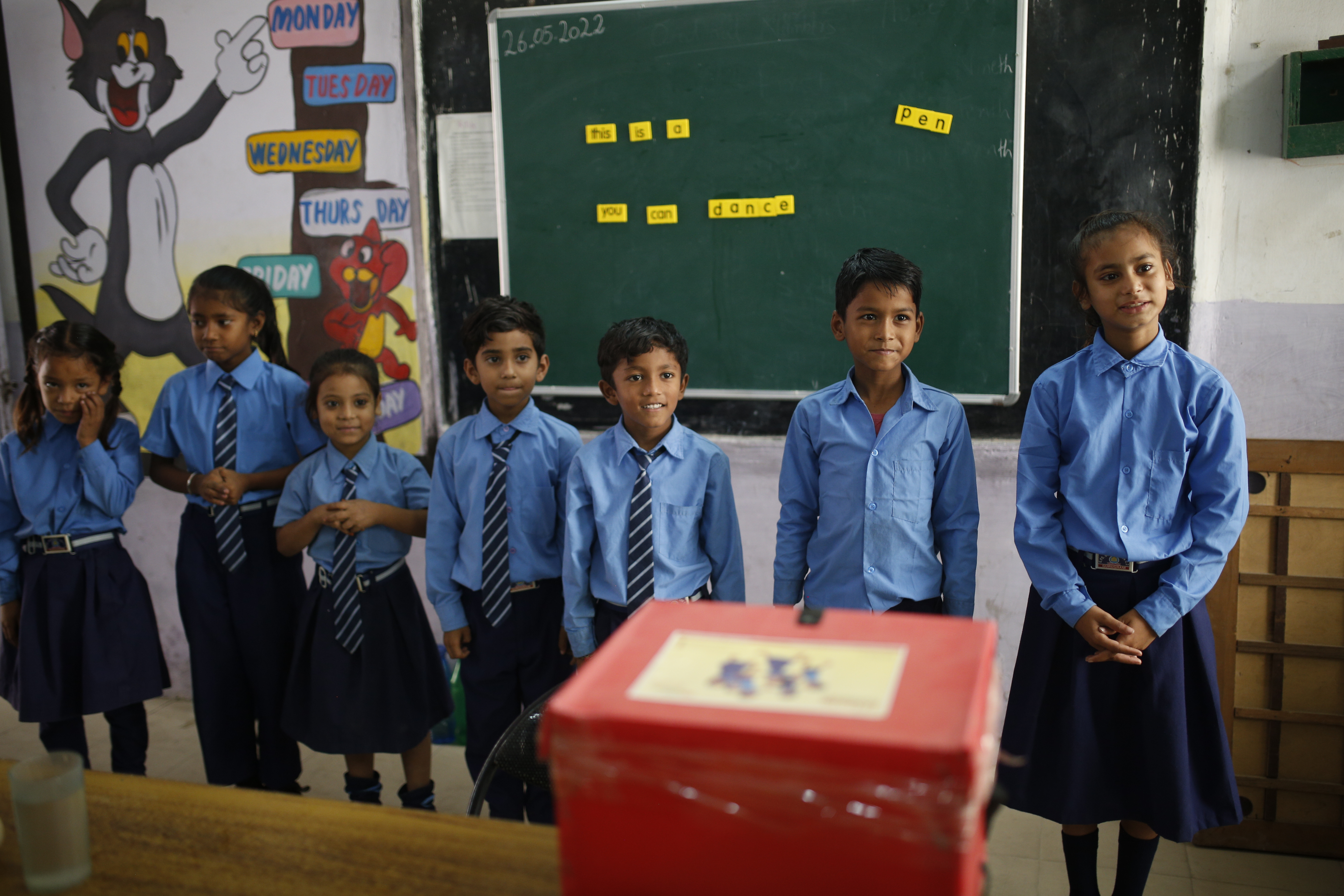
India’s education transformation begins with a powerful idea. An idea that states every child must learn to read, understand and solve basic mathematical problems at the right age. To make this vision a reality in every educational institution in India by implementing the NIPUN Bharat Mission. A mission that aims to ensure Foundational Literacy and Numeracy (FLN) for all children in early grades.
A nationwide initiative launched in 2021 by the government of India, focused primarily on the children in the age group of 3-9 years. Under this initiative, the government aimed to achieve universal FLN in primary schools by 2026-27.
NIPUN Bharat Mission and the Foundation of FLN Skills in India
At its core, the NIPUN Bharat Mission acknowledges that early grade and foundational learning years of a child’s education determine their entire learning journey. It shifts the focus from schooling access to the actual learning outcomes that empower children to learn and develop their skills.
Aligning it with the vision of the National Education Policy NEP 2020, it prioritises early-grade learning outcomes, conceptual understanding, activity-based and experiential classroom learning, with the focus on teacher-led transformation supported by structured pedagogy.
Role of SDG 4 Quality Education in India’s Learning Goals
India’s FLN movement also reflects a broader global commitment towards SDG 4: Quality Education, which is all about ensuring quality education for every child. SDG 4 goes beyond classroom enrolment numbers; it focuses on children’s skill development. It prioritises:
- Equity for children to ensure that every child, regardless of their geographic background, attains equal and high-quality learning opportunities to those of urban learners.
- Inclusion that supports first-generation learners in multilingual classrooms.
- Quality learning through pedagogy and digital learning solutions, to improve classroom engagement, teacher support, and measurable learning outcomes.
Classroom Transformation Through Educational Kits for Schools
Achieving foundational literacy demands structured solutions that help teachers convey concepts effectively, even without heavy infrastructure or digital tools.
Well-designed educational kits for schools and hands-on learning models allow children to learn through participation and develop curiosity and confidence at an early age.
Teachers can easily help students understand numbers through real-world interaction and build language skills using visual and storytelling tools.
With structured classroom learning kits, schools with limited infrastructure can create inclusive learning environments for children.
Teacher Empowerment as the Core of Learning Success
Educators are the ones who make quality learning accessible for every child. NIPUN Bharat also recognises teachers as the primary drivers of learning outcomes. Implementing strong FLN depends on confident educators who are equipped with practical teaching strategies. Teachers’ empowerment includes:
- Providing teachers with classroom-ready learning tools.
- Access to structured lesson plans and digital teaching resources.
- Ongoing academic support and assistance.
When teachers receive consistent support, classrooms become more interactive, adaptive and inclusive.
Sampark Foundation’s Contribution to Foundational Learning
As an implementation-focused education NGO in India, Sampark Foundation plays a critical role in strengthening FLN skills. It brings frugal and innovative learning solutions into the classroom.
Sampark Foundation works closely with state education systems, combining teacher empowerment, digital innovation and classroom-ready learning resources. With its six innovations, Sampark:
- Provides educational teaching easy kits for schools that enable activity-based learning.
- Integrates the Sampark Smart Shala app to support educators with structured lesson plans and academic guidance.
- Provides access to Sampark TV, which offers interactive, engaging learning experiences with curriculum-aligned classroom content.
Measuring Progress Toward Learning Outcomes
The NIPUN Bharat mission emphasises tracking real learning progress with structured monitoring systems. It helps educators identify learning gaps early and provide teaching strategies accordingly.
Key progress indicators include assessing:
- Reading proficiency in early grades in classrooms
- Numeracy understanding and problem-solving ability of the children in their early-grade learning
- Classroom participation and engagement levels across different subjects
- Consistency of teaching practices across schools
Conclusion:
To move towards achieving the goal of foundational literacy and numeracy, NIPUN Bharat ensures every child in India builds strong FLN skills from the earliest years of learning.
India is moving closer to achieving equitable, quality education for all by combining policy vision, empowered teachers, and innovative classroom solutions. In this vision, Sampark Foundation continues to make it a reality and to bring meaningful learning outcomes across classrooms.
FAQs
1. What is the NIPUN Bharat Mission?
NIPUN Bharat Mission is a national initiative that aims at ensuring all children in India achieve foundational literacy and numeracy skills by the end of Grade 3, during their early years of schooling.
2. What are FLN skills under the mission?
Foundational Learning and Numeracy skills include basic reading, learning and comprehension, with writing ability, number sense, and early mathematical reasoning that are essential for future learning.
3. How does NEP 2020 connect to NIPUN Bharat?
NEP 2020 sets foundational learning as India’s highest education priority, and NIPUN Bharat serves as its implementation framework focused on early-grade learning outcomes.
4. How are NGOs supporting the implementation of the NIPUN Bharat mission?
Organisations like Sampark Foundation support government systems through digital learning tools, teacher empowerment, and scalable classroom solutions that strengthen foundational education nationwide.


