
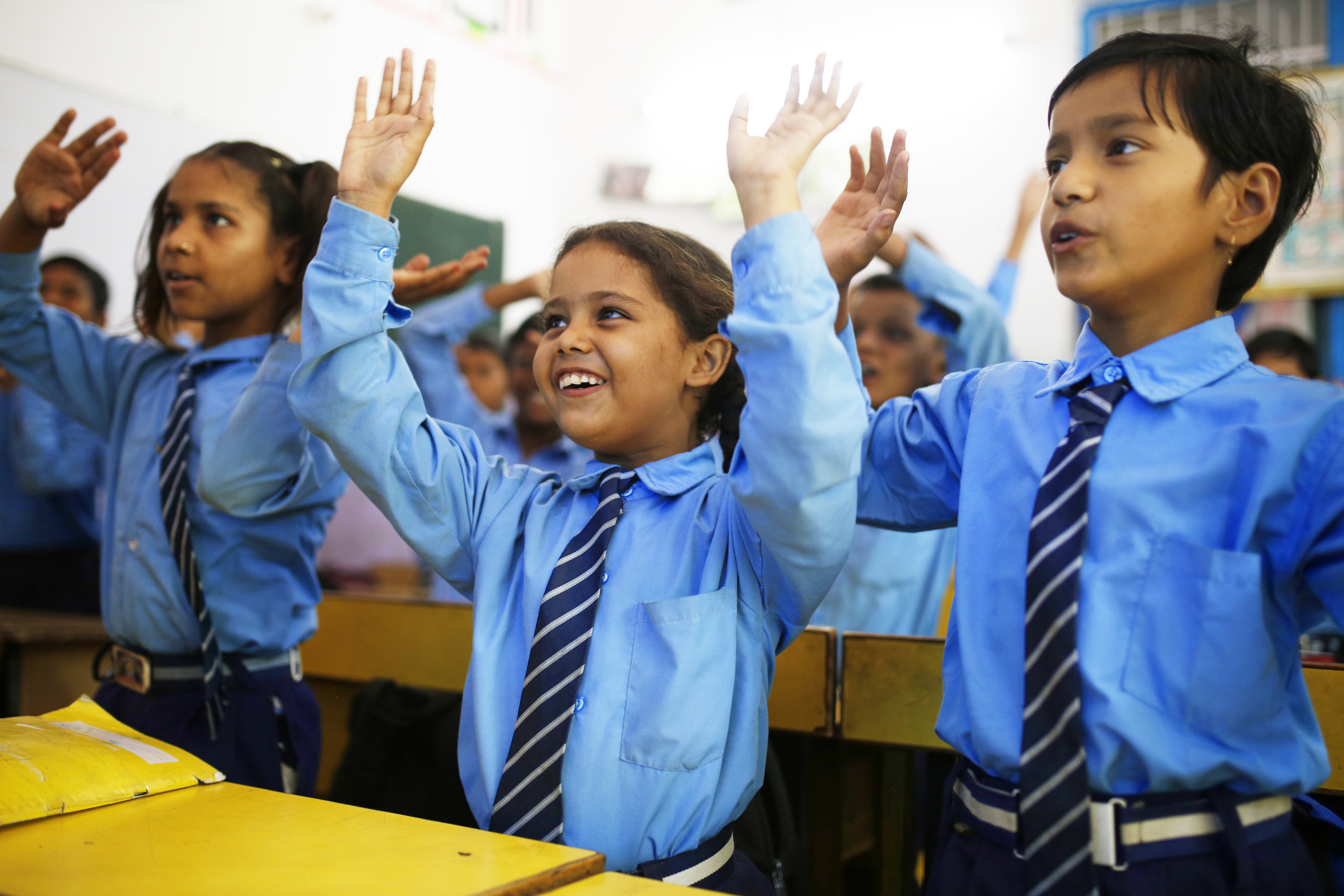
Education NGOs are redefining how learning reaches millions of children. Earlier, NGOs working for education in India focused only on expanding access to schooling, but have now prioritised real educational impact. India’s focus has shifted from enrolment to learning quality, engagement, and long-term student outcomes.
Educational institutions collaborating with NGOs working for education in India to bring quality education accessible across classrooms through innovative learning tools and technology-enabled digital learning solutions.
By combining pedagogy, teacher empowerment and technology, Sampark Foundation is helping millions of children experience meaningful learning regardless of their geography and socio-economic background.
Education NGO Innovation Shaping Future Classrooms
The Indian educational system faces many complex challenges while introducing quality learning across rural and government classrooms.
Teachers often work with multi-grade classrooms, with limited teaching resources and uneven access to digital infrastructure. Traditional learning interventions cannot alone close this learning gap; educators need system-led innovations that transform the learning experience for children.
Modern education NGOs are strengthening the existing learning ecosystems by:
- Supporting teachers with structured pedagogy and training programs to use and implement digital tools in the classroom
- Introducing accessible and frugal learning innovations in the classroom
- Building sustainable models that work within government schools and align with the curriculum goals
Digital Learning Solution for Children as a Core Strategy
Technology has become a powerful equaliser of quality education in India. Digital learning solutions for children must function in more than just urban, high-connectivity environments. The Sampark Smart Shala App and Smart TV demonstrate how digital learning can succeed when it is teacher-friendly, aligned with the curriculum and accessible across classrooms.
Designed to meet young learners’ cognitive needs, these hybrid-learning ecosystems are where teachers, digital learning apps and classroom activities support guided classroom interaction, helping teachers deliver structured lessons while increasing student participation.
Classroom Teaching Kits Enhancing Blended Learning
Physical engagement remains the essential element of quality learning, especially for children in primary education. Classroom teaching kits and materials for primary schools bridge this gap by providing children with an environment for physical learning.
This blended learning approach allows teachers to maintain continuity of learning even without internet access.
And Sampark’s Teach-easy kits enable teachers to simplify abstract Math and language concepts, support visual learners, and reduces reliance on rote memorisation.
English Learning Program and Skill-Based Education
Many children in government schools can read English but hesitate to speak it confidently. This hesitation discourages them from communicating with others and participating in any opportunities.
In this context, NGOs address this challenge by introducing structured English-learning programs that include guided listening, speaking, and interactive practice. With a skills-based approach to help children build confidence and develop long-term academic and career readiness, NGOs ensure that learning English becomes a tool for opportunity through everyday classroom routines.
Teachers Helpline and Continuous Professional Support
Bringing technology into the daily classroom routine needs confident educators. Structured guidance, continuous training, and support make teachers confident in using innovative digital learning solutions for children.
Sampark Foundation introduces the Sampark Didi Helpline to empower teachers at every step by providing real-time support and guidance. It aims to resolve academic challenges and improve overall education using Sampark’s innovative learning tools.
Scaling NGO Education Program Impact Nationwide
Educational transformation depends on the large-scale impact it creates across the learning ecosystem. Factors such as FLN skills development, communication, and knowledge determine how children across schools are learning with digital tools.
Collaborative efforts between educational institutions and NGOs can extend quality and consistency to thousands of schools.
By bringing low-cost implementation models with minimal infrastructure dependency and curriculum-aligned pedagogy, Sampark Foundation collaborates with educational institutions to create a high-quality learning environment for children.
FAQs
1. What is the future role of education NGOs?
Education NGOs are becoming innovative partners in creating inclusive and high-quality learning environments. Working towards strengthening teaching quality, technology integration, and promoting skill-based learning to support large-scale learning improvements in the education ecosystem.
2. Can NGO programs scale nationally?
Yes. NGO programs can scale nationally with low-cost, teacher-led models aligned with government systems to expand across multiple states.
3. What technologies support NGO learning models?
Yes. Teachers can use the Sampark Smart Shala app without advanced technical skills. It is intentionally designed with a simple interface, allowing teachers to integrate it into daily lessons without specialised digital training.
4. How does the teaching progress tracking system help schools?
Teach progress tracking systems allow educators and administrators to monitor learning progress, identify learning gaps early, and plan targeted academic interventions for improved outcomes.


