
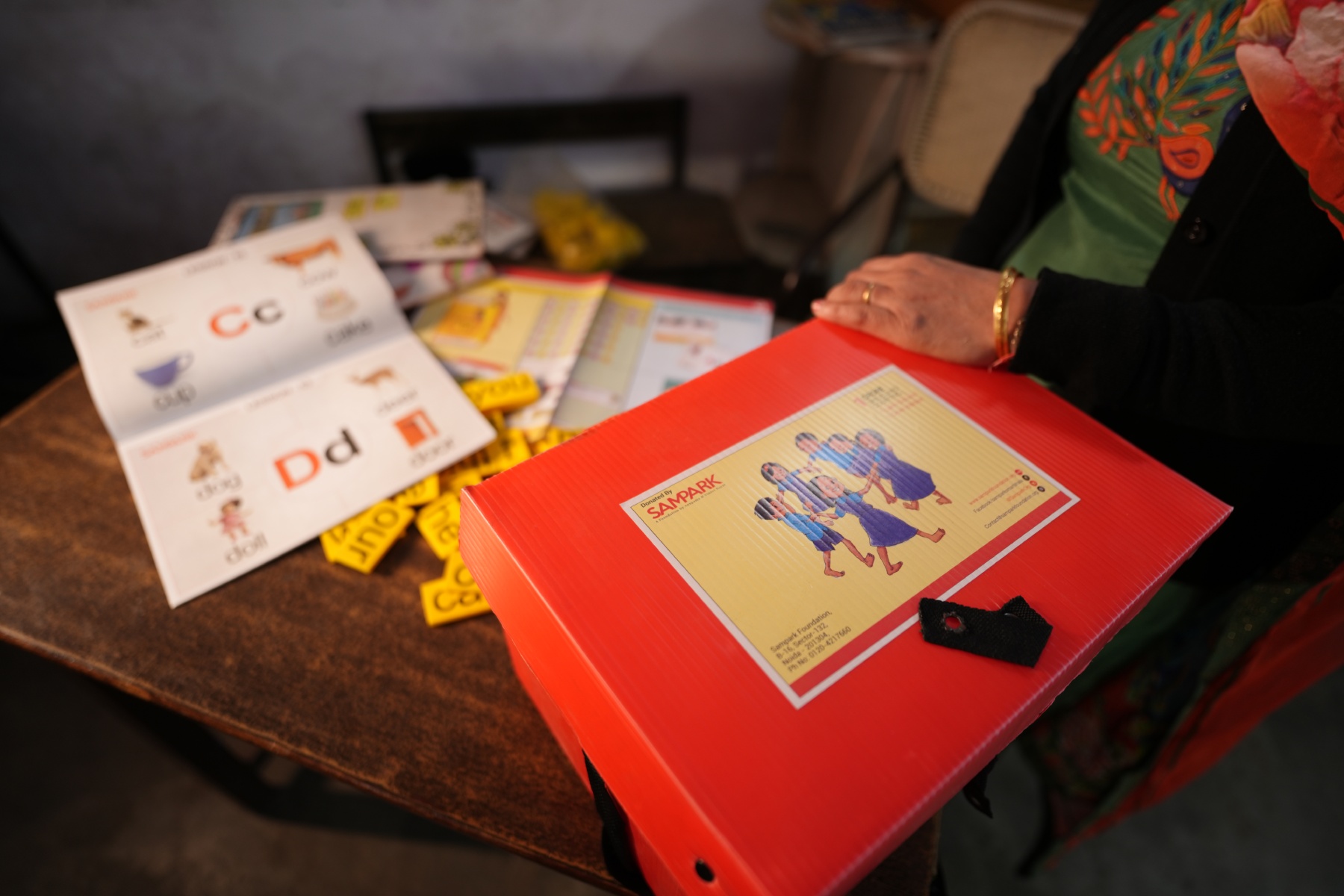
Why Kits for Schools Support Foundational Learning
Across many Indian classrooms, teachers still face the challenge of incorporating engaging learning tools into classroom learning. And to help children truly understand what they learn, schools today need powerful learning innovations, such as playful learning kits, that shift education from passive listening to active participation through fun, creative learning.
When these young learners see, touch, and experiment with interactive learning, rather than relying on rote memorization, they grasp concepts more effectively and engage in classroom learning. With these hands-on learning activities and kits, teachers can turn abstract ideas into real experiences, allowing the children to learn, explore, and ask questions freely and with curiosity.
Experiential learning improves overall retention of the children by engaging them with different visual, auditory, and kinesthetic learning experiences. All these structured educational kits help educators in strengthening early literacy and numeracy by creating a strong foundation for a child’s long-term academic journey.
Importance of Teaching Materials for Primary Schools in Early Development
Early childhood is a critical developmental stage for every child. Where the kids develop curiosity, cognition, and confidence with every step of their learning journey, with well-designed, age-appropriate teaching materials for primary schools, teachers and parents together can translate curriculum goals into understandable learning experiences, helping the children build strong cognitive and problem-solving abilities.
Interactive age-appropriate learning tools support children by helping them:
- Build cognitive and reasoning abilities in the early developmental stages
- Increase classroom participation and attention span across different subjects
- Explore and learn with curiosity instead of depending on the rote memorization process
When children actively participate in the learning process, classrooms become spaces of discovery rather than instruction alone. With concept-based learning, teachers focus on clarity rather than repetitive explanation and rote learning.
Addressing Classroom Resource Gaps Through Educational Kits for Students
In many government and rural schools, learning resources remain constrained. Schools operate without the facilities such as laboratories, digital tools, and supplementary materials. And in these environments, the educational kits for students play a crucial role in bridging infrastructural gaps. These ready-to-use kits and teaching materials for primary schools help in improving the understanding level of a child and improving learning outcomes.
As these kits allow teachers to provide:
- Standardized learning experiences across classrooms
- Efficient lesson delivery, even with limited infrastructure, with quiz-based learning for kids
- Equal exposure to quality learning tools for rural and underserved students with innovative teaching kits
These educational kits for schools simplify lesson execution and reduce teacher workload, improving the overall classroom engagement. With the smart integration of technology in smart classrooms, the result is equitable access to learning, strengthening foundational education nationwide.
Supporting English Learning programme Through Activity-Based Tools
Language learning often becomes intimidating for first-generation learners in rural classrooms, particularly when English is introduced through textbook-heavy instruction. But activity-based tools within an English learning programme help remove this fear in rural and government schools.
Interactive and playful classroom activities such as phonics cards, storytelling materials, visual aids, and conversational games encourage students to practice speaking naturally as they engage with these playful activities. Instead of memorizing vocabulary through textbook learning, children learn language through participation and repetition.
And these interactive language activities encourage children to:
- Improve their pronunciation and listening skills by staying active in the learning process
- Expand vocabulary through contextual learning
- Communicate with confidence and collaborate with their peers with strong communication skills
- Learn and grow with multilingual classroom learning
When the classroom learning feels safe and enjoyable, children become active learners instead of passive listeners. Confidently improving their knowledge and strengthening both academic performance and self-confidence.
Role of Quiz-Based Learning for Kids in Reinforcing Concepts
Quiz-based learning for kids transforms evaluation into an engaging classroom activity rather than the usual classroom assessment.
Gamified quizzes help children revisit concepts while enjoying the learning process. With regular recall activities, children lead to:
- Improve concept recall through repetition
- Increase classroom energy and their participation with more activity
- Collaborate with peers and participate in healthy competition
Teachers can identify learning gaps instantly with immediate feedback and interactive assessment, allowing children to associate learning with curiosity rather than pressure.
Contribution of Education NGOs Toward Equitable Education Access
Scaling educational innovation with digital and innovative learning tools across India requires collaboration between all sectors of society. Such as the governments, educators, and civil society. With the support of a non-profit organization in India, introducing these practical, scalable solutions within government and rural schools becomes possible.
Education NGOs contribute to the learning journey of the children by:
- Designing frugal and impactful classroom innovations that empower both teachers and students
- Training teachers to effectively use learning kits and digital tools
Sampark Foundation signifies this model by combining structured pedagogy – Sahi Kram, Sahi Dhang, teacher empowerment, and technology for smart classrooms to ensure learning improvements are sustainable rather than temporary interventions.
Conclusion: Educational Kits That Bring the Real Transformation
Kits for schools demonstrate that meaningful educational transformation begins with thoughtfully designed frugal tools placed directly into teachers’ hands.
Educational kits help create inclusive and joyful learning environments by enabling activity-based learning and strengthening classroom consistency.
Through its programmes and innovations, Sampark Foundation continues to advance equitable access to quality education. Ensuring that every child, irrespective of their geographical location, experiences learning that is engaging, practical, and empowering.
FAQ
1. What is the age suitability of educational kits for different grade levels?
Educational kits are most effective for primary school students, particularly in the early learning grades. Because in that early age, children develop strong foundational skills.
2. What learning outcomes are achieved through kit-based education?
Children learning with these quiz-based learning tools develop strong literacy and numeracy skills with playful learning and also improve their retention rate, concept clarity, and higher engagement levels.
3. Are educational kits affordable for government schools?
Yes. Frugal innovation models adopted by education NGOs enable kits to remain cost-effective and scalable across large public education systems, including rural and government classrooms with limited resources.
4. Can kit-based learning be implemented at scale?
Yes, these educational kits for students can be implemented at scale. Structured kits, combined with teacher training, enable consistent implementation across multiple districts and states.


