
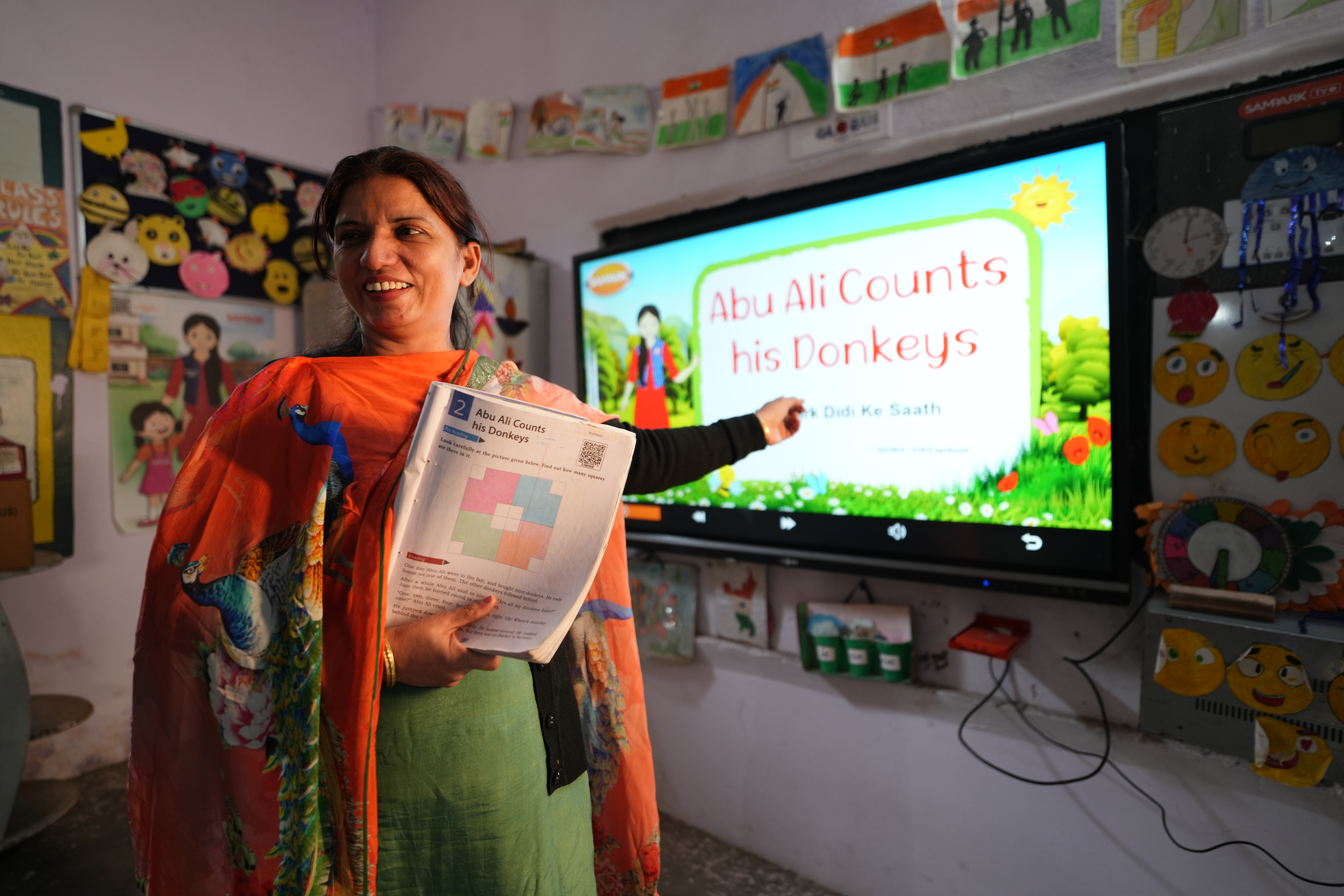
Introduction: When Technology Becomes Part of the Learning Experience
For many primary school students, technology is associated only with entertainment. By using interactive digital learning tools in the classroom, teachers can capture children’s attention and keep them more actively involved in the learning process.
The traditional learning process often fails to keep kids interested in the topic. That is why many teachers prefer an interactive teaching app for children, as it helps them build a more natural, intuitive understanding of the subject. As a result, children absorb information more easily and naturally.
What Makes an Educational App Useful for Children?
A great educational app for children aligns with the curriculum and stays up to date. A simple, intuitive design helps young students focus on the lesson rather than struggling to navigate the software.
Such classroom teaching kits use multisensory elements to support all learning styles through four core pillars:
Grade-Appropriate Navigation: Simple, visual menus allow young children to explore lessons confidently without getting confused.
Active Learning Activities: Interactive puzzles and choices turn passive screen time into active, critical problem-solving.
Curriculum-Aligned Content: Lessons map directly to grade-level standards, making it easy for teachers to integrate them into daily classes.
Multimedia Audio-Visual Content: Dynamic graphics, clear audio narration, and touch inputs engage visual, auditory, and hands-on learners at the same time.
Why Interactive Learning Can Improve Classroom Participation
In classrooms, we often see students hesitate to ask questions about concepts. Using an interactive teaching app for children helps them learn at their own pace and ask questions about any concept in a supportive, comfortable environment.
Visual representations break down various complex concepts into clear, simple, and easy-to-learn steps. This detailed approach turns difficult concepts into something easy to understand and far more accessible for students.
Digital tools also offer time for thorough practice, helping turn complex topics into simple steps. This learning pattern lets students re-practice challenging lessons as many times as they want and understand the concepts at their own learning pace.
How Educational Apps Can Support Teachers, Not Replace Them
Technology and educational apps are most effective when they support educators with active guidance and continuous support.
Educators can teach the lesson and then provide students with online exercises to reinforce it. Combining technology, such as apps, with traditional teaching resources offers a balanced approach to education, allowing teachers to teach across different learning levels.
This blended approach frees up valuable instructional time for teachers to focus more on guiding group activities and support students who require additional individual support.
What Should Schools Look for in a Digital Learning Solution?
Selection of the right digital tools for teaching requires close attention to real-world classroom conditions. A comprehensive digital learning solution for children should adapt easily to different kinds of student needs and infrastructure constraints.
The key criteria for choosing educational tools are the following:
- Curriculum Alignment: The software needs to provide the most relevant information according to the state standards to support daily lesson planning.
- Offline Functionality: Digital tools should serve effectively even in low-connectivity areas with stable performance.
- Shared Devices: It is critical to implement a tool that can be used in multi-user mode by switching between different students’ accounts.
Making EdTech Work in Government Schools
Deploying educational technology in public school systems requires addressing specific ground-level challenges. Implementing EdTech in government schools in India requires solutions built around infrastructural limits, teacher training, and long-term affordability.
Hardware, software, and TV-based learning tools should be durable and easy to use during short class periods. Complex, non-user-friendly tools may not be used widely because teachers may find it hard to fit them into their existing duties.
Designing technology in accordance with the classroom environment will ensure high utilisation rates in rural schools. Technology is used more when it is affordable and accessible, making education possible.
How Sampark Smart Shala Brings Digital Learning Into Classrooms
The Smart Shala App presents how integrated technology can transform children’s primary education into a simple and fun experience. The application is designed for government schools. Moreover, it also provides curriculum-related content, videos, and teaching tools.
This combination of mobile software, teaching resources, and video instruction is a powerful tool. It helps teachers create quality lessons and engage students in the learning process.
Conclusion
Digital tools in the classroom help to improve the learning experiences of students rather than increasing their screen time. The most effective education apps for children work alongside teachers and assist them in making daily lessons clear, interactive, and effective.
Therefore, combining digital tools with guided teaching helps schools build an engaging and comfortable learning environment for students, which ultimately supports them in their academic growth.
FAQs
1. What should an educational app for children include?
An educational app for children should include curriculum-aligned lessons, simple navigation, interactive learning activities, and audio-visual features. These components often help keep children engaged in the overall learning process without any hindrance.
2. How does an interactive teaching app help students?
An interactive teaching app for children helps students break down complex topics into easy-to-understand, step-by-step lessons. It also offers a low-pressure environment for students to practice repeatedly, ultimately helping hesitant students build confidence.
3. Can educational apps be used in government schools?
Yes. EdTech for government schools in India is developed to work within local infrastructural constraints in rural areas. These digital tools feature offline access, simple interfaces, and low-bandwidth requirements to support rural classrooms.
4. How can digital learning solutions support teachers?
Digital learning solutions assist teachers by providing ready-to-use lessons and automated practice modules, including visual explanations. This helps teachers reduce lesson preparation time and explain abstract concepts more easily.
5. What makes an educational app effective for primary students?
An educational app for primary students focuses on active problem-solving teaching rather than passive screen viewing. It uses gamified visual representations to help young children understand foundational concepts in an easy manner.


