
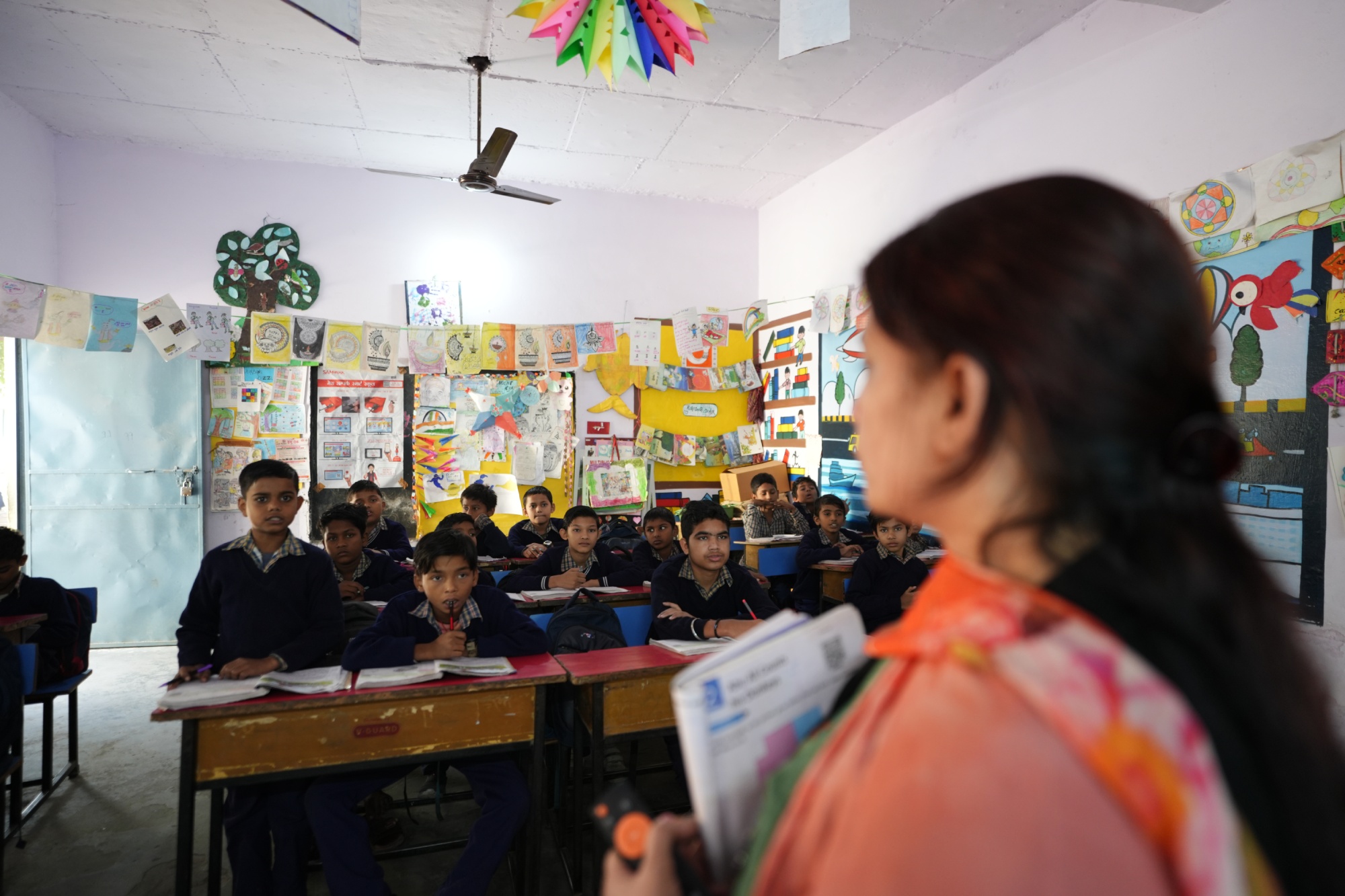
Introduction: Indian Education NGOs as Technology Enablers
Indian education NGOs today are increasingly serving as catalysts for transforming the educational ecosystem across the nation. Across India, education-focused non-profit organizations are introducing technology-led, innovative learning solutions in schools that bring quality learning experiences to children who have traditionally been left out of the digital revolution.
While urban schools rapidly adopted digital tools, millions of students in rural and government schools continued to face limited access to modern learning resources. NGOs working for education in India have stepped in to bridge this divide by designing frugal, scalable, and classroom-ready innovations. These tools allow children to learn and grow with curiosity and engage in learning beyond textbooks.
These organizations are helping schools move beyond textbook dependency toward interactive, inclusive, and engaging learning environments.
Educational App Solutions Improving Access in Remote Schools
One of the most powerful innovations in the educational ecosystem introduced by NGOs is the use of digital educational apps. Digital tools specifically designed for children and real classroom conditions.
Unlike the mainstream EdTech platforms, these NGO-led digital learning solutions prioritize accessibility and adoption. Offline-enabled apps ensure lessons continue even in areas with limited internet connectivity, allowing students to learn consistently regardless of location.
With its guided lessons, activity instructions, and audiovisual learning modules, the Sampark Smart Shala App helps teachers standardize the quality of teaching across classrooms. It helps them create an inclusive learning environment for children, ensuring that children’s learning opportunities are not bound by geographic boundaries.
Increasing Engagement Through Gamification with Quiz-Based Learning for Kids
Quiz-based learning for kids encourages greater engagement and curiosity among children through participation in classroom activities. With gamified quizzes, children turn daily lessons into an exploratory experience that strengthens their conceptual clarity by identifying their mistakes with instant feedback.
These interactive quiz-based learning activities allow students to collaborate, compete, and celebrate progress together with peers. These tools also assist teachers in assessing students with a better understanding and foster every child’s academic confidence and social learning skills.
Blending Technology with Activity-Based Learning Tools for Kids
Traditional learning needs the touch of technology to create a balance in the learning ecosystem. Because learners today demand more than just the textbooks, they need a real understanding of the concepts, and hands-on practical activities to understand a concept with clarity.
With activity-based learning tools for kids and educational kits for schools, teachers can create all-inclusive learning environments. With digital learning kits, teachers can demonstrate processes with more clarity, narrate stories, and reinforce lessons through joyful audiovisual explanations. In this way, teachers can maintain a balance between screen-based and experiential learning.
Role of NGO Working for Education in India in Digital Inclusion
An NGO working for education in India plays a crucial role in ensuring that technological innovation reaches schools that need it most. NGOs bring clarity, confidence, and flexibility to classrooms by ensuring that every digital innovation becomes an active part of the daily classroom learning.
NGOs assist teachers with structured training and guidance on these digital learning tools, assisting them to use and implement the tools with clarity and confidence in the classroom teaching. NGOs like Sampark Foundation work collaboratively with state governments and educational institutions to embed technology into the daily classroom learning and create all-inclusive learning environments for children across regions.
Overcoming Infrastructure Challenges Through Scalable Solutions
Despite all the collaborative efforts, implementing digital learning still faces some practical challenges. Schools are operating with limited electricity, internet connectivity, and technical support. Therefore, implementing digital learning requires a scalable, frugal, and practical approach.
Innovative learning tools such as portable learning devices, offline-ready teaching materials, and shared classroom technologies make digital learning easy to implement in the classrooms. These scalable solutions allow teachers to expand rapidly with quality education and bring large-scale educational transformation across diverse geographies.
Expanding Equal Learning Opportunities Nationwide
Educators today need to adapt to the technology and match the requirements of the modern learners. Traditional learning now needs to be blended with digital learning to provide children with experiential and practical learning environments. Indian educational NGOs address these educational challenges through scalable innovations that create consistent educational experiences regardless of socio-economic background.
Organizations like Sampark Foundation focus on integrating technology, pedagogy, and teacher empowerment to build educational systems where every child has access to meaningful learning opportunities.
Empower Every Child with Digital Learning. Contribute and Become a Spark.
FAQs
1. What challenges do schools face when adopting technology?
When adopting technology into learning, schools face challenges primarily driven by budget constraints, limited connectivity, insufficient teacher training, and infrastructure gaps.
2. Are digital learning tools accessible in rural schools?
Yes. Digital learning tools are accessible in rural areas. Manyreas. Many NGO-developed digital learning tools are designed for rural schools, where they can operate within low-resource environments and function well with continuous internet access.
3. Do teachers require special training to use digital tools?
Yes, teachers need ongoing support and structured training to adapt, use, and implement digital learning tools confidently in everyday classroom teaching practices.
4. Can technology-driven education programs scale across India?
Yes. Technology-driven education programs can scale across India by using portable devices, standardized content, and teacher support systems, enabling efficient expansion to thousands of schools.


