
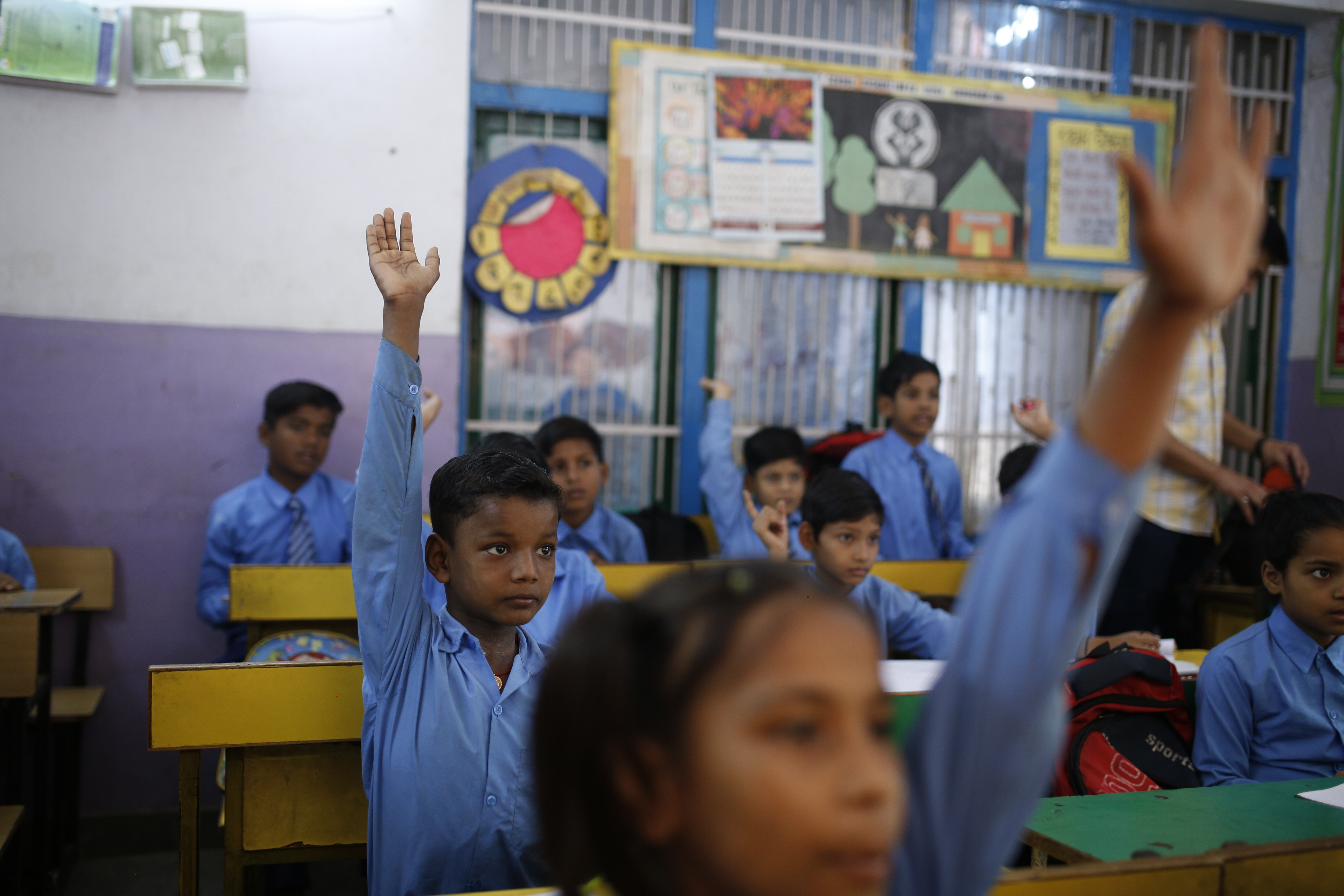
Choosing the best education NGO in India is not just about looking at how many schools an organisation reaches. It is about understanding whether it is working towards creating meaningful change in classrooms and whether that change can continue at scale.
For an organisation working across India’s public education system, it means going beyond one-time interventions in between the academics. It requires sustained effort, strong partnerships with state governments, practical solutions for teachers and children, and a clear focus on learning outcomes.
Sampark Foundation, established in 2005, follows this approach by bringing together pedagogy, technology, teacher training and classroom resources to strengthen primary education across government schools.
Best Education NGO in India Driving Measurable Learning Impact
Scale becomes meaningful when efforts translate into better classroom experiences and outcomes.
Sampark Foundation has worked across 8 states and 1.4 lakh schools, supporting teachers and students through a combination of learning tools, structured pedagogy, technology and on-ground support.
Its approach is built around frugal solutions that can be replicated across different school systems rather than interventions that are designed for a single classroom. This includes tools such as Sampark TV, Sampark Smart Shala app and Teach-Easy Kits, supported by teacher training and classroom engagement.
For CSR partners and education stakeholders, this kind of long-term approach offers something more valuable than a short-term programme; it brings them the opportunity to contribute towards sustained improvement within the existing education system.
NGO Working for Education in India Bridging Systemic Gaps
An NGO working for education in India can play an important role by working alongside the existing education systems that are already serving millions of children.
Government schools often bring together children with different learning levels, languages and classroom needs. Teachers therefore need more than textbooks to make lessons engaging and accessible. They need practical resources, appropriate pedagogy and continuous support to cater to children of different learning levels.
Sampark Foundation works with government school systems to address these classroom-level needs for children, while keeping teachers at the centre of the learning process. The aim is to strengthen the systems that are already in place.
NGO Education Program Built for Scalable Impact
A strong NGO education program needs to connect several pieces of the learning ecosystem. And Sampark Foundation focuses on programmes that combine teacher development with classroom resources and technology.
By bringing educational kits to schools, it provides hands-on ways to introduce concepts through visual and interactive learning with digital tools. Teacher training helps educators use these resources with the right pedagogy and academic assistance.
This digitally integrated model also allows programmes to align with the priorities of state education departments, making implementation more practical across large school networks.
Indian Education NGO Supporting Inclusive School Systems
An Indian education NGO working at scale must account for the realities of India’s diverse classrooms.
With this focus, Sampark Foundation aims to create learning solutions that are practical, low-cost and adaptable across different school environments. This combined approach brings local classroom understanding with structured programmes, allowing educators to use resources in ways that fit their students’ learning needs.
And when educators have the ideal tools and right support to make lessons more engaging, children benefit from a classroom environment where participation, curiosity and understanding can grow together.
CSR Partner for School Education and Government School Collaboration
For organisations looking to contribute to education through CSR, choosing the right implementation partner is as important as choosing the right cause.
A credible CSR partner for school education in India needs to understand both community needs and government systems. Working as an NGO with government schools also requires coordination, transparency and the ability to implement programmes consistently across locations.
Sampark Foundation’s model brings these elements together through partnerships with state governments, structured programmes and measurable implementation. This enables CSR support to move beyond individual activities and contribute towards larger, system-level education goals, empowering children.
Conclusion: Sampark Foundation’s Continued Role Among India’s Top Education NGOs
The best education NGO in India is ultimately the one that connects purpose with practice. An education NGO that focuses on strengthening teachers, engaging children and building solutions that work at scale.
Sampark Foundation continues to pursue this approach through partnerships across the public education system. By combining pedagogy, technology and teacher support, it helps teachers create an all-inclusive learning environment which brings interactive learning to the classroom for children.
Continued collaboration between governments, CSR partners, schools and NGOs can help make quality learning more accessible to every child.
FAQs
1. What makes an organisation the best education NGO in India?
An organisation that has strong government partnerships, measurable learning outcomes, and sustainable programmes that support teachers with frugal and innovative classroom learning tools can be defined as the best education NGo in India.
2. How does an NGO working for education in India support government schools?
NGOs working for education in India can support government schools through teacher training programmes, learning resources and technology. NGOs provide implementation support while working alongside existing education systems.
3. What does a typical NGO education program include?
An education programme may combine teacher training, classroom resources, activity-based learning, digital tools and monitoring systems. An integrated approach helps ensure that different parts of the learning ecosystem work together.
4. Why do CSR teams partner with an Indian education NGO?
An experienced Indian education NGO can help CSR partners implement programmes on the ground while bringing knowledge of schools, teachers and communities. Structured programmes, government partnerships and transparent monitoring can also help CSR investments create sustained impact.


