
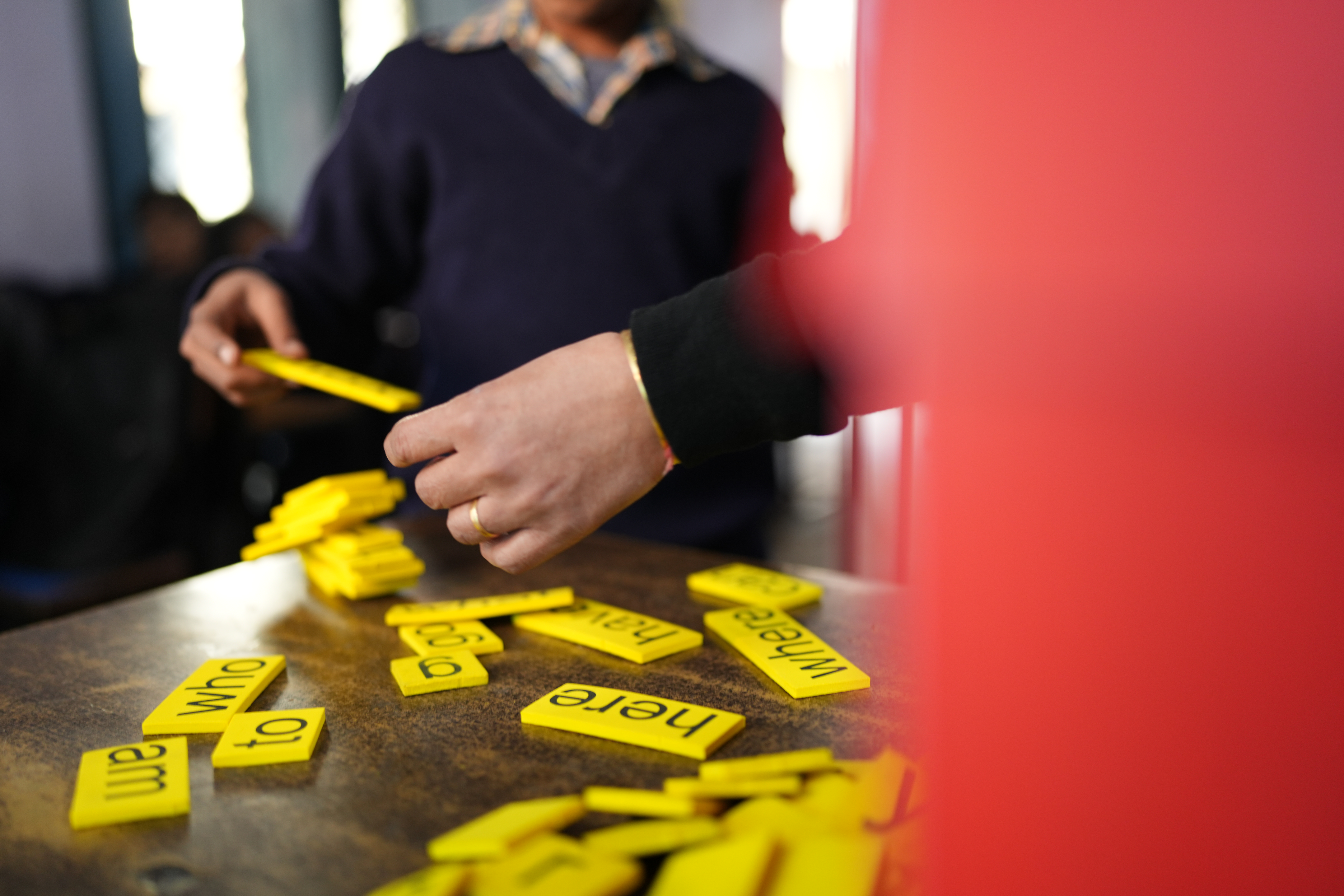
Introduction to the FLN Program and Its Role in Early Learning
Foundational literacy and numeracy define a strong start for a child in school. It shapes how confidently a child learns in the years ahead. FLN program focuses on helping children in the early grades develop two essential abilities: reading with understanding and working comfortably with numbers.
For a child in Grades 1–3, being able to read a simple story, understand instructions, count and compare numbers and solve a basic problem is more than an academic milestone. All these skills determine how easily the young learners can participate in classroom learning as subjects become more complex.
This is why Sampark Foundation places foundational learning at the core of its work with government schools, combining teacher support, structured pedagogy and engaging classroom resources.
FLN Program Strengthening India’s Learning Base
An effective FLN program goes beyond teaching children how to recognise letters and numbers. It helps them develop reading fluency, strong comprehension, writing and basic number operations through regular practice and meaningful classroom experiences.
The key is consistency; teachers need clear lesson sequences, age-appropriate activities and simple ways to understand where students are progressing or need additional support.
When all these elements come together, foundational learning becomes part of everyday classroom practice rather than a separate exercise.
Foundation Literacy and Numeracy Shaping Lifelong Learning
Foundation literacy and numeracy build a strong foundation for children. It helps them build skills and provides young learners with the confidence to approach new learning through activities and hands-on learning experiences. Instead of relying on textbook-based instructions, it allows them to explore every opportunity without any hindrances.
Consider when children can read a short passage comfortably. They can follow a science activity and understand a word problem, or learn from a textbook more independently. Similarly, a child who understands numbers can approach activities such as measurement, patterns and everyday calculations with greater ease.
Strong foundations therefore support participation and progression across subjects. They also require more than classroom instruction alone. Teachers, families and communities all have a role to play in creating an environment where children can practise and apply what they learn.
FLN in Education Supporting Classroom Transformation
FLN in education becomes meaningful when children get opportunities to learn by doing. Instead of relying only on repetition, teachers can use stories, songs, games, objects and everyday situations to make reading and mathematics easier for the children to understand.
Teacher readiness is equally important. When educators have access to the right pedagogy, resources and ongoing support, they can adapt activities to different learning levels within the same classroom.
Technology can complement this approach when implemented effectively. Tools such as Sampark TV and educational kits for schools bring structured audio-visual lessons into classrooms, helping teachers introduce concepts through familiar and engaging formats without making technology a replacement for teaching.
FLN Skills Build Confident, Future-Ready Learners
The value of FLN Skills extends well beyond the primary grades. Reading, writing and numeracy are the tools children use to make sense of almost every subject and everyday situation.
A child who understands a word problem is better placed to reason through it and has a confident foundation for future learning, including more advanced mathematics, science and technology.
A child who can read independently can explore a new topic with greater confidence. A child who understands numbers can identify patterns, estimate quantities and make sense of information around them.
National Education Policy NEP 2020 and STEM Programs Supporting FLN
The National Education Policy NEP 2020 places strong emphasis on foundational literacy and numeracy, recognising it as a prerequisite for further learning. This makes foundational education not just an early-grade priority, but an important part of India’s broader education transformation.
Once children have these basics in place, STEM programs in schools can build on them through experimentation, observation, measurement and problem-solving. A child who is comfortable with numbers can engage more confidently with patterns and measurements; a child who can read and understand instructions can participate more independently in a science activity.
The progression matters: build strong foundations first, then offer opportunities to explore, question, and create.
Conclusion: FLN Program Building India’s Educational Future
Foundational Learning and Numeracy (FLN) program remains a central part of strengthening India’s early learning outcomes. Lasting progress will depend on collaboration between teachers, schools, governments, NGOs and communities, supported by the right pedagogy and resources.
By combining teacher support with practical tools and engaging learning experiences, initiatives such as those led by Sampark Foundation can help make foundational learning more joyful, consistent and meaningful for children.
FAQs
1. What is the FLN program and why does it matter?
A Foundational Learning and Numeracy (FLN) program helps children develop essential early learning skills in reading, writing, comprehension and numeracy. These skills enable children to participate more confidently in learning across subjects.
2. How does foundation literacy and numeracy affect long-term learning?
Strong early FLN skills make it easier for children to understand textbooks, follow instructions, solve problems and learn independently as they progress to higher grades.
3. What does FLN in education look like in classrooms?
FLN in education includes stories, games, songs, hands-on activities and structured practice that help children understand and apply literacy and numeracy concepts rather than simply memorising them through textbooks.
4. How are FLN Skills assessed in schools?
Schools and educators can assess foundational learning skills through classroom activities, ongoing reading and numeracy tasks assigned to children, regular assessments and progress monitoring. All these insights help teachers identify learning needs and adapt instruction accordingly.


