
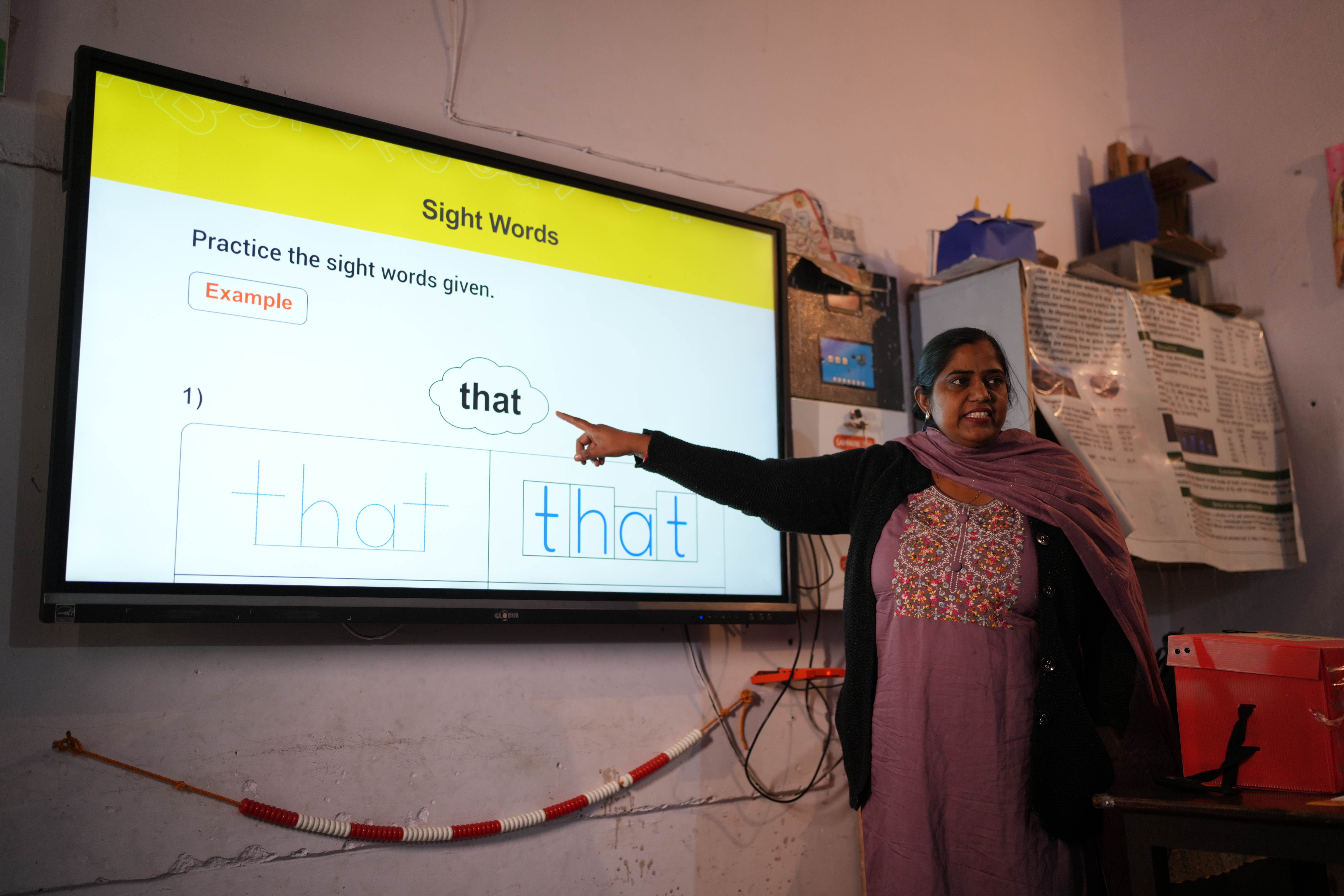
Introduction to Sampark TV for Modern Classrooms
In today’s world, technology has become an essential part of education; these young learners learn better when they visualise, engage, and observe. But meaningful learning isn’t created by devices alone; it comes from making lessons easier to understand, classrooms more interactive, and teaching more effective for the students.
With this objective, Sampark Foundation introduced Sampark TV into the classrooms. It was designed with this philosophy in mind to transform an existing television into a powerful learning companion by delivering curriculum-aligned, audio-visual lessons that support both teachers and students.
Instead of asking schools to invest in expensive infrastructure, it is reaching schools as a modern, frugal learning tool in thousands of classrooms, especially where resources are limited. This approach is helping schools make digital learning more practical, accessible, and engaging.
Sampark TV Transforming Digital Learning in Schools
Children naturally respond to stories, visuals, music, and movement. When all these elements become a part of the classroom teaching, learning becomes easier to follow and more enjoyable.
Sampark TV brings structured lesson plans, animated content, songs, and demonstrations with classroom activities into a single learning experience for children. It assists educators in facilitating discussions, answering questions, and guiding classroom activities by presenting concepts visually while allowing them.
This combination of teacher-led instruction and digital content creates classrooms where students participate and become active learners rather than simply listening.
Smart TV for Teaching: Improving Classroom Engagement
Smart TVs for teaching make everyday teaching simplified and more engaging. Rather than relying solely on textbook-based learning, Smart TVs bring visual demonstrations, animated explanations, and real-life examples to make abstract ideas easier for young learners to understand.
With Smart TVs in classrooms, teachers also get access to structured, readily available content, allowing them to spend less time preparing visual aids and more time interacting with students. As classrooms become more discussion-oriented, children gain confidence to ask questions, share ideas, and learn collaboratively.
TV-Based Learning for Schools Supporting Foundational Education
The learning outcomes of TV-based learning for schools lie in its accessibility across rural and government classrooms. Many other digital learning solutions depend on constant internet access, but television-based learning is designed for rural and government classrooms.
Sampark’s Smart TV is designed to deliver consistent lesson content across schools without any dependency on heavy infrastructure or any internet connectivity cost. It proves to be a frugal solution for government and rural classrooms, allowing educators to assist diverse learners with digital learning solutions.
Audio-visual learning helps in creating strong foundational literacy and numeracy amongst the children. When children learn to connect words, sounds, images, and numbers in meaningful ways, they are more likely to retain concepts and participate confidently during classroom activities.
Indian Education NGO Driving Technology-Enabled Education
Technology creates lasting impact only when it addresses real classroom challenges.
As an Indian education NGO, Sampark Foundation has focused on building solutions that are affordable, scalable, and easy for teachers to adopt. Its six innovative programmes combine digital innovation with teacher training, classroom resources, and structured pedagogy rather than treating technology as a standalone intervention.
It works closely with state governments and educators to demonstrate how thoughtful innovation can strengthen public education while keeping teachers at the heart of every classroom.
Data-Driven Teaching Strategies for Better Student Performance
Digital classrooms generate valuable learning insights, helping educators
adapt to data-driven teaching strategies. It helps them understand which concepts students are grasping well and where additional support is needed.
It allows educators to adjust their instruction wiht regular classroom observations, assessments, and participation trends.
It shifts the whole process from reactive teaching to informed decision-making, enabling more personalised support while helping schools monitor learning progress over time.
Fun Quiz for Students and Kits for Schools Enhancing Learning
A fun quiz for students encourages young learners to think, respond, and apply what they have learned to real life in an enjoyable, low-pressure environment. Activity-based and gamified learning improve comprehension and allow children to explore freely.
These quiz-based activities allow educators to get immediate feedback and identify areas that need reinforcement.
When these playful methods are combined with kits for schools, these quizzes become part of a broader activity-based learning approach.
Sampark Foundation assists teachers by introducing hands-on teaching materials that encourage experimentation, discussion, and collaborative problem-solving, helping them build stronger conceptual understanding for the children while keeping classrooms energetic and interactive.
NGO Working for Education in India Supporting Digital Classrooms
The future of education depends on creating solutions that are practical enough to reach every classroom.
Every NGO working for education in India has the opportunity to bridge learning gaps by supporting schools. With teacher training, technology, and innovative classroom practices, NGOs can help educators bring meaningful learning outcomes. Sustainable impact comes from strengthening the entire learning ecosystem rather than introducing isolated interventions.
Sampark Foundation’s integrated approach combines digital content, teacher support, classroom resources, and continuous monitoring. It aims to bring scalable innovations across diverse school environments that bring the best educational outcomes and help children learn for the future.
Conclusion: Sampark TV Empowering Future-Ready Education
Sampark TV is making classroom learning more visual, interactive, and accessible for learners across classrooms.
By combining technology with structured pedagogy and activity-based learning, it helps educators create better and more engaging learning environments for children.
As schools continue to embrace digital education and learning solutions that are inclusive, scalable, and teacher-friendly, they will play an important role in shaping the future of learning across India.
FAQs
1. What is Sampark TV and how does it support classroom learning?
Sampark TV turns a normal television into a classroom learning solution. It delivers curriculum-aligned audiovisual lessons that make teaching more interactive and engaging for children.
2. Why is a smart TV for teaching becoming important in schools?
Smart TV for teaching helps educators explain lessons through multimedia content. It presents learning concepts visually, improving classroom participation, and supports activity-based learning.
3. How does TV-based learning for schools improve student engagement?
TV-based learning for schools brings audio-visual lessons through stories, creative demonstrations and interactive activities. It captures students’ attention and simplifies complex concepts, and encourages greater participation.
4. How are NGOs working for education in India using technology to improve learning?
Many education NGOs in India are supporting schools through digital learning platforms, teacher training, classroom resources, and technology-enabled teaching models that improve access to quality education.


