
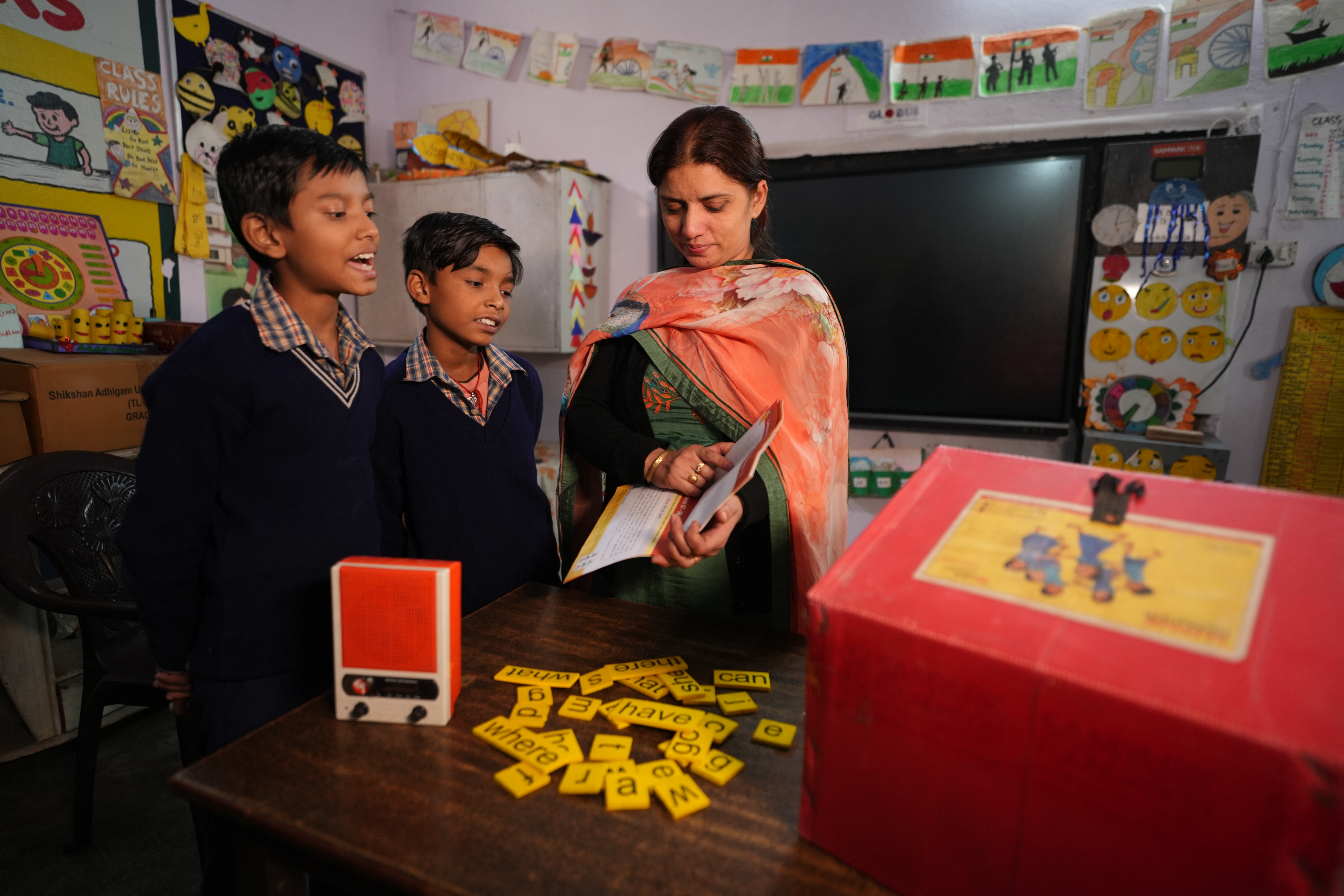
Introduction to Digital Dashboard for Education: Transforming Indian Schools
For years, school improvement efforts were focused only on the periodic assessments, manual reports, and annual reviews. These methods only provide snapshots of academic performance and don’t provide the actual academic data from the classrooms to measure impact.
Today, Indian schools are going beyond assessing academic performance and focusing on improving children’s learning outcomes by integrating technology and digital learning tools into daily classroom learning. Digital dashboards for education are becoming key tools for teachers and institutions, enabling informed, data-driven decision-making.
The discussion around educational technology has evolved to focus on utilising meaningful data to track learning progress, identify challenges early, and provide support to students in need.
Education Dashboard and the Shift Towards Smart School Management
From attendance records and classroom participation to assessment scores and learning progress, every school generates valuable information. The real challenge arises when the educators need this information to assess and turn it into actionable insights.
A digital dashboard for education helps schools and educators organise and visualise key data in one place, making it easier to monitor academic performance and identify trends over time.
Instead of waiting for end-of-year results, school leaders can track progress continuously. Teachers can assess and identify areas where students may need additional support, while administrators can make informed decisions on resource allocation and intervention planning.
School Evaluation Dashboard Improving Accountability and Transparency
Improving accountability and classroom learning outcomes requires clear insights into what is working and where additional support is needed. A school evaluation dashboard provides clarity to educators by combining multiple factors of school performance, such as attendance rates, classroom engagement, assessment results, and programme implementation, in a single unified platform. This digital dashboard for education allows school leaders and education officials to gain a clearer understanding of overall school health.
By using these school evaluation dashboards, educators can enhance accountability and consistently track progress. When educators find it difficult to identify successful practices and address challenges, they keep improvement efforts focused on student learning outcomes.
Interactive Teaching App for Children: Making Learning Engaging
Data alone cannot improve learning outcomes; it requires effective classroom practices that keep children engaged and motivated.
An interactive teaching app for children supports this goal by transforming traditional classroom lessons into engaging learning experiences for children.
Through multimedia content, guided activities, quiz-based learning, and visual explanations, children can actively participate and engage in the learning process with their peers.
Engagement plays a crucial role in comprehension and retention, especially for early-grade learners. Interactive learning tools help educators sustain attention, encourage active participation, and make complex concepts easy to understand for young learners.
When classroom instruction is combined with digital resources, they create inclusive and dynamic learning environment that supports both teachers and students.
Data-Driven Teaching Strategies Supporting Better Learning Outcomes
Data-driven teaching strategies become valuable to identify different learners and support them with effective learning methods.
By analysing classroom performance data, teachers can identify learning gaps, understand which concepts require reinforcement, and adapt instruction accordingly. Instead of relying solely on intuition, educators gain access to evidence that helps guide their teaching decisions.
Data becomes most powerful when it informs action inside the classroom.
Teacher Training Program Supporting Digital Classroom Adoption
Technology for smart classrooms is only effective when educators are confident and capable enough to adapt and make it a part of the daily classroom learning.
A strong teacher training program ensures that teachers understand how to use digital tools and learn how to integrate them meaningfully into classroom teaching.
Training helps educators interpret education dashboard insights, utilise digital resources effectively, and apply technology to enhance learning and build confidence among teachers who may be new to digital platforms.
Continuous support and professional development are essential for creating sustainable technology adoption in schools.
FLN Education and Technology for Smart Classrooms in Primary Schools
India’s focus on Foundational Literacy and Numeracy (FLN) education has highlighted the importance of ensuring that every child acquires basic reading and mathematical skills in their early years.
Smart classroom solutions that bring interactive content, activity-based learning and dashboards into the classroom learning, help educators track foundational learning progress and provide engaging ways to reinforce key concepts.
By combining pedagogy, technology, and teacher support in early-grade learning, institutions can create strong learning environments that strengthen foundational skills while preparing students for future academic success.
Conclusion: Digital Dashboard for Education: Creating Smarter Learning Systems
Digital dashboards for education solutions are helping schools move beyond traditional monitoring methods. By bringing technology and innovative learning tools into the classroom, it is creating more responsive and student-focused learning systems.
Schools understand that to make more informed decisions and improve student outcomes, they need to combine real-time education dashboard insights, teacher support, interactive learning tools, and strong foundational learning practices.
As India continues to invest in quality education, technology must remain focused on its ultimate purpose of helping every child learn better.
Through innovations such as learning dashboards, smart classroom solutions, and teacher empowerment initiatives, organisations like Sampark Foundation are contributing to a more transparent, inclusive, and effective education ecosystem.
FAQ
1. Why are education dashboards important in schools?
Education Dashboards help institutions and educators track student performance and understand what is happening in classrooms. Beyond academic insights, it provides details about learning outcomes and program implementation through real-time data.
2. What are the benefits of smart classroom technologies?
Smart classroom technologies improve engagement and simplify lesson delivery for educators by creating all-inclusive, interactive learning environments for children.
3. How do data-driven teaching methods improve learning outcomes?
Data-driven teaching methods help teachers understand and identify learning gaps to personalise learning instruction, monitor progress, and implement timely interventions accordingly to support student success.
4. Why does FLN education matter in primary learning?
FLN education provides children with essential literacy and numeracy skills in the early years of learning. It forms the foundation for future academic achievement and lifelong learning.


