Our Programmes

Turning conventional wisdom upside down

Our Programmes

Turning conventional wisdom upside down

An Overview

Sampark Foundation’s programmes are designed to transform learning in primary and middle school education by making classrooms more joyful, interactive, and effective. With a strong focus on Math, English, and Science, we equip teachers with simple, scalable tools and engaging pedagogy to improve student learning outcomes. Guided by the philosophy of Sahi Kram, Sahi Dhang (the right sequence and the right method) our programmes bring lasting change in classrooms at scale.

Our impact in numbers

16

Increase in children attendance

30

Reduction in teachers workload

4

Programme acceptance score

76

Schools teach as per plan

English Programme

The English Programme focuses on strengthening listening, speaking, reading, and writing skills in primary education. Developed as a bilingual course, it introduces English in a way that is relatable and easy for children to grasp, while also supporting teachers with step-by-step lesson plans mapped to state curricula.

Children begin their journey through stories, rhymes, and activities, gradually moving to structured reading and writing practice using multimedia workbooks and worksheets at varied difficulty levels. Interactive video lessons with conversational language make explanations clear and engaging, while an AI-enabled Speak Word tool helps improve pronunciation and speaking confidence.

To encourage active participation and application, the programme integrates classroom games, energizers like Be Fit videos, and fun quizzes through Sampark Didi Ke Sawaal. These gamified assessments make learning interactive while helping teachers track progress. By combining bilingual instruction, innovative digital tools, and simple teaching resources, the English Programme builds a strong foundation in language skills that empowers children to communicate with confidence.
Math Programme

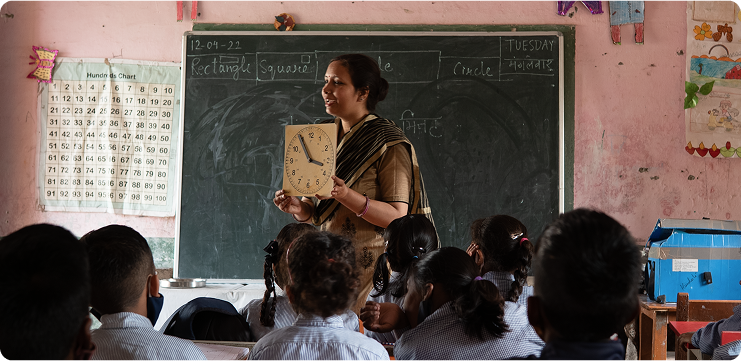
The Math Programme is designed to build strong foundational numeracy skills for children in Classes 1–5 by making mathematics simple, joyful, and engaging. Rooted in a six-step constructivist approach, the programme ensures children progress in the right sequence and right method (Sahi Kram, Sahi Dhang), moving from prior knowledge to practice and assessment.

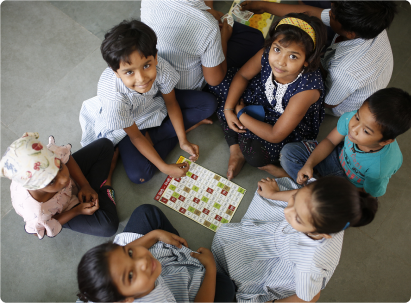
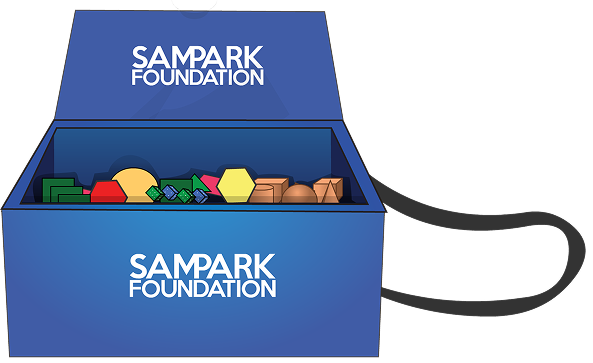
Teachers are supported with structured lesson plans, interactive teaching-learning materials, and manipulatives such as board games and activities that connect mathematics with everyday life. Each concept is introduced in context, reinforced through classroom activities, and practiced using visually rich worksheets tailored to different difficulty levels. To make assessments less stressful and more engaging, the programme uses Sampark Didi Ke Sawaal — a gamified quiz format that helps children consolidate learning while reducing exam anxiety.

By combining joyful pedagogy with ready-to-use classroom resources, the Math Programme empowers teachers to simplify abstract concepts, encourage problem-solving, and build confidence among children in their numeracy skills

Science Programme

The Science Programme is designed to make science engaging, relatable, and fun for children in Classes 6–8. Many students lose interest in science when concepts become abstract, but by starting earlier with interactive and hands-on methods, the programme helps children see science as a way of life rather than a subject to fear.

Built on the philosophy of Sahi Kram, Sahi Dhang (the right sequence and the right method), the programme follows a six-step learning cycle. Lessons begin with prior knowledge and real-life examples, introduce concepts through bilingual videos, and reinforce them using experiments, songs, or terminology videos. Students then practice with worksheets, participate in projects, and complete gamified assessments through Sampark Didi ke Sawaal, making evaluations enjoyable and stress-free.

The programme blends conventional pedagogy with innovative approaches to nurture 21st-century skills such as problem-solving, creativity, and collaboration. At its core, it offers lesson plans aligned with NCERT and SCERT outcomes, structured into micro-competencies to support teachers along with bilingual videos that simplify complex concepts through everyday examples and experiment manuals with live-shot demonstrations that transform classrooms into discovery spaces. Group activities and terminology videos make learning interactive and memorable, while visually rich worksheets encourage both practice and comprehension.

By bridging the gap between theory and practice, the Science Programme not only helps students grasp core scientific concepts but also deepens their engagement with STEM learning. It builds curiosity, confidence, and future-ready skills equipping children not just with knowledge, but with the mindset to explore, innovate, and thrive in a world where science and technology drive tomorrow’s opportunities.

Our alignment with NEP 2020 and NIPUN Bharat

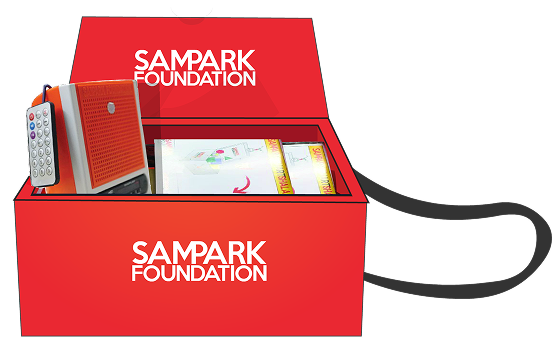
Our programmes are deeply aligned with the vision of the National Education Policy (NEP) 2020, which places the highest priority on achieving Foundational Literacy and Numeracy (FLN) by Grade 3. By focusing on joyful, activity-based, and inclusive learning, our Math, English, and Science programmes embody the NEP’s call for learner-centric pedagogy, experiential approaches, and the use of technology to strengthen classroom delivery. From bilingual lessons and interactive kits to digital content on Sampark TV is designed to make classrooms more engaging, collaborative, and effective, ensuring children learn with both curiosity and confidence.

Our approach also directly supports the NIPUN Bharat Mission (National Initiative for Proficiency in Reading with Understanding and Numeracy), which emphasizes the importance of building strong foundational skills in early schooling years. By empowering teachers with simple, scalable tools and structured pedagogy rooted in Sahi Kram, Sahi Dhang (the right sequence and the right method), our programmes reduce complexity, enhance teacher capacity, and foster measurable improvements in learning outcomes.

Our low-cost, high-impact innovation seamlessly aligns with India's key education policies, making it a scalable and sustainable solution for government schools.

NEP 2020 (National Education Policy)

Sampark Smart Shala supports the shift towards interactive, technology-driven learning, emphasizing conceptual understanding over rote memorization.

NIPUN Bharat Mission

Our focus on foundational literacy & numeracy (FLN) directly contributes to the mission's goal of ensuring that every child can read and solve basic math by Grade 3.

EdTech & Digital Learning

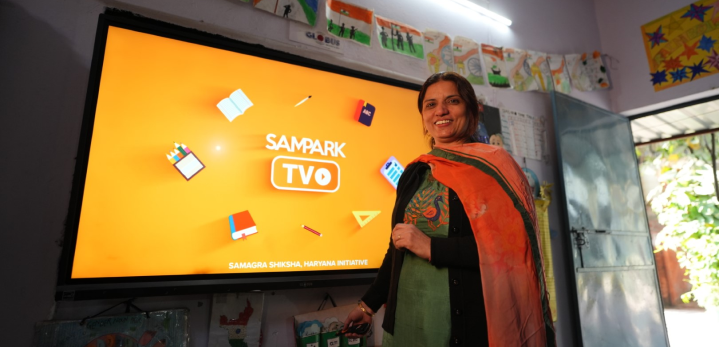
Sampark TV makes digital education accessible in rural schools, bridging the learning gap for students with limited resources.

Systemic Change at Scale

Transforming education requires a collaborative approach. Sampark Foundation, in partnership with state governments and district education departments, has scaled its model to reach millions of children in government schools.

  • Scaling across multiple states & districts
  • Aligning with national education goals & policies.
  • Gaining endorsements from policymakers & government officials.
  • Creating a ripple effect in education reform at the grassroots level.

Sampark’s alignment with SDG4

Ensure inclusive and equitable quality education and promote lifelong learning opportunities for all

Sampark’s intervention:
Using hands-on Math & English kits and the Sampark TV device—pre-loaded with FLN and Science content aligned to SCERT syllabi across 8 states—we’re improving classroom learning and education quality.
Target 4.1

By 2030, ensure that all girls and boys complete free, equitable and quality primary and secondary education leading to relevant and effective learning outcomes.

Sampark’s intervention:

Train & empower teachers on the effective use of Sampark Foundation’s TLMs in classrooms to ease the teaching-learning process.
Target 4.a

Build and upgrade education facilities that are child, disability and gender sensitive and provide safe, non-violent, inclusive and effective learning environments for all.

Sampark’s intervention:

Sampark innovations cater to millions of children. The TLMs are made in an age-appropriate and child-friendly manner creating an inclusive environment for learning for all children in the classrooms.
Target 4.c

By 2030, substantially increase the supply of qualified teachers, including through international cooperation for teacher training in developing countries, especially least developed countries and small island developing States.

Sampark’s intervention: 

Widespread impact across government and aided schools in 8 states—HP, Uttarakhand, Haryana, UP, Rajasthan, Jharkhand, Chhattisgarh, and Maharashtra—with focused outreach to aspirational districts and remote areas.
Target 4.5

By 2030, eliminate gender disparities in education and ensure equal access to all levels of education and vocational training for the vulnerable, including persons with disabilities, indigenous peoples and children in vulnerable situations.