
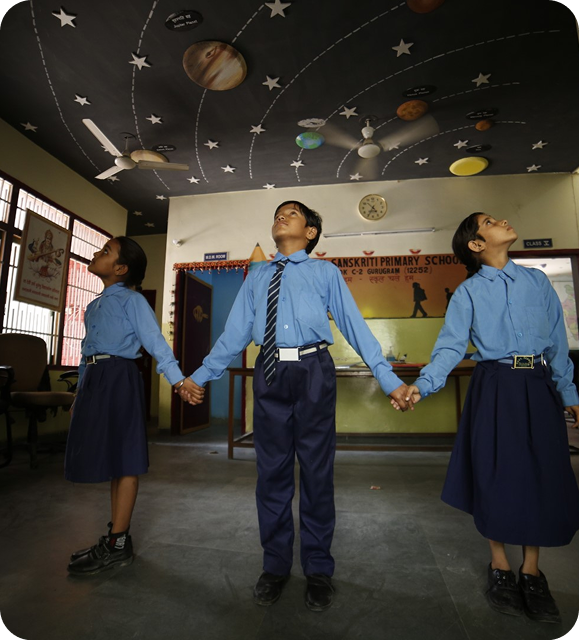
How the Interactive Method of Teaching Helps Classes 1 to 8 Learn Better
Introduction
What is one word that describes a classroom learning environment?
Instead of simply observing lessons, children learn best when they actively engage with the material. Interactive learning ensures that concepts stay with them longer and strengthen their foundational literacy, knowledge, and essential cognitive abilities such as critical thinking and adaptability.
Interactive learning shifts teaching from rote memorisation to understanding-based learning. In rural schools, this approach plays a crucial role, especially important for Classes 1 to 8, where learning forms the foundation for literacy, numeracy, communication, and critical thinking.
This is why Sampark Foundation places joyful, interactive, activity-based learning at the core of its mission, supporting India’s national vision of strong Foundational Literacy & Numeracy (FLN) for every child.
What Is the Interactive Method of Teaching?
2.1 Definition
The interactive method of teaching is a classroom approach in which students learn by participating rather than just listening. It includes students’ active participation through questions and discussions. Allows children to explore concepts through hands-on activities and learning through real-life examples.
This method turns the traditional classroom into a shared learning space where children think, respond, and collaborate actively rather than memorising passively.
2.2 Why It Works for Younger Learners
Children between classes 1 and 8 absorb concepts faster when they do something with the information they’ve learned. Experiential learning for young students makes every lesson meaningful and memorable, strengthening comprehension and building communication skills among children. In rural classrooms, it helps children develop critical thinking and problem-solving skills at an early age.
Challenges Faced by Teachers in Traditional Classrooms
1.Rote Learning & Limited Student Participation – Many students still rely on memorising answers rather than understanding the concepts. With a little room for conversation, children are often afraid to ask questions or express their doubts.
2.Multi-Grade Classrooms in Rural India – In many of the rural schools, one teacher teaches children from multiple grades together. Interactive teaching methods can simplify the learning process by engaging students with common interactive classroom activities and stories all at once
3.Lack of Resources and Teaching Aids – Traditional classrooms often rely on textbooks and blackboards, using outdated teaching methods that leave no room for engaging, interactive lessons. The schools in rural India need easy-to-use, activity-based and low-cost interactive teaching tools and methods to encourage student engagement.
How can Interactive Learning Methods be Introduced in the Classrooms?
Interactive education and child-friendly teaching methods mean teaching and learning approaches that can actively engage students in the learning process. Withstudent engagement strategies, schools must start utilising modern technology to introduce children to new ways of learning. Some interactive approaches heavily integrated into our program are Sampark Smartshala App, Teach-Easy Kit, Sampark TV, Sampark Didi ke Sawaal, and AI-Driven Speak English Program.
Our six innovations are designed with interactive methods of teaching in mind to make the learning experience more dynamic for kids, especially in classes 1 to 8:
- Physical Manipulatives: The Teach Easy Kit has game-oriented tools like ganitmala, base 10 blocks, flashcards, and number strips to give kids more hands-on experience.
- Audio-Visual methods: The Sampark Smartshala App offers various stories, songs, rhymes, and videos to explain tough concepts for better understanding.
- Gamified Assessments: Monitoring progress is a major component of an educational journey. To make it stress-free for students, our tool, Sampark Didi ke Sawaal, provides KBC-inspired quiz evaluations.
How Does It Impact the Students?
The benefits of interactive teaching are designed to make classrooms more engaging, participatory and fun, by providing kids with advantages:
- Improve Retention: Children who learn through hands-on experience retain conceptual understanding better and for longer.
- Active Participation: In an engaged classroom, students tend to participate more by voicing their thoughts; it doesn’t feel like a knowledge transfer but an active discussion.
- Develop Curiosity: As interest in learning increases, curiosity also spikes. Schools where our program is implemented report that children ask more questions now.
- Understand Complex Concepts: Subjects like Math and Science tend to become easier when abstract concepts are imparted via storytelling, visual demonstration, and games.
Our Story Across Eight States
From creating academic impact, like a 40% improvement in Math and Science scores and a 32% increase in overall academic results, the best outcome is that children now call learning their favourite part of the day, ask questions with confidence, and don’t find subjects as challenging compared to the past.
This change, brought about by interactive methods of teaching that extend into behavioural change, is a bigger indicator of success for us as it helps in improving learning outcomes in rural India, preparing them for their future.
Your Journey with Us
At Sampark Foundation, we don’t just provide digital tools for teaching techniques for classes 1 to 8; we also offer help that can bring change alongside educators, our SPARKs, the volunteers who take the teach-easy pedagogy to the remotest areas, empowering the communities to move towards opportunities that can uplift them from socio-economic improvement. The best part is that “You can be the SPARK of change, too! Click here to learn more!
Conclusion: Interactive Teaching is the Future of Better Learning
Interactive teaching is about shifting the learning approach from passive listening to active participation. Activity-based learning in rural schools
allows children to ask questions, explore, and learn through doing.
For Classes 1 to 8, especially in rural schools, the interactive and joyful learning method builds confidence, curiosity, and stronger foundational skills. With simple, low-cost activities and teacher-friendly methods, every classroom can become more engaging and effective for children.
By adopting small interactive practices into everyday teaching, teachers can spark big, lasting change. Helping every child learn better, think sharper, and grow with joy.


