
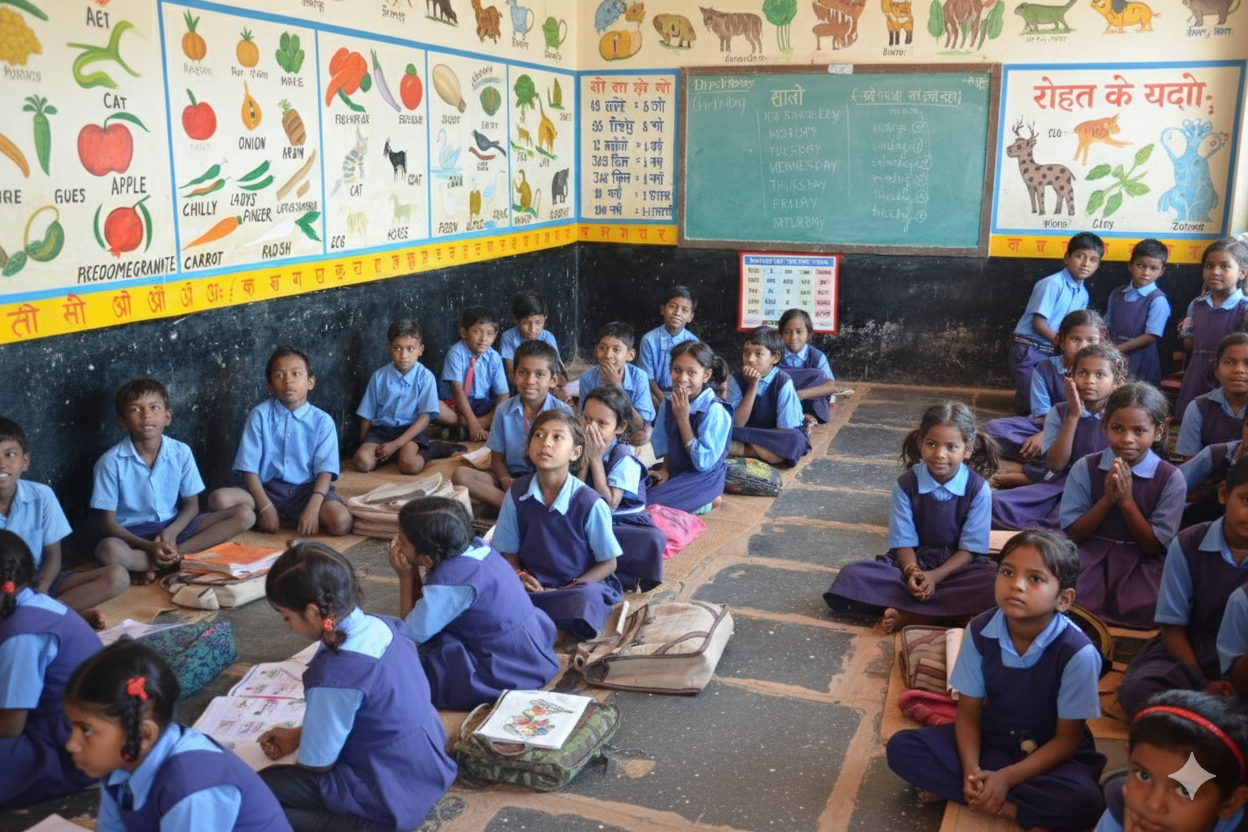
Early Childhood Education as a Foundation for Rural Development
Introduction
Early childhood education is more than just a preparatory stage for school and learning – it is the cornerstone of cognitive, social and emotional development. In rural areas, where access to structured education is often limited, early childhood education in rural India can play a critical role in breaking the cycle of poverty, improving literacy rates and fostering long-term community growth.
Early Childhood Care and Education (ECCE), as envisioned by the National Education Policy (NEP) 2020 and central to the NIPUN Bharat mission, plays a crucial role in shaping a child’s future. It fosters critical thinking, effective communication, and adaptability – skills essential for success in the 21st century.
At Sampark Foundation, we take this opportunity to focus on strengthening foundational literacy, numeracy and life skills from the early years of learning through innovative tools and low-cost teaching solutions.
The Role of Early Childhood Education in Rural Development
Cognitive and Emotional Development
The early years of a child’s life shape brain development and influence their ability to think critically, communicate effectively and adapt to new challenges. Studies indicate that children who receive structured early grade learning demonstrate stronger problem-solving abilities and improved concentration compared to those who miss out on early learning opportunities.
In rural areas, where children often grow up in environments with limited educational resources, early childhood education ensures that children develop fundamental skills in literacy and communication before higher schooling.
Reducing Dropout Rates and Improving Academic Performance
Children who attend pre-primary programmes adapt better to formal schooling, as they enter with a strong foundation in language, motor skills and social interaction. This leads to higher retention rates and a reduction in dropout rates.
In many rural communities, the lack of exposure to structured learning environments results in students struggling to grasp concepts once higher education begins. Investing in quality early education ensures that these students start their academic journey with confidence and a solid learning base.
Empowering Families and Communities
The benefits of ECCE extend beyond individual children, impacting families and communities as a whole. When ECCE centres are available, caregivers, who are often women, have the opportunity to pursue employment, further education, or engage in community development activities. This increased workforce participation strengthens families economically and contributes to thriving communities. As NEP 2020 emphasises, ECCE is not just about children; it’s about building stronger, more empowered communities.
Challenges in Implementing Early Childhood Education in Rural Areas
Despite its proven benefits, early childhood education faces several challenges in rural India:
- Limited infrastructure: A lack of dedicated ECCE centres and trained educators.
- Lack of resources: Limited understanding among families about the long-term benefits of structured early learning.
- Financial constraints: Families with limited income prioritise immediate livelihood needs over early education.
- Teacher shortages: A lack of trained early education specialists hinders effective program implementation.
To address these barriers, there is a pressing need for policy-level interventions, public-private partnerships, and community-driven initiatives that make quality early childhood education accessible and sustainable, thereby improving rural learning outcomes.
What Strong Early Childhood (Primary) Education Looks Like
Strong early childhood education is built on simple, engaging and meaningful practices that help children develop strong foundational skills and build confidence.
1.Building Foundational Literacy – Daily reading habits, storytelling and phonics-based activities provide children with the basics of language in a fun, engaging and interactive way.
2.Strengthening Foundational Numeracy – Interactive learning tools and methods using everyday objects such as beads, sticks, and charts, children learn numbers, patterns and concepts through exploration instead of rote memorisation.
3.Social & Emotional Development – Early childhood education promotes collaboration, confidence and encouragement. Creating a safe and open space for children to express themselves through classroom routines.
4.Activity-based & Play-based Learning (for Primary Grades) – Games, interactive study materials, and outdoor activities bring learning to life. It helps children discover concepts through play, exploration and imagination with strong primary education in rural India.
Sampark Foundation’s Role in Strengthening Early Education
Understanding the importance of early childhood education, we at Sampark Foundation have integrated early childhood learning methodologies into our interventions to enhance basic literacy and numeracy in rural India. By combining interactive teaching aids, digital learning tools and teacher training, Sampark ensures that young learners develop essential skills.
With our frugal, innovative tools, Sampark is collaborating with schools across different states and rural areas, ensuring that children start their academic journey with confidence and enthusiasm. And establish a strong foundation of rural development.
Join us in making quality ECCE a reality for every child! Partner with Sampark Foundation and help us build a strong foundation in early childhood education, leading to a brighter future for all.
Conclusion: Early Childhood Education Is the Foundation of Rural India’s Future
Early grade learning is an important foundational step on which rural India’s social and economic progress relies. When children develop strong literacy, numeracy, and socio-emotional skills in the early years of learning, they are much more likely to stay in school, perform better academically and grow into confident contributors to their communities.
For rural India to grow, investing in the foundations of child development in rural communities, including early-grade reading and learning for children aged 6–11, is non-negotiable. Strong foundational learning must become a priority, supported by policymakers, NGOs, teachers, and local communities working together to close learning gaps in rural primary schools early and equitably.
With our collective efforts, we can ensure that every child, regardless of background, receives quality primary education with frugal, innovative learning tools. Creating a way for a stronger future for rural learners with strong early education today.


