
What Holistic Education Really Means for a Child in Rural India
Across rural India, children walk into classrooms with curiosity and the desire to learn. But meaningful learning happens only when education nurtures the whole child, not just academic scores. Holistic education supports cognitive, emotional, physical, social, and creative development, ensuring learning becomes joyful and connected to real life.
Yet in many rural regions, the focus remains on textbooks and syllabus completion. Limited exposure, scarce learning materials, and additional household responsibilities leave little room for the holistic development of students. As a result, children often miss opportunities to express themselves, build confidence, explore creativity, and develop problem-solving skills.
A strong holistic approach to education gives every rural child what they truly deserve: the chance to learn fully, grow confidently, and thrive both inside and outside the classroom.
Beyond Textbooks: The Real Needs of a Child in Rural India
While access to schooling has expanded, everyday rural challenges still shape how children learn and participate. These realities affect not only academic progress but also student holistic development.
Rural children often need support to navigate:
- Long distances to school, reducing attendance and energy
- Household responsibilities such as caregiving and fieldwork
- Limited exposure to art, music, stories, and technology
- A lack of safe spaces to express thoughts and emotions
When education focuses only on memorisation, children lose the chance to develop essential emotional, social, creative, and problem-solving skills, reinforcing the need for holistic teaching that nurtures the whole child.
The 5 Pillars of Holistic Development in Education
Holistic education recognises that children grow across multiple dimensions. For rural learners, these pillars are even more critical to shaping confidence, well-being, and long-term learning habits.
The five interconnected pillars of holistic learning include:
1.Physical Development
Healthy surroundings, nutrition, hygiene, and physical play help children stay energetic and attentive.
2.Cognitive Development
Curiosity-driven activities and concept clarity strengthen deep understanding instead of rote learning.
3.Emotional Development
Children need space to express feelings, feel supported, and develop resilience during challenges.
4.Social Development
Teamwork, peer learning, communication, and collaboration build strong interpersonal skills.
5.Creative Development
Arts, stories, music, and local culture nurture imagination, innovation, and confidence.
Together, these pillars ensure children grow confidently, emotionally, creatively, socially, and academically.
Why the Learning Environment Is the Foundation of Holistic Education
A child’s learning environment shapes how they think, feel, and participate in school. A strong environment includes:
- Clean, well-lit, and safe classrooms
- Engaging teaching-learning materials
- Activity corners for stories, art, puzzles, or free play
- Supportive teacher-student relationships
- Emotional safety and a sense of belonging
When the environment is nurturing, children explore more, engage more deeply, and learn joyfully, making it the bedrock of holistic learning.
The Role of Teachers: Mindset, Methods & Meaningful Interactions
Teachers are at the heart of holistic education. Their mindset and methods shape how children experience learning every day. Supportive teachers help children:
- Learn through hands-on, activity-based experiences that build real understanding
- Stay motivated through positive reinforcement instead of fear or pressure
- Express their thoughts and emotions openly, knowing they will be heard
- Work together on projects that strengthen critical thinking and collaboration
Warm interactions and patient guidance foster confidence, curiosity, emotional resilience, and social growth.
Home & Community: The Missing Links in Rural Holistic Education
Holistic learning continues beyond school. When families and communities participate in a child’s journey, development becomes richer and more consistent.
Effective home- and community-based support includes:
- Simple parent-led routines: Reading stories, revising lessons, or guiding small daily learning tasks.
- Community mentors and volunteers: Youth groups or local leaders facilitating storytelling circles, after-school learning groups, or creative activities.
- Connecting school and home: When parents understand what children learn in class, they can reinforce concepts and celebrate progress.
These partnerships strengthen holistic learning, preserve cultural identity, and ensure children feel supported at every step.
How Sampark Foundation Enables True Holistic Learning in Rural India
Sampark Foundation believes every child deserves joyful, meaningful, and equitable learning. Through the Sampark Smart Shala Programme, holistic education becomes accessible in thousands of rural classrooms.
Sampark strengthens holistic education through:
1.Activity-Based Learning Tools
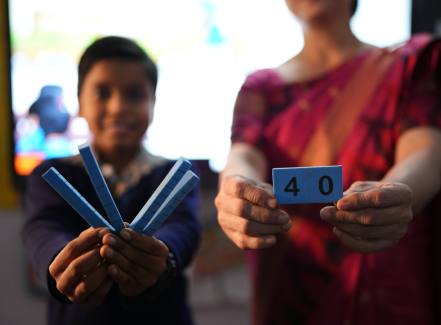
Hands-on, interactive materials transform abstract concepts into playful, engaging experiences, nurturing curiosity, creativity, and cognitive growth.
2. Low-Cost, High-Impact TLM Kits
Colourful, practical teaching-learning materials make daily lessons exciting and effective, ensuring holistic study remains affordable and scalable.
3.Audio-Enabled Toys & Story-Based Pedagogy
Songs, stories, and rhythm make learning simpler, especially for first-generation learners.
4.Teacher Capacity Building
Structured training empowers teachers with child-centred pedagogy, socio-emotional understanding, classroom management skills, and holistic teaching methods.
5.Community-Based Learning Initiatives
Parents, youth mentors, and local volunteers support after-school circles and home-learning routines, extending holistic learning beyond classroom walls
Sampark Foundation’s approach makes learning joyful, inclusive, and transformative, supporting complete holistic development in education.
Conclusion
The Way Forward: A New Vision for Rural Education in India
For rural India to truly progress, education must move beyond finishing the syllabus and embrace holistic education that nurtures the whole child.. When classrooms spark curiosity, creativity, and emotional well-being, children become confident, motivated learners who genuinely enjoy coming to school.
This transformation becomes possible when governments, NGOs, teachers, and communities work together to create learning spaces where every child can think freely, express openly, and experience joyful, holistic development in education every day.
Sampark Foundation remains committed to bringing holistic learning to rural schools, ensuring every child can grow, explore, and imagine freely.
Become a SPARK and join us in creating a brighter, holistic future for every child in India.


