
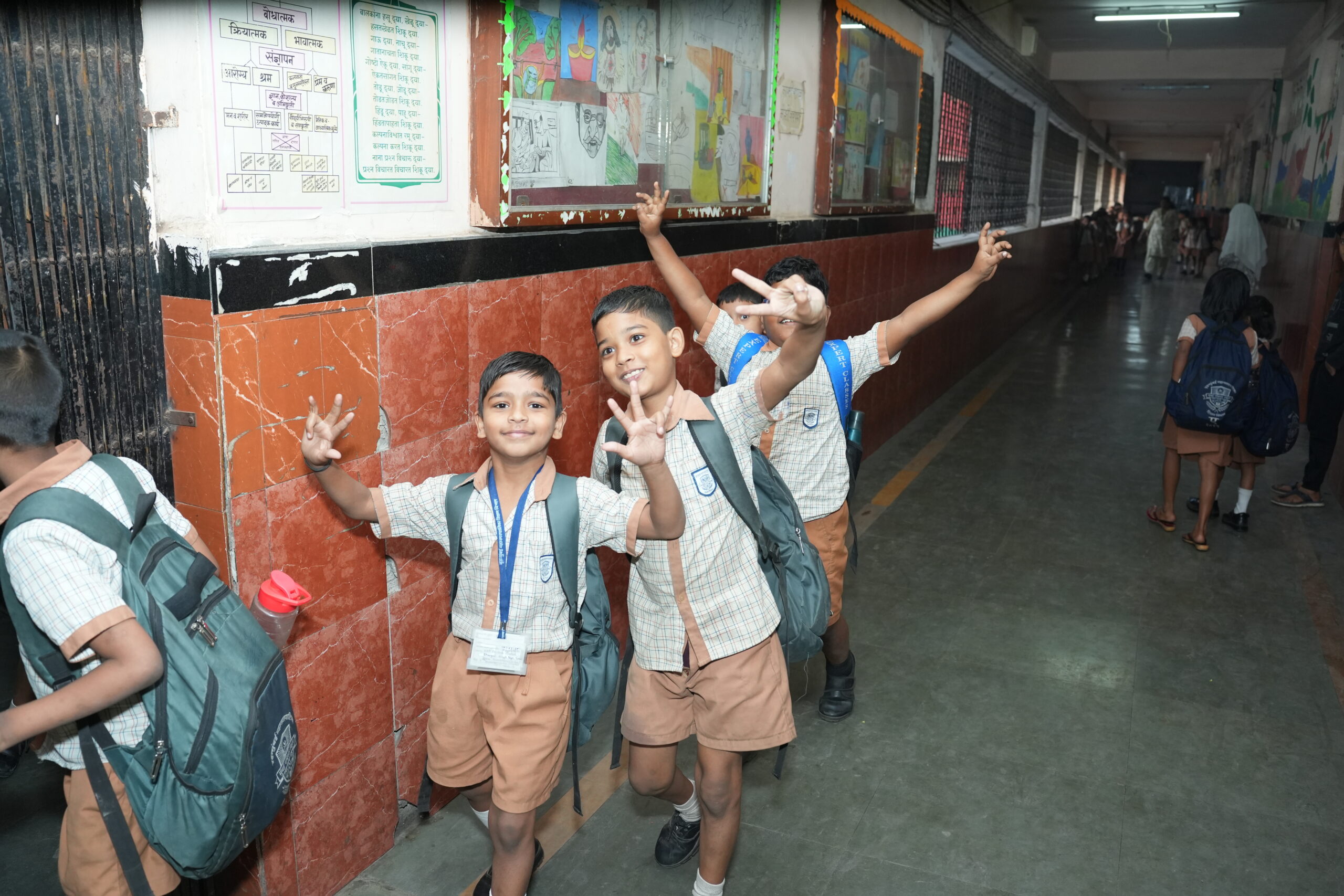
Reading, Counting, Thriving: India’s Pursuit of Foundational Learning through NIPUN Bharat
Bright, urgent, and deceptively simple: teach every child to read, understand and do basic arithmetic, and do it before she finishes Grade 3. That is the promise and the moral challenge behind the NIPUN Bharat mission (National Initiative for Proficiency in Reading with Understanding and Numeracy). Launched by the Government of India in July 2021, NIPUN Bharat converts the lofty language of policy into an operational mission: universal Foundational Literacy and Numeracy (FLN) for children aged 3–9 years, with a tight focus on outcomes, capacity-building, and measurable progress at school, block and district levels.
It emerges as a game-changer at a time when the country’s classrooms are filled with the bright hopes of over 250 million children, yet decades-old challenges of basic reading and numeracy threaten to dim these dreams. In the bustling narrative of India’s economic ascent, a quiet but profound crisis had been unfolding in its classrooms: a vast number of children were progressing through elementary grades without the fundamental ability to read, write, and perform basic arithmetic. This educational deficit, threatened to derail the nation’s demographic dividend, creating a generation equipped with school certificates but lacking the essential skills for meaningful participation in society.
The policy was necessitated by years of accumulating learning poverty, as nearly half of India’s students in Grade 5 could not read a Grade 2-level text. When children fail to grasp basic literacy and numeracy by the age of eight or nine, they inevitably struggle to comprehend the curriculum in higher classes, leading to reduced engagement, repetition, and high dropout rates. This prompted the National Education Policy 2020 to explicitly identify universal FLN as the system’s highest near-term priority, noting that without it, all later investments in education will have sharply reduced returns. NIPUN Bharat was therefore an urgent course correction: prioritising the foundations before advancing to higher-order skills.
Foundational literacy and numeracy are not merely academic milestones. They are the essential gateway skills that shape a child’s ability to learn, reason, and succeed in life. For a child, mastering FLN means transitioning from “learning to read” to “reading to learn.” This shift unlocks the entire curriculum, empowering them to pursue sophisticated knowledge and skills. A child who can read with comprehension and confidently perform basic calculations develops enhanced cognitive abilities, self-esteem, and a resilient approach to challenges, setting the stage for a life of dignity and opportunity. Strong Foundational learning study outcomes reduce learning gaps, lower dropout rates, and foster greater inclusion by supporting disadvantaged groups.
Thus, FLN is an equity and productivity lever: literate, numerate cohorts improve civic participation, health outcomes, employability and the country’s human capital. Economically, failure to deliver FLN means wasted public expenditure and a skills gap that compounds across generations; socially, it deepens inequality because children from disadvantaged backgrounds are the most likely to be left behind. Thus, through the NIPUN Bharat mission, India is investing in its human capital, ensuring that its youth demographic dividend becomes a reality and accelerating progress towards Sustainable Development Goal 4 (Quality Education).
NIPUN Bharat is designed as a mission-mode project under the centrally sponsored scheme of Samagra Shiksha, implemented through a structured, multi-tier framework. It covers children in the age group of 3 to 9 years (Balvatika to Grade 3) and establishes clear, age-appropriate learning outcomes, or Lakshyas, for each grade. This provides a precise roadmap for teachers, with additional focus on specialised teacher training through the NISHTHA (FLN) programme to equip 2.5 million teachers with the specific skills needed for foundational learning.
The policy promotes play-based, activity-based, and experiential learning methods, moving away from rote memorisation. It stresses the importance of instruction in the child’s home language in the foundational years to improve comprehension and mandates continuous, formative, and adaptive School-Based Assessments and large-scale standardised assessments to track child-specific progress and inform instruction.
Significantly, implementation is decentralised, and states and districts adapt the central framework to local languages and realities. A robust implementation and monitoring mechanism is set up at the National, State, District, Block, and School levels, ensuring accountability and continuous tracking.
However, there’s no time to rest, and there are miles to go before we sleep. Pockets of low learning persist, especially among disadvantaged, multilingual and out-of-school groups. Closing these gaps requires sustained funding for remedial programmes, continuous teacher mentoring and materials in local languages. Strengthening PARAKH’s role in translating assessment into actionable policy, and integrating UDISE data with classroom-level dashboards, will be essential. Vidya Pravesh and Balvatika initiatives must be expanded and better connected to Grades 1–3 so that early learning gains are preserved. There is a persistent risk that the mission’s focus on targets could lead to a ‘tick-box’ approach. Future efforts must prioritise quality over mere compliance, ensuring that monitoring systems provide actionable feedback to teachers, rather than just procedural data.
Community engagement via large-scale parent-literacy drives and actively involving them in School Management Committees (SMCs), local learning camps, and home-based learning kits is essential to creating a conducive learning environment beyond the school gates. Continuous, on-site, and high-quality mentorship and academic support for teachers must be institutionalised to expand capacity-building and continuous professional development, especially as curriculum and pedagogy evolve. Using tech-driven, adaptive learning models and local best practices, particularly in underserved areas, is vital as States and districts need flexibility and resources to adapt teaching-learning materials (TLMs) to regional languages and cultural contexts, especially for multilingual classrooms and tribal communities, which is vital for genuine comprehension.
NIPUN Bharat is one of the clearest instances of policy alignment the Indian school system has seen. Its success will be judged not by programmatic launches but by the day when a typical nine-year-old across India can read, reason and compute with confidence. India stands at a powerful inflection point, and with this policy, the country is not only giving children the tools to read, write, and count, but is empowering them to dream, create, and lead.


