
Five Years, One Vision: Understanding the Implementation of NEP 2020
Hailed as the new dawn in the educational landscape of India, the National Education Policy 2020 (NEP 2020) burst onto the scene with the promise of a generational transformation, banking on the dream that every child in the country would receive an education that is holistic, forward-looking, and rooted in the Indian ethos. It isn’t just a new education policy update; it’s a paradigm shift that promised to replace rigidity with flexibility, rote with reasoning, and uniformity with inclusion. For a country where more than 260 million children are in schools, NEP 2020 envisioned a system that nurtures the innate potential of every learner.
Central leadership has been pivotal in orchestrating NEP 2020’s roll-out. At the apex, the Ministry of Education has steered the reform through a set of institutional frameworks and mission-mode projects. It established the National Steering Committee to monitor implementation, issue regular guidelines and rolled out the NIPUN Bharat Mission in 2021 to improve Foundational Literacy and Numeracy (FLN) for all children by Grade 3. The National Curriculum Framework for School Education (NCF-SE) 2023 translates NEP’s pedagogical vision into a tangible curricular design, while PARAKH, under NCERT, has been established as the national assessment regulator to standardise evaluation practices across boards.
Complementing these are other frameworks such as Vidya Samiksha Kendras (VSKs) for data-driven governance, while digital platforms like DIKSHA and PM eVIDYA have become the policy’s technological backbone for teacher training and content delivery. Centralised funding mechanisms, such as Samagra Shiksha, have been recalibrated to support NEP-aligned activities, including foundational literacy and numeracy drives, expansion of early-childhood learning, and holistic assessment in the educational reforms in India. Nationwide awareness campaigns and stakeholder consultations have ensured that NEP is not just a top-down directive, but a living, adaptive guideline shaped by collective ownership.
Education being a concurrent subject, states play a pivotal role in contextualising the NEP’s provisions and translating vision into local policy. Almost all states have now formed State Implementation Committees (SICs) and Task Forces to align their curricula, teacher training modules, and governance mechanisms with NEP principles. Acting as the powerhouses of customisation, the State Councils of Educational Research and Training (SCERTs) and State Boards develop their own State Curriculum Frameworks (SCFs) and adapt textbooks and pedagogical practices. They establish their own implementation roadmaps, often focusing on ECCE and FLN targets, while setting up an independent State School Standards Authority (SSSA) to oversee governance and standardisation.
Several states, including Gujarat, Maharashtra, Madhya Pradesh, Karnataka, and Odisha, have launched their own FLN missions and are utilising State Vidya Samiksha Kendras to monitor real-time learning data. They also oversee teacher recruitment, deployment, and continuous professional development, leveraging in-service training modules delivered through the National Initiative for School Heads’ and Teachers’ Holistic Advancement (NISHTHA). This alignment of digital infrastructure, teacher preparation, and monitoring mechanisms marks a shift from ad-hoc programmatic implementation to systemic transformation. Regional and vernacular innovations are encouraged, from introducing local art forms in curricula to using mother tongues as mediums of instruction in early grades, truly embodying NEP’s spirit of flexibility.
At the district level, District Education Officers (DEOs) and Block Resource Centres (BRCs) serve as the nerve centres of NEP’s execution, operate as its feet on the ground, interfacing with schools and local communities. Through the Samagra Shiksha Abhiyan, districts receive integrated funding for infrastructure, inclusion, teacher training, and innovation. District Institutes of Education and Training (DIETs) are being upgraded to act as professional development hubs, ensuring that the spirit of NEP reaches classrooms through empowered teachers rather than top-down mandates.
Many districts, such as Varanasi, Nashik, and Tirunelveli, have emerged as model districts where the policy’s principles are being piloted with measurable success in FLN outcomes and school readiness. The monitoring and tracking of student learning outcomes, particularly for FLN, is managed and aggregated at the district level. Regular review meetings, digital dashboards, and micro-planning exercises have made district administration more evidence-driven. District-level monitoring committees facilitate need-based interventions, identify learning gaps, and ensure fidelity to the learning outcomes matrix.
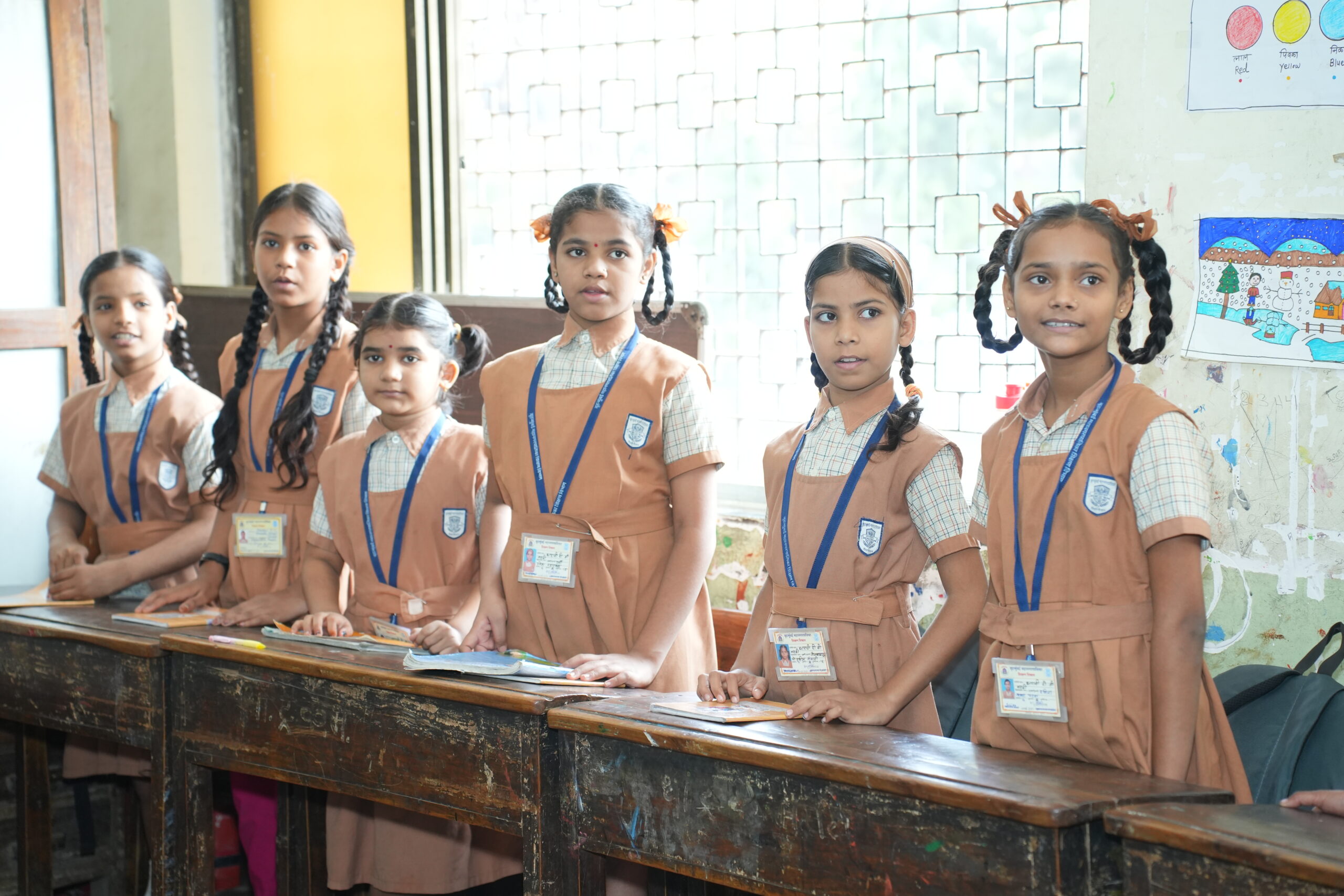
At the grassroots, Nep 2020 implementation is most visible in classrooms. Teachers are being trained in competency-based pedagogies, Anganwadis are being strengthened for early childhood education, and Balvatikas (preparatory classes) are bridging the 3–8 year foundational stage as envisioned by the 5+3+3+4 structure. Block Education Officers (BEOs) facilitate training, monitor school readiness, and ensure compliance with NEP-aligned reforms. Local governance structures, such as School Management Committees (SMCs), Panchayati Raj bodies, and community volunteers, are increasingly involved in tracking attendance, promoting enrollment, and supporting foundational learning campaigns.
The integration of DIKSHA and NDEAR (National Digital Education Architecture) ensures that even remote schools are digitally connected, closing the loop between planning and practice. The formation of School Complexes/Clusters is critical at this level to share resources, teachers, and infrastructure, thereby ensuring quality education is accessible even in remote areas. Additionally, Community mobilisation efforts have been operationalised on a war-footing, with community reading campaigns, inclusion programs for out-of-school children, and localised remedial learning models tailored to context-specific challenges such as migration, gender gaps, and socio-economic disparities. Innovation labs and NEP cells are being set up to track progress and troubleshoot challenges.
Together, these institutional levers, distributed in a decentralised manner, ensure that the reform is not a standalone effort, but a synchronised orchestration of multiple instruments of change. Five years on, the NEP’s influence can be felt till the last mile- from Anganwadi centres in tribal villages to digital classrooms in metropolitan schools. The convergence of ministries, community partnerships, and technology-driven monitoring has enabled unprecedented outreach. Programs such as School Chalo Abhiyan, Padhe Bharat, and NIPUN Samarth have localised the reform effort, ensuring that implementation is not just top-down but participatory and inclusive.
The implementation journey, while robust, is encountering predictable friction, especially given the scale and ambition of the policy. However, such obstacles must not shift the focus from contextualised, bottom-up innovation. India’s educational landscape stands at an inflection point, halfway between promise and realisation. The coming decade promises a revolutionary transformation where the classroom becomes a space for critical thinking, creativity, and compassion, not just compliance.
The journey of National Education Policy 2020 (NEP) is thus not merely a policy in progress, but a reminder of a simple truth: India is determined not just to educate, but to empower. Its success will be defined by how effectively we sustain this momentum, bridge the last-mile gaps, and translate the vision of equitable, joyful, and holistic learning into lived reality for every child.


